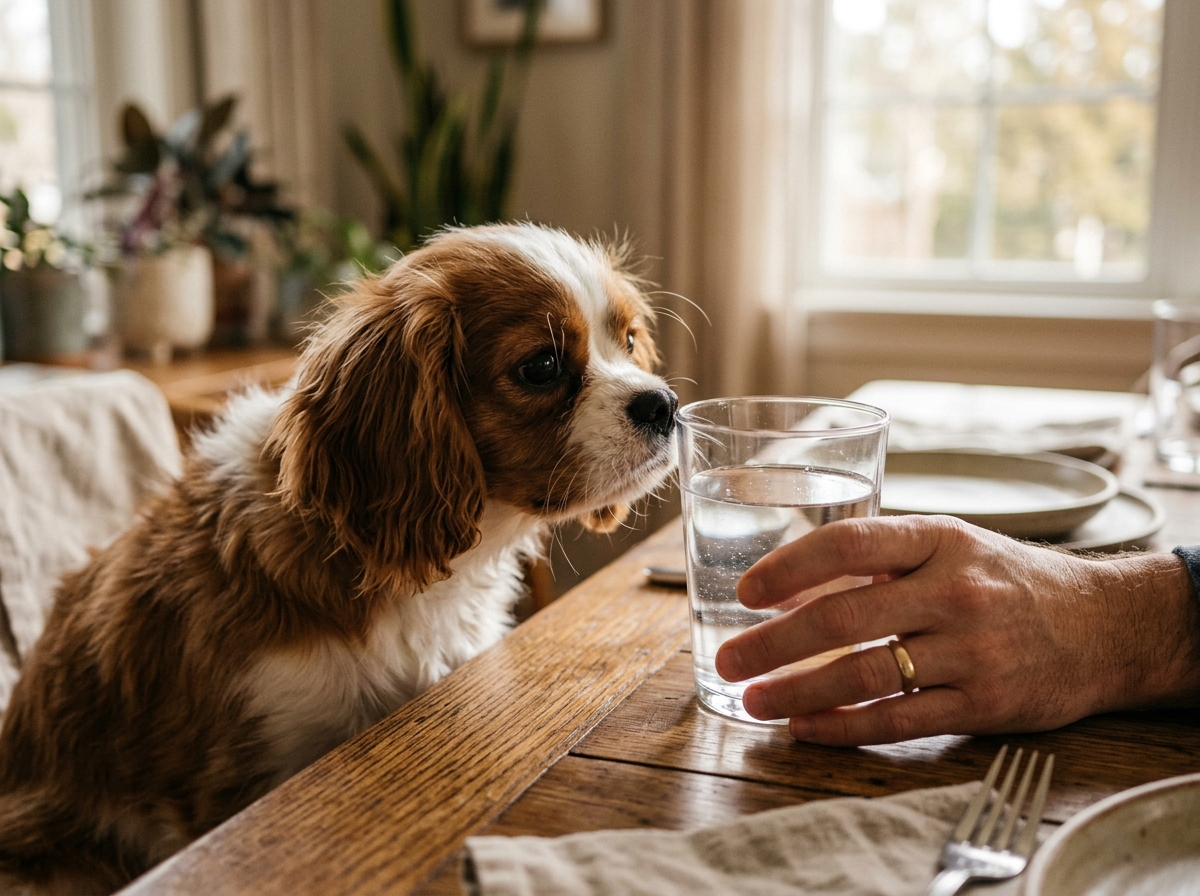
Many pet owners observe a curious and persistent canine behavior: despite having access to a clean, freshly filled water bowl in their designated feeding area, dogs often ignore it and actively attempt to drink from a human’s water glass. While this behavior is frequently dismissed as simple curiosity or poor manners, animal behavioral science and veterinary nutrition indicate that it stems from deep evolutionary instincts, sensory evaluation, and environmental stressors. Here is an evidence-based examination of why dogs prefer drinking from human water cups, underlying sensory triggers, and practical veterinary guidelines to optimize canine hydration.
Table of Contents
3 Biological Reasons Behind Cup Preference
When a canine consistently bypasses a standard pet bowl in favor of human drinking vessels, animal behavioral specialists identify three primary drivers rooted in survival mechanics and sensory processing.
1. Social Referencing and Pack Safety
Domestic canines (Canis lupus familiaris) are social species governed by instinctual resource evaluation. In natural environments, communal water sources carry significant contamination risks. When a canine observes human family members—who act as social referents—consuming fluid from a specific vessel, the dog’s cognitive assessment marks that water source as safe and verified. Attempting to share water from a human glass is often an instinctual behavior driven by social bonding and resource verification.

2. Sensory Evaluation: Freshness and Dissolved Oxygen
Canines possess an olfactory system vastly more sensitive than humans. Water left undisturbed in a pet bowl for several hours loses dissolved oxygen and can accumulate airborne particulates or bacterial biofilms. Conversely, a freshly poured glass of water served at a cool ambient temperature (ideally between 15°C and 20°C / 59°F to 68°F) offers superior organoleptic appeal, free from the stale olfactory cues of stagnant fluid.
3. Vessel Material Odors and Whisker Sensitivity
The construction material of standard pet bowls frequently acts as a deterrent:
- Plastic Bowls: Soft plastics develop microscopic scratches that trap odor-causing bacteria and emit volatile organic chemicals detectable by dogs.
- Metal Bowls: Stainless steel can impart a metallic odor and create disruptive reflections or auditory vibrations when tags clink against the rim.
- Whisker Fatigue: If a water bowl is too narrow or deep, a dog’s highly sensitive facial vibrissae (whiskers) continuously brush against the sides. Over time, this sensory overstimulation creates physical discomfort, prompting the pet to seek alternative, wider drinking surfaces.
Clinical Hydration Management
Understanding sensory triggers allows owners to modify the home environment to encourage independent water consumption. A healthy canine typically requires between 50ml and 60ml of water per kilogram of body weight daily to maintain renal and metabolic function.
Vessel Optimization and Placement
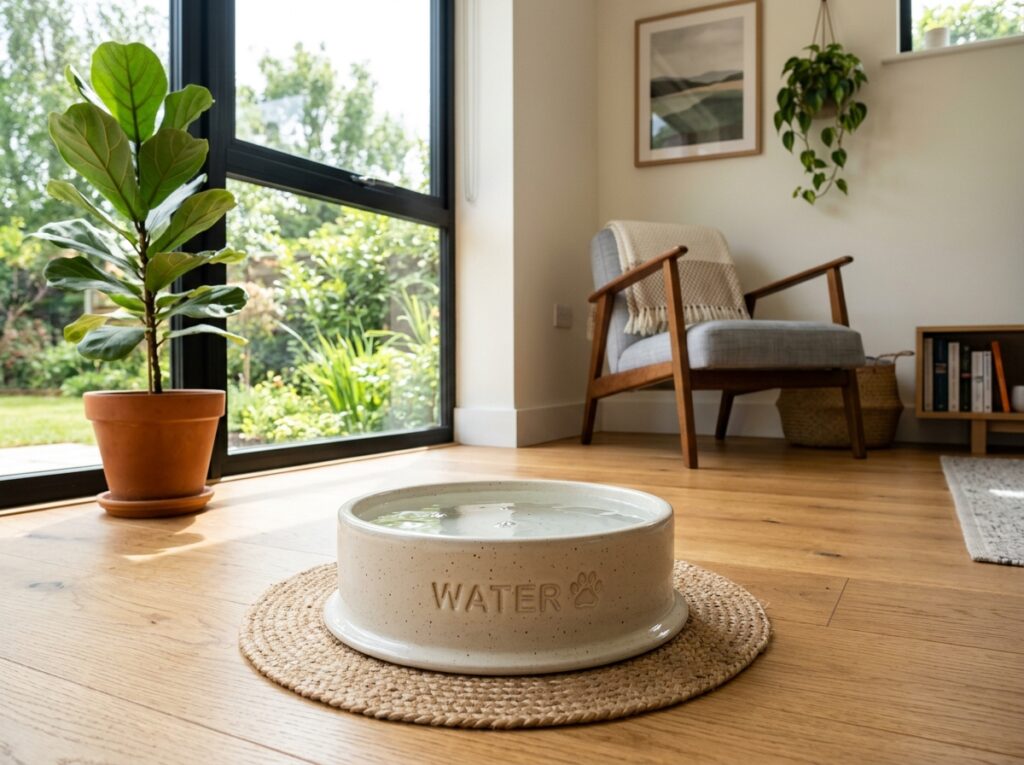
- Upgrade Vessel Material: Replace narrow plastic or reactive metal bowls with wide, heavy ceramic or non-porous glass vessels. These materials are chemically inert, odorless, and structurally mimic the glassware favored by humans.
- Strategic Placement: Position water stations in quiet, accessible areas away from high-traffic domestic zones, noisy home appliances (e.g., refrigerators or washing machines), and immediate food stations to prevent food particulate contamination.
Dietary Hydration Strategies
For canines demonstrating chronic low fluid intake, dietary supplementation offers an effective clinical strategy:
Nutritional Soups: Blending low-glycemic, dog-safe vegetables (such as steamed carrots) with lean, unseasoned proteins and sodium-free bone broth creates an enticing, high-moisture supplement suitable for picky eaters or senior dogs with compromised dental structures.
Thermal Moisture Addition: Incorporating warm water directly into dry kibble enhances aroma and increases moisture intake.
⚠️ Veterinary Warning (Polydipsia/Polyuria):
If a canine exhibits sudden, unexplained increases in water consumption (polydipsia) accompanied by frequent urination (polyuria), owners should seek immediate veterinary evaluation. According to clinical veterinary guidelines, abnormal drinking habits can serve as early primary symptoms of endocrine disorders such as diabetes mellitus, Cushing’s disease, or chronic renal failure.
Summary
A dog’s preference for drinking from human glasses is primarily driven by social referencing, sensory evaluation of water freshness, and physical discomfort associated with inappropriate pet bowl materials. By transitioning to wide, odorless ceramic or glass vessels, refreshing water frequently, and placing drinking stations in quiet environments, owners can successfully align domestic hydration setups with canine sensory biology.