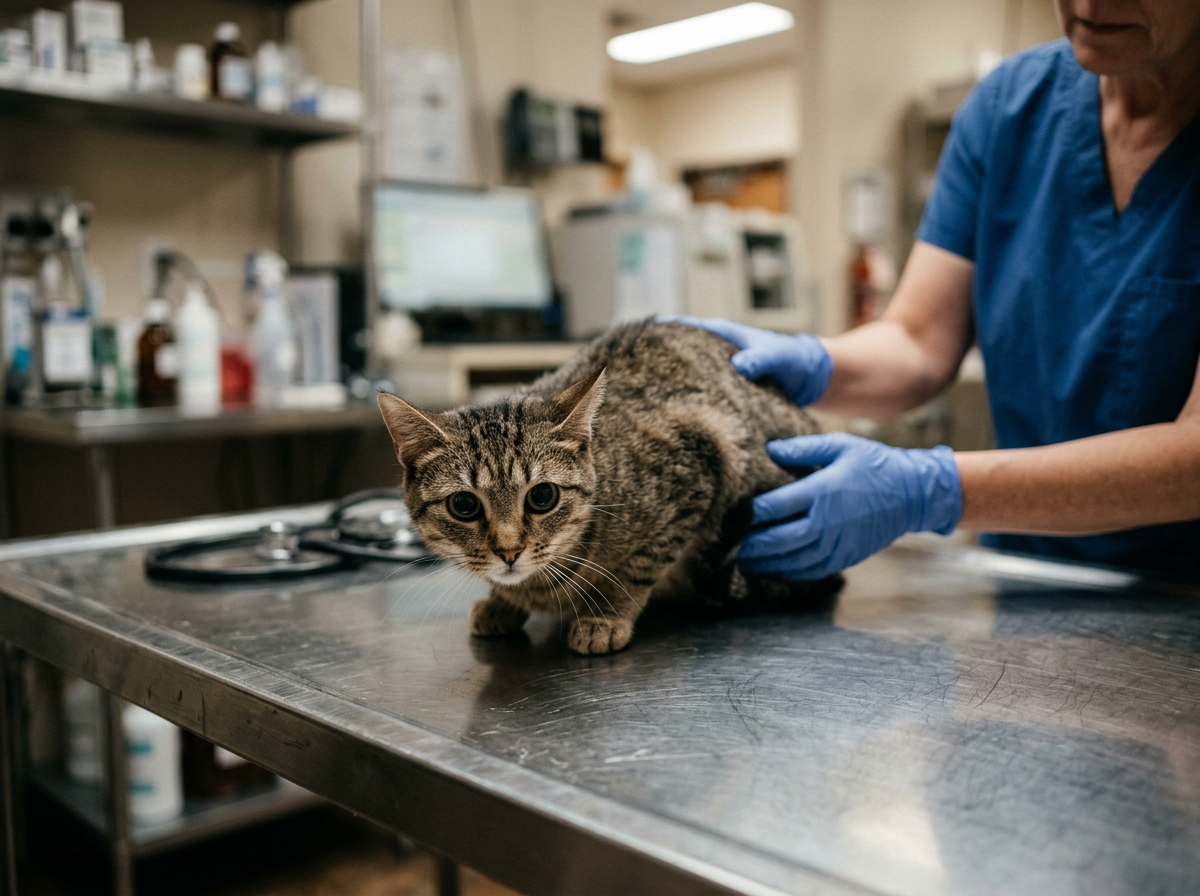
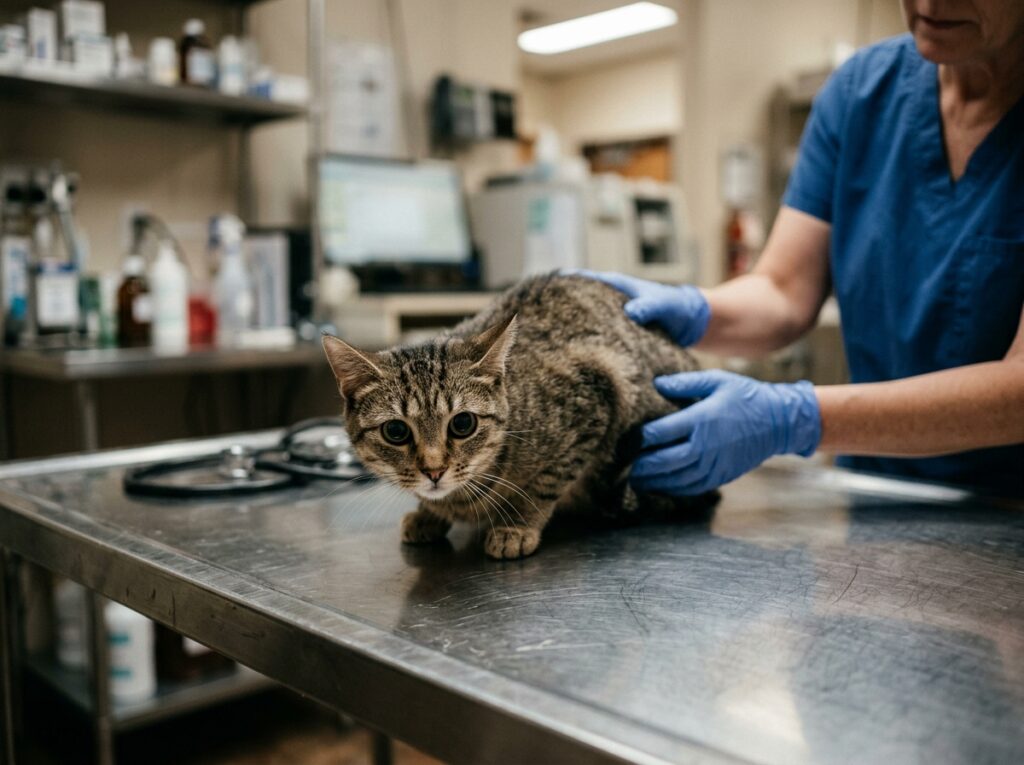
Is a purring cat always a happy cat? When a feline produces a loud, rumbling purr while placed on a cold stainless steel examination table at a veterinary clinic, owners frequently assume their pet is relaxed or comforted by the staff. However, veterinary behaviorists warn against this dangerous misconception. While purring during interaction at home signals contentment, purring in a high-stress medical environment functions as an autonomic self-soothing reflex, a vocal painkiller, and a defensive de-escalation signal. Let’s examine the neurological and behavioral science behind this paradoxical clinical reaction.
Table of Contents
The Science of Stress Purring
A veterinary examination room exposes a feline to acute sensory overload: chemical disinfectants, unfamiliar handling, and the acoustic residue of other distressed animals. In this environment, purring rarely indicates comfort; instead, it represents a physiological coping strategy triggered by the sympathetic nervous system to survive perceived territorial endangerment.
3 Hidden Clinical Meanings
Evaluating feline body language alongside vocal acoustic patterns reveals three primary biological drivers behind clinical purring.
1. Autonomic Self-Soothing and Anxiety Masking
When experiencing extreme distress, domestic cats utilize internal thoracic vibrations to regulate their own autonomic nervous system. Much like human displacement behaviors during panic (e.g., hyperventilating or pacing), rhythmic purring generates consistent sensory feedback that masks environmental anxiety.
To confirm anxiety purring, clinicians assess secondary stress markers:
- Mydriasis: Fully dilated, black pupils reflecting sympathetic arousal.
- Crouching Posture: Ventral body surface pressed flat against the exam table with limbs tucked underneath.
- Physiological Distress: Hyperhidrosis (sweating from paw pads) or acute tachypnea (open-mouth panting).
2. Acoustic Analgesia: Natural Pain Relief
Bioacoustic research demonstrates that feline purring typically occurs within a frequency range of 20Hz to 150Hz. In clinical sports medicine and veterinary orthopedics, low-frequency acoustic stimulation within this exact band corresponds to accelerated bone fracture healing, cellular regeneration, and localized pain abatement.
When suffering from painful conditions such as urethral obstruction, cystitis, or acute trauma, a cat purrs to trigger an endogenous release of beta-endorphins in the central nervous system. This self-generated acoustic frequency functions as an internal analgesic to mitigate physiological agony.
3. Defensive Calming Signals (De-escalation)
From an ethological standpoint, purring in the presence of a perceived threat functions as an appeasement or calming signal. By vocalizing non-aggressive acoustic frequencies, the patient communicates physiological vulnerability to the veterinary clinician or restraint handler: “I am highly distressed and submissive; I pose no physical threat.”
⚠️ Clinical Handling Warning:
Misinterpreting a defensive purr as voluntary submission often leads handlers to escalate tactile restraint. Crossing a distressed feline’s sensory threshold can trigger acute defensive aggression, resulting in sudden scratching or biting (overstimulation syndrome).
Veterinary Stress Reduction Protocols
Minimizing clinical stress requires proactive preparation by the pet owner prior to arriving at the medical facility.
Pre-Visit Environmental Conditioning
- Carrier Acclimatization: Keep the transport carrier permanently accessible within the domestic environment days before an appointment. Line the base with familiar fleece bedding and utilize pheromone analogue sprays (such as Feliway) 30 minutes prior to transport to stabilize neurochemical anxiety.
- Exam Room Handling: Upon arrival, keep the carrier elevated on an exam surface rather than placed on the floor. Where feasible, dismantle the top half of a hard-shell carrier, allowing the veterinarian to perform primary physical auscultation while the feline remains seated within its familiar lower territory.
Pharmacological Intervention
For felines exhibiting profound situational panic or historical aggression during examinations, proactive pharmacological anxiety management is strongly advised. Consult a licensed veterinary practitioner regarding targeted pre-visit anxiolytic medications (such as oral gabapentin) to safely lower the sensory stress threshold.

Summary
Vocalizations on a veterinary examination table must be interpreted through comprehensive clinical observation rather than acoustic assumptions. A purring cat in a medical setting is frequently utilizing low-frequency internal vibrations for pain relief, autonomic emotional regulation, and defensive de-escalation. By analyzing pupil dilation, body posture, and respiratory rates alongside acoustic purrs, owners and clinical staff can identify masked pain and implement low-stress veterinary handling protocols.