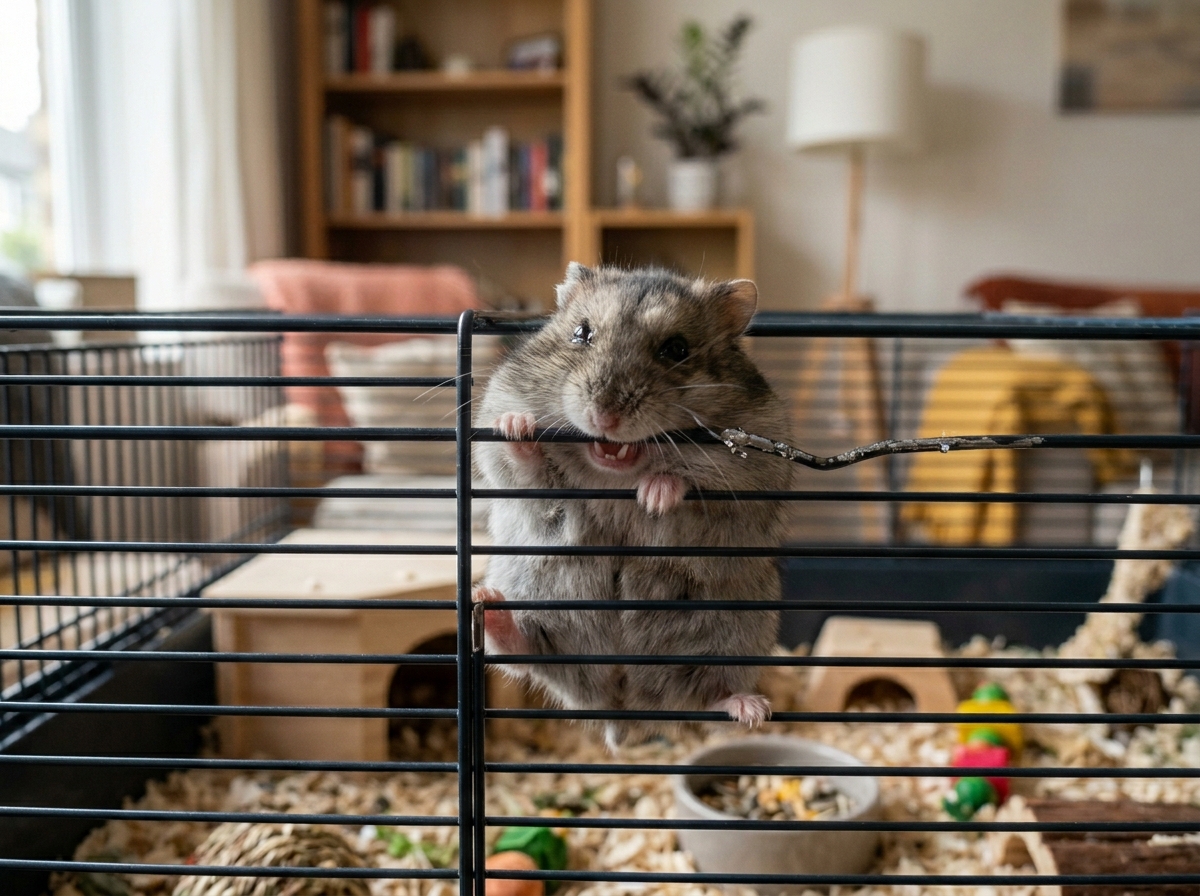
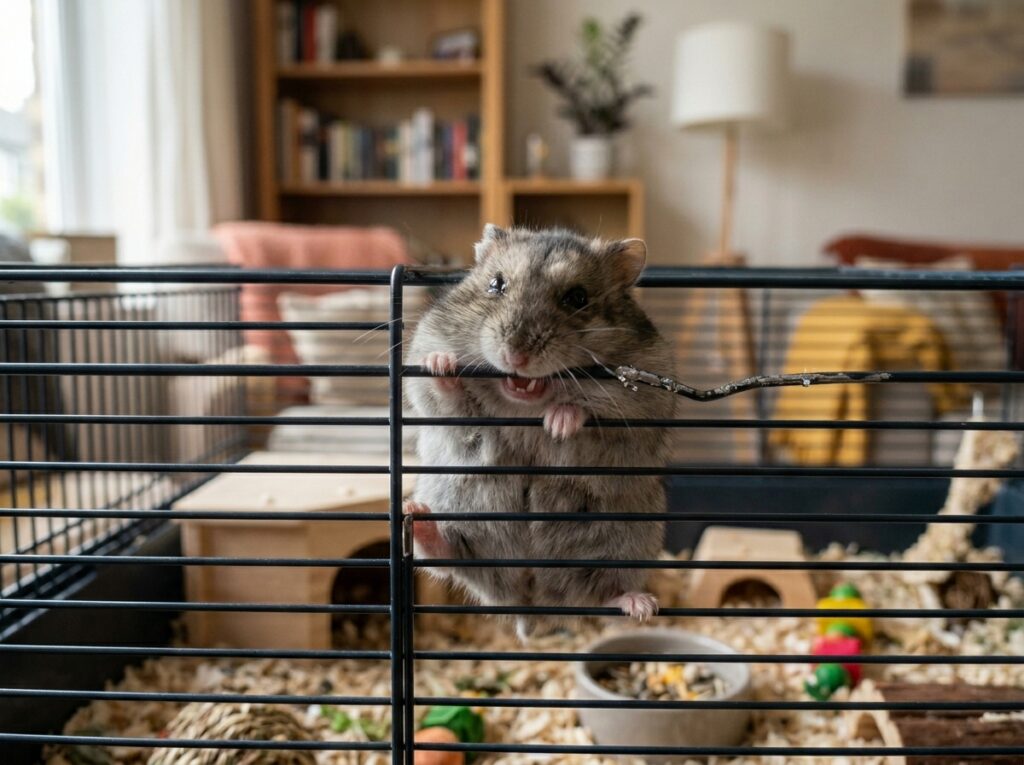
I remember the frantic sound clearly – a persistent, almost maddening gnawing against metal bars. My adorable Djungarian hamster, Jungerie, was dealing with a severe case of hamster chewing cage bars, biting them like her life depended on it. At first, I dismissed it as normal teeth grinding, a common hamster behavior. However, this seemingly harmless habit quickly turned into a terrifying reality when I discovered her cage door ajar and Jungerie nowhere to be found. The initial relief that she was simply sharpening her teeth vanished, replaced by panic. This experience taught me an important lesson about understanding our tiny companions and why they exhibit certain behaviors, especially when it comes to hamster chewing cage bars.
Table of Contents
Understanding Hamster Chewing Cage Bars
The Urge to Chew: Not Always Teeth Grinding
It’s a common misconception that all chewing is for dental health. While hamsters’ teeth grow continuously and require wear, excessive or frantic chewing, particularly on cage bars, often points to underlying issues beyond simple teeth grinding. Recognizing the difference is essential for your hamster’s well-being.
My Escape Artist: A Personal Story
My Jungerie was an expert. I thought her cage was secure, but her relentless efforts to chew the bars eventually weakened the plastic joints of the door, allowing her to push her way out. It was a harrowing search, involving late-night tip-toeing and strategic snack placement, until I finally found her safely tucked behind the sofa. This incident was a wake-up call, making me explore the true reasons behind her excessive chewing and how to prevent it.
Why Do Hamsters Chew Their Cage Bars?
There isn’t a single reason why a hamster might start chewing its cage. Instead, it’s often a combination of factors. Understanding these can help you address the root cause and improve your pet’s quality of life.
1. Boredom and Lack of Stimulation
Hamsters are intelligent and active creatures. If their environment lacks enrichment – such as wheels, tunnels, and toys – they can become bored. This boredom often manifests as destructive behaviors like hamster chewing cage bars.
2. Dental Health Needs
While not the only reason, dental health is still important. Hamsters need to wear down their continuously growing incisors. If they don’t have appropriate chewing materials, they might turn to the cage bars out of necessity.
3. Stress or Anxiety
Loud noises, frequent handling, insufficient hiding spots, or an unsuitable cage location can cause stress. Stressed hamsters may engage in repetitive behaviors like bar chewing as a coping mechanism.
4. Seeking Attention
Sometimes, hamsters learn that chewing on bars gets your attention. If you consistently react to the noise, even if it’s to tell them to stop, they might associate the behavior with getting noticed.
5. Desire to Escape (Small Cage Syndrome)
Perhaps the most concerning reason is the desire to escape. If a hamster’s cage is too small, they will feel confined and naturally try to find a way out. This is a strong instinct, and for small hamsters, even a slight opening can be an opportunity. The ASPCA provides excellent guidelines on appropriate cage sizes.
Solutions to Stop Hamster Chewing Cage Bars
Once you’ve identified potential causes, you can implement solutions to deter this behavior.
Provide Enrichment and Toys
Offer a variety of enrichment items:
- A large, solid-surface exercise wheel.
- Tunnels and tubes.
- Digging areas with safe substrate.
- Foraging toys where they can find treats.
These distractions can greatly reduce boredom-driven hamster chewing cage bars.
Offer Safe Chewing Options
Ensure your hamster has access to plenty of safe chewing materials, such as:
- Untreated wooden chew toys.
- Cardboard tubes from paper towels (without glue).
- Safe, natural branches (like apple or willow wood).
- Hay-based treats.
Check Cage Size and Setup
Re-evaluate your hamster’s habitat. Is it large enough for their species? Does it have enough bedding for burrowing? A spacious cage with ample bedding and hideouts can significantly reduce the desire to escape and chew bars.
Reduce Stress
Ensure your hamster’s cage is in a quiet area, away from direct sunlight or drafts. Provide multiple hiding spots and avoid sudden loud noises. Gentle, consistent handling can also build trust and reduce anxiety.

When to Consult a Vet
If despite your best efforts, your hamster continues to chew excessively, or if you notice any changes in appetite, drooling, or jaw swelling, it’s important to consult a veterinarian specializing in small animals. They can rule out any underlying dental problems or other health issues that might be contributing to the behavior.
Understanding the reasons behind your hamster’s behaviors, especially something as potentially dangerous as hamster chewing cage bars, is paramount for their safety and happiness. By providing an enriching environment, appropriate chew toys, and a suitably sized home, you can help your little friend thrive and prevent any future escape attempts.