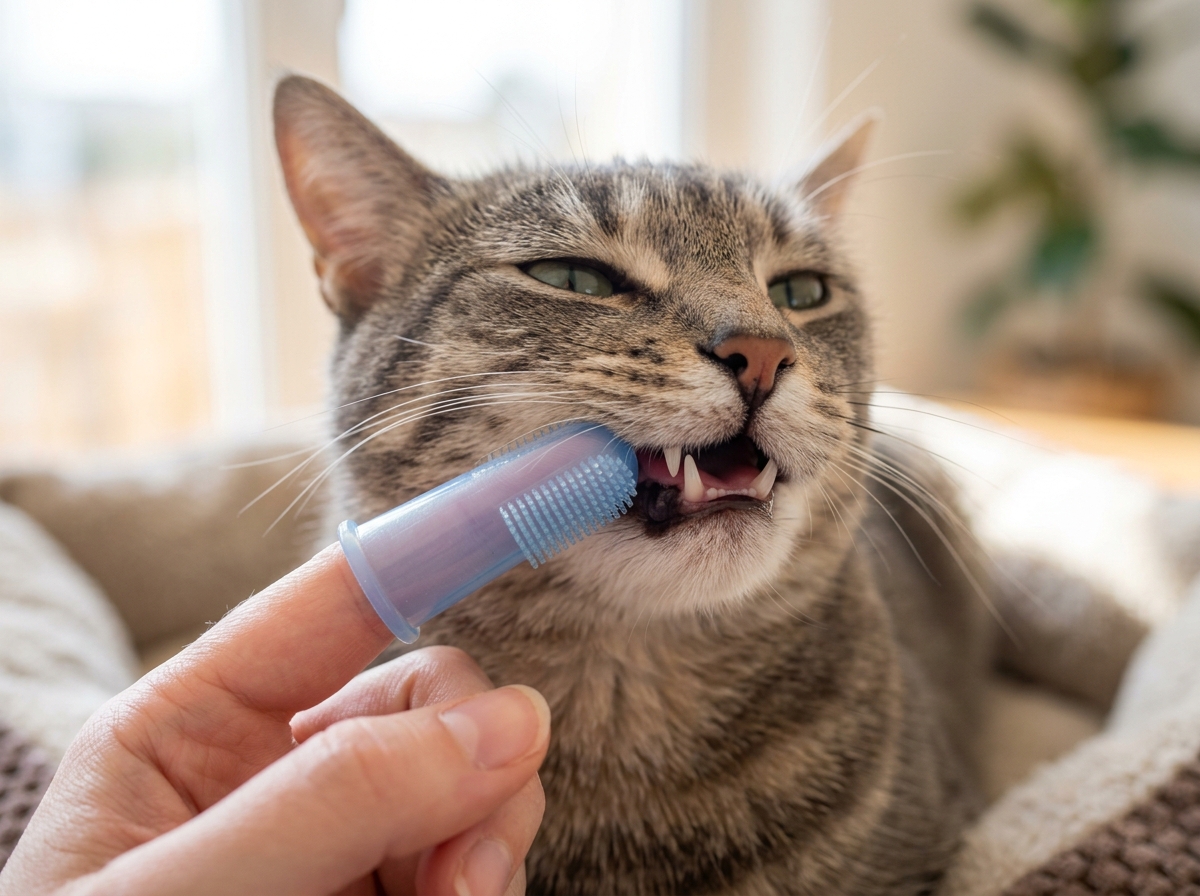
Did you know that within just 24 to 48 hours, the soft plaque on your cat’s teeth can completely harden into cement-like tartar? It is a terrifyingly fast biological process that leaves a staggering 70% to 80% of felines over the age of three suffering from hidden, painful dental diseases. You gently lift their lip, swipe the toothbrush, and suddenly see red. Noticing your cat’s gums bleeding when brushing is a heart-stopping moment for any pet parent. Are you hurting them? Is it a symptom of a severe underlying illness?
While overseeing the production of chewy treats like turkey tendon, duck neck, and Hanwoo beef liver for our Greenbone pet food line, I am constantly reminded of one crucial fact: even the most delicious, carefully formulated oven-baked meat snacks are entirely useless if a cat is in too much oral pain to chew them. Witnessing your cat’s gums bleeding when brushing is a clear, urgent signal from their body that their dental health requires immediate attention.
Let’s uncover the exact veterinary reasons behind this bleeding and walk through a foolproof, stress-free, 3-step method to protect your feline’s delicate mouth without the daily battle.
Table of Contents
Top 3 Reasons for Cat Gums Bleeding When Brushing
1. Early Signs of Gingivitis and Rapid Tartar Accumulation
If left unchecked, plaque quickly mineralizes into tartar (calculus). As this rough tartar builds up on the tooth’s surface, bacteria thrive and multiply, directly inflaming the mucosal lining of the gums. This inflammation is known as gingivitis. When a cat has gingivitis, their gum tissues become swollen, bright red, and incredibly fragile, meaning that even the lightest touch from a toothbrush will result in your cat gums bleeding when brushing.
- Expert Advice: According to the
Veterinary Oral Health Council (VOHC), hardened tartar cannot be removed by home brushing alone. If your cat’s teeth have yellow or brown crusts, professional scaling under veterinary anesthesia is highly recommended.
2. The Wrong Toothbrush and Excessive Brushing Pressure
Feline oral mucosa and gum epithelial cells are drastically thinner and more delicate than human gums. Therefore, minimal friction can easily cause lacerations. Using a human toothbrush or a stiff-bristled dog brush is a primary culprit for tissue damage. Furthermore, applying too much pressure while brushing accelerates gum recession.
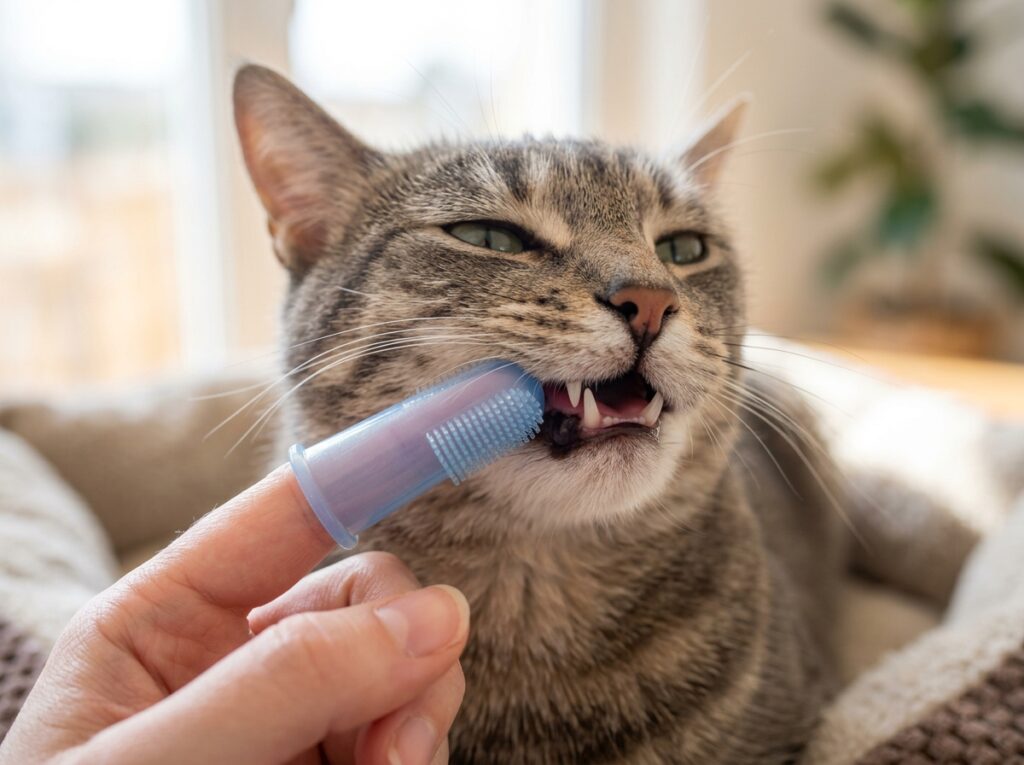
- The Right Tools: Always use an ultra-soft-bristled, feline-specific toothbrush or a silicone finger brush.
- Optimal Pressure: The pressure applied to the bristles should be incredibly light—just enough pressure so that you wouldn’t crack an eggshell.
3. Severe Feline Stomatitis and Immune System Disorders
Beyond mild gingivitis, there is always the possibility of Feline Chronic Gingivostomatitis (FCGS) or other viral infections like Feline Calicivirus (FCV). These conditions cause severe, widespread inflammation across the entire oral cavity due to an overactive immune response.
- Watch for Symptoms: Be on the lookout for excessive drooling, overwhelming bad breath, difficulty eating dry kibble, or a sudden decrease in grooming habits.
- Emergency Action: If your cat paws aggressively at their mouth or vocalizes in pain when you touch their muzzle, stop brushing immediately. Forced brushing will only worsen the trauma. Seek veterinary intervention right away.
A 3-Step Guide to Stress-Free Feline Dental Care
Step 1: Ditch the Brush for Gauze and Oral Spray
Never force a toothbrush into the mouth of a cat that is deeply terrified or in pain. Coercion aggravates existing wounds and creates a permanent phobia of dental care.
For the first week or two, simply wrap a piece of sterile gauze around your index finger. Apply a pet-safe oral sanitizing spray to the gauze and gently touch the outer lips and gums. Let them get used to the sensation. Never use human mouthwash containing alcohol, as it is highly toxic to felines.
Step 2: Positive Reinforcement with High-Palatability Toothpaste
Cats respond much better to positive reinforcement than forced compliance. To stop your cat’s gums bleeding when brushing, you first need them to stay calm.
Purchase an enzymatic pet toothpaste flavored like chicken, malt, or salmon. Initially, treat the toothpaste purely as a delicious snack. Let them lick a small amount right off your fingertip. This builds a positive, rewarding association with the taste. Never use human toothpaste, as ingredients like xylitol and fluoride are deadly to cats.
Step 3: Perfecting Your Brushing Angle and Technique
Plaque accumulates fastest and heaviest on the outer surfaces of the upper maxillary molars. Once your cat accepts the gauze and toothpaste, transition to focusing on these specific areas.
- The 45-Degree Angle: Hold the bristles lightly at a 45-degree angle where the tooth meets the gumline.
- Gentle Motions: Use tiny, circular vibrations rather than harsh back-and-forth scrubbing. Start with the easily accessible canines and slowly work your way to the back molars.
- Pro Tip: You do not need to pry your cat’s mouth wide open! Simply lifting the corner of their lips to brush the outer surfaces is highly effective for plaque control. For more behavioral tips, check out our comprehensive
feline health and wellness guide.

Long-Term Oral Health Strategies for Your Feline Friend
Daily brushing remains the absolute gold standard for maintaining a healthy mouth and preventing instances of cat gums bleeding when brushing. If daily care is practically impossible, aim for a minimum of three times a week to see real preventative benefits.
If your cat simply will not tolerate brushing no matter what, consider supplementary options like VOHC-approved dental chews, oral care probiotics, or plaque-softening water additives. However, remember that these are aids, not complete replacements for mechanical brushing.
Your cat’s strong teeth and healthy gums are built through your gentle touch and consistent dedication. Starting tonight, follow this 3-step guide to slowly transform dental care from a bloody battleground into a peaceful, rewarding routine. Have you experienced challenges with your cat’s dental hygiene? Share your first brushing attempts or your biggest struggles in the comments below!