I still vividly remember the day I bought the most luxurious, plush “magic” bed for my dog. I was so excited for him to use it, but to my dismay, he completely ignored it. Instead, every single night without fail, he would wiggle right into the narrow space between my legs. At first, I felt incredibly proud and loved—after all, it meant he adored my company, right? But the reality of the situation quickly set in. I would wake up with a stiff neck and aching back because I couldn’t move an inch all night. Worse, whenever I accidentally tossed and turned, my poor pup would wake up startled and wide-eyed. I couldn’t help but worry about my dog sleeping between legs all night, wondering, “Is this really okay for his sleep quality and mine?”
Table of Contents
The Instinctual Reasons for a Dog Sleeping Between Legs
To truly understand the psychology behind a dog sleeping between legs, we have to look deep into their wild canine instincts. By nature, dogs seek out narrow, dark “dens” as their safest hiding spots. When you lie down, the V-shaped space created by your legs provides the perfect physical structure that fulfills their biological need for absolute security and comfort.
Furthermore, human legs have a high concentration of sweat glands. This spot allows your dog to directly feel your body heat and smell your familiar scent, which brings them immense psychological relief.
Pack Animal Instincts and Contact Comfort
Back in their wild pack animal days, dogs relied heavily on “contact comfort.” They slept pressed tightly against their pack members to guard against stealthy predators and harsh cold weather. This survival instinct remains incredibly strong in our modern house pets.
You might notice this behavior intensifying during times of external stress. For instance, you will often find a dog sleeping between legs during a loud thunderstorm or neighborhood fireworks. By tucking themselves deeply between your legs, they are protecting their most vulnerable areas (the abdomen and the back) while relying on you as their ultimate protector.
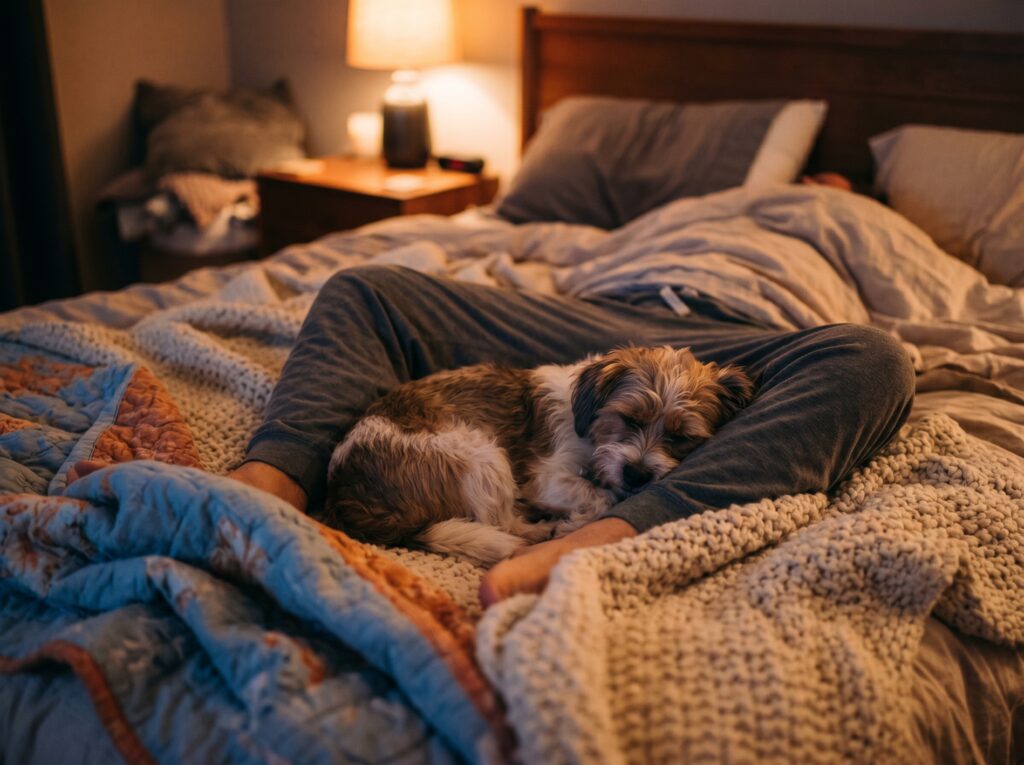
Is a Dog Sleeping Between Legs a Sign of Anxiety?
Many owners find themselves wondering if a dog sleeping between legs is a sign of something more serious than just seeking warmth. The truth is, the intense desire to maintain continuous physical contact with an owner every single second is a hallmark trait of “Velcro Dog” syndrome.
According to guidelines provided by the [🔗American College of Veterinary Behaviorists], a significant number of dogs suffering from separation anxiety exhibit following and clinging behaviors even when the owner is present in the home. If your dog feels sheer terror at the thought of being physically separated during the night, this is a strong early warning sign of an underlying anxiety condition.
When Comfort Turns into Over-dependence
The key is distinguishing between a simple need for warmth and dangerous hyper-attachment. If the habit of a dog sleeping between legs causes them to panic, whine, or bark anxiously the moment you shift your weight, you should suspect an over-dependence issue.
If they absolutely refuse their own comfortable bed and exhibit compulsive behaviors like licking their paws raw or pacing when you leave the room, it is highly recommended to seek professional behavioral intervention or learn more about [🔗dog separation anxiety].
How to Gently Stop a Dog Sleeping Between Legs
If you want to gently address the issue when a dog sleeping between legs becomes a problem for both your sleep quality and their mental health, here are some highly effective environmental improvements you can implement:
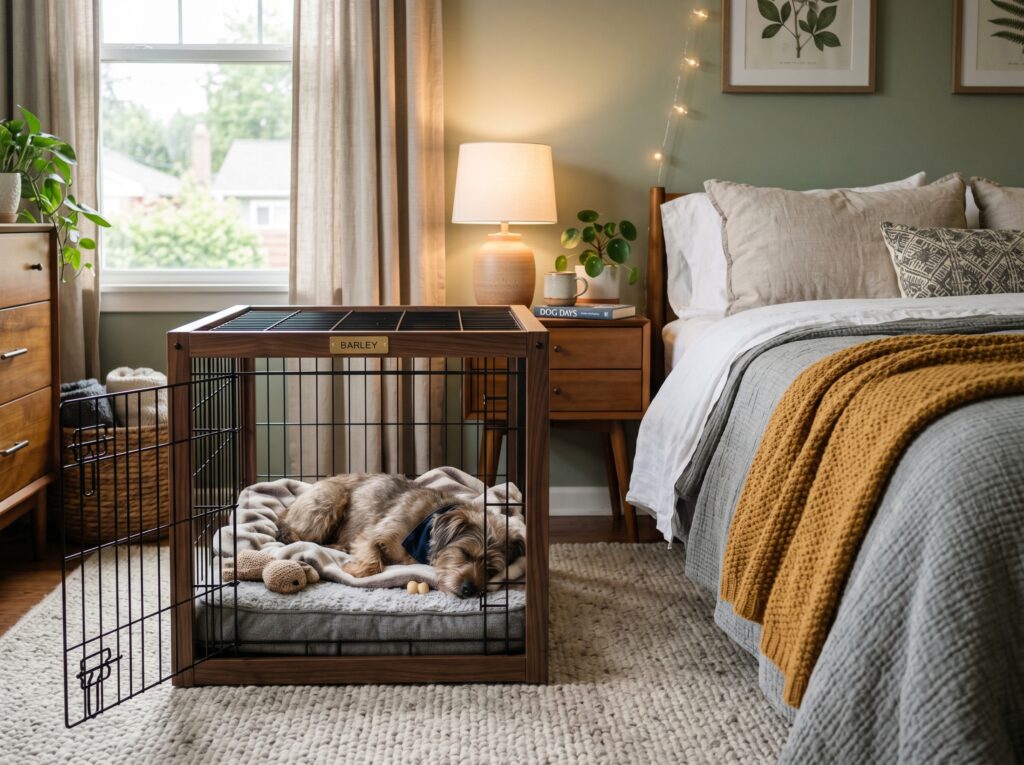
- Positive Crate Training: The goal is to help them recognize their own kennel as their primary safe haven. Create positive associations by placing their favorite treats or nose-work toys inside the crate.
- Systematic Desensitization: Forcing an immediate separation will only cause immense grief. Start by shifting their position to your feet, then to a bed on the floor, and finally into the crate. Gradually increase the physical distance over several weeks.
- Use Stress Relief Aids: Leave an unwashed piece of your clothing in their designated sleeping area so your scent remains. Utilizing scientifically proven DAP (Dog Appeasing Pheromone) sprays can also provide significant relief.
Final Thoughts on a Dog Sleeping Between Legs
Ultimately, you need to look beyond the immediate habit of a dog sleeping between legs and focus on promoting long-term emotional well-being for your pet. While this sleeping posture itself is not a terrible disease, a behaviorally healthy dog should be able to enjoy high-quality sleep on their own comfortable cushion without requiring constant physical contact.
As a loving owner, display consistent leadership by setting healthy sleep boundaries. Ensure that your pet’s underlying anxiety isn’t ignored under the guise of simple affection.
Where does your furry friend usually sleep at night? Do they have a unique sleeping habit? Share your experiences with us in the comments below!