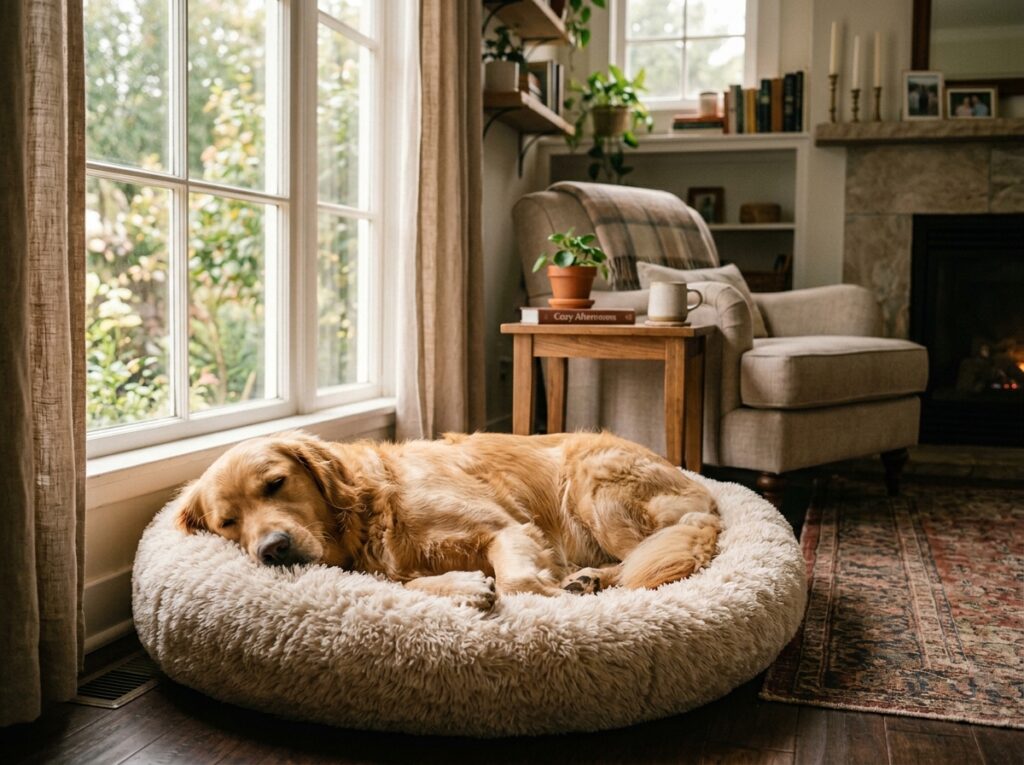
![A relaxed golden retriever resting on a soft bed showing why do dogs sigh when content]](https://greenbone7.com/wp-content/uploads/2026/06/Golden_Retriever_lying_on_bed_202606121147.jpeg)
The other day, I was sitting in the living room when my dog, who had been lying quietly beside me, suddenly let out a massive, human-like “phew!” My heart completely dropped. “Does my dog have a secret worry I don’t know about?” I panicked. “Is he secretly depressed because I haven’t played with him enough today?” If you are a pet parent, you have probably heard this deep breath and worried just like I did, wondering to yourself, “Exactly why do dogs sigh so heavily?”
Well, here is a comforting spoiler: unlike humans, a dog’s sigh doesn’t automatically mean they are overwhelmed by sadness or despair. In fact, it is a crucial behavioral cue that marks a shift in their physical or emotional state. Sometimes, it happens when their autonomic nervous system finally relaxes, and other times, it happens when their expectations fall flat. Understanding the true answer to “why do dogs sigh” requires us to look closely at their body language and the context of the situation. However, because a sigh can sometimes mask underlying pain, such as groaning, we need to know how to tell the difference between a natural physiological habit and a health issue.
Table of Contents
2 Main Meanings: Why Do Dogs Sigh in Different Situations?
When analyzing your furry best friend’s vocalizations, the secret lies in their eyes and their overall posture.
1. The Positive Signal: Half-Closed Eyes (Extreme Relaxation)
When people ask, “why do dogs sigh?”, they often overlook the most common and beautiful reason: pure, unadulterated relaxation. If your dog is resting with their eyes half-closed or fully shut, you can breathe a sigh of relief yourself. This is a highly positive signal indicating that their parasympathetic nervous system has activated, leading to emotional and physical unwinding.
This behavior typically occurs right after they have burned off physical energy—like after a long walk, a satisfying meal, or a fun play session. By letting out a deep breath, your dog is essentially saying, “Ah, I can finally relax.” It is a perfectly normal physiological response.
- Key Body Language: Lying down on a soft cushion or your lap (their safe space), letting go of all body tension, and exhaling deeply with a soft expression.
2. The Negative Signal: Eyes Open with Chin on Paws (Boredom or Disappointment)
On the flip side, another common reason behind “why do dogs sigh” is tied to mild frustration or boredom. If your dog is staring at you with wide-open eyes, resting their chin heavily on their front paws, the meaning changes entirely. This is a passive expression of disappointment—a realization that they aren’t getting what they want.
Perhaps they were staring at you hoping for a treat or waiting for a walk, but you didn’t react. When they realize their efforts are futile, they let out this sigh to “reset” their emotional state and give up on the expectation.
Important Note: If this frustrated sighing becomes a chronic daily habit, it could lead to stress. If you notice this, it’s a great time to introduce indoor enrichment like nosework toys or a quick training game to keep their mind sharp and engaged.
Medical Red Flags: Why Do Dogs Sigh With a Wheeze?
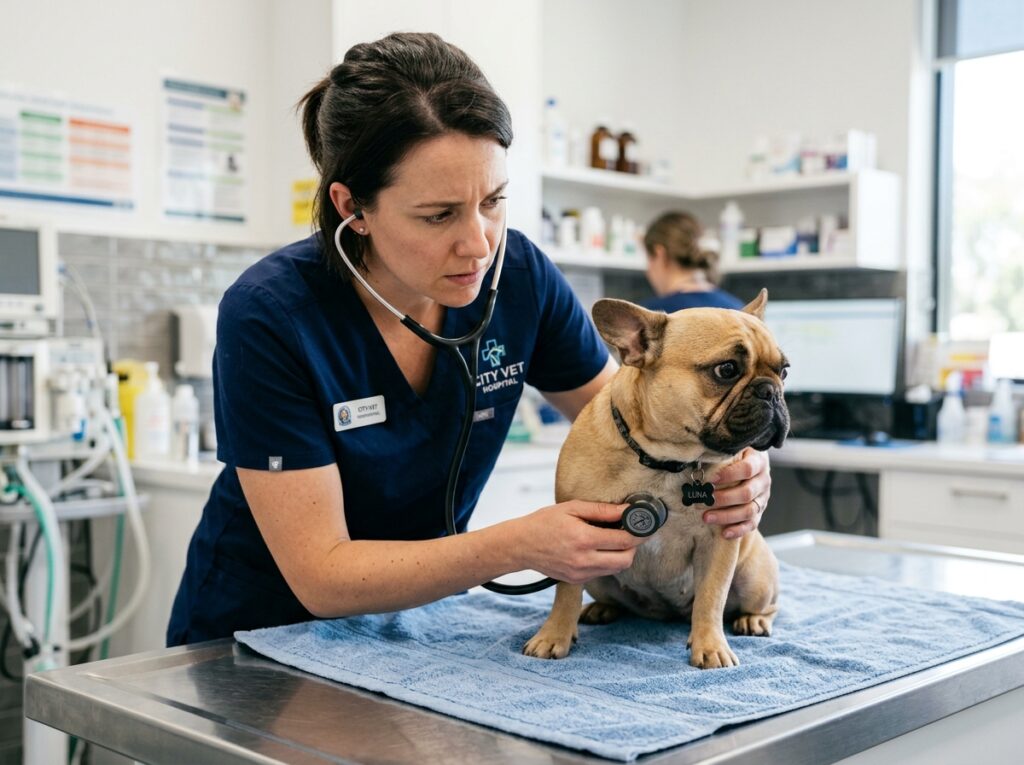
If your dog’s sigh sounds less like a release of air and more like a struggle, it is time to pay close attention. Sighing that is accompanied by wheezing (stridor), groaning, or frequent coughing is not a simple emotional expression—it is a cry for help regarding respiratory discomfort.
This can be especially prevalent in flat-faced breeds dealing with Brachycephalic Obstructive Airway Syndrome (BOAS), or it could indicate bronchial or heart issues. If your dog’s resting respiratory rate exceeds the normal range of 15 to 30 breaths per minute, or if you notice their gums changing color, please consult the American Kennel Club (AKC)resources on canine health or visit your local vet immediately.
- Check Point: If your dog’s chest and abdomen heave drastically when breathing, or if they cannot lie down comfortably and must stand up to sigh, do not wait—get a professional veterinary checkup to ensure their airways are clear.
Dog Depression vs. Stress Management
Many pet parents leap to the conclusion of “depression” after a single sigh, but canine depression or severe lethargy involves much more. You must look for a consistent decrease in appetite, a sudden drop in activity levels, rejection of physical affection, and drastic changes in sleep patterns.
If your dog is dealing with mild stress or anxiety, supplements formulated to calm the mind can be highly beneficial. Ingredients like L-Theanine (which increases calming alpha brain waves), Alpha-casozepine (Zylkene, derived from milk), and L-Tryptophan are excellent options.
- Pre-Feeding Warning: Never rely solely on treats or supplements. Because lethargy can stem from hidden medical issues, always consult your veterinarian before introducing new calming aids.
Conclusion: Understanding Your Dog’s Deep Breaths
Now that we have thoroughly explored the question of “why do dogs sigh“, you can observe your pet with confidence rather than panic. Whether their eyes are open or closed, and whether they are resting their chin or sprawling out, a sigh is a natural, essential form of canine communication.
If they are just a bit bored, a quick game or a walk will instantly lift their spirits. However, always stay vigilant for raspy breathing or signs of physical distress that might require a doctor’s visit.
Does your dog have a specific moment when they always let out a dramatic “phew”? Share your funny or sweet stories in the comments below!