Running Greenbone and crafting pet snacks for over a decade, I’ve met countless furry friends. But the ones that always pull at my heartstrings are the older dogs—those who can no longer crunch on their favorite hard treats. Recently, while researching and developing our ‘Senior Line’ at Greenbone, it hit me again just how desperate the need is for easy-to-chew, safe foods for dogs with severe dental wear or missing teeth. If your old friend is struggling to chew, finding safe, soft fruits for senior dogs becomes a top priority. A gentle, sweet fruit can bring so much joy to their golden years!
Why Safe, soft fruits for senior dogs Are Essential
For older dogs with weak teeth, soft-textured snacks are absolutely mandatory to prevent tooth fractures or swallowing difficulties. The right soft fruits for senior dogs provide a wonderful alternative, offering fresh, tender bites that don’t require heavy chewing.
However, you cannot just hand over any fruit blindly. Before introducing soft fruits for senior dogs, always evaluate your dog’s swallowing capability, digestive health, and any underlying conditions like kidney disease or diabetes. Furthermore, always remove all peels, seeds, and stems. Only offer the softest flesh to avoid indigestion or severe gastrointestinal blockages.
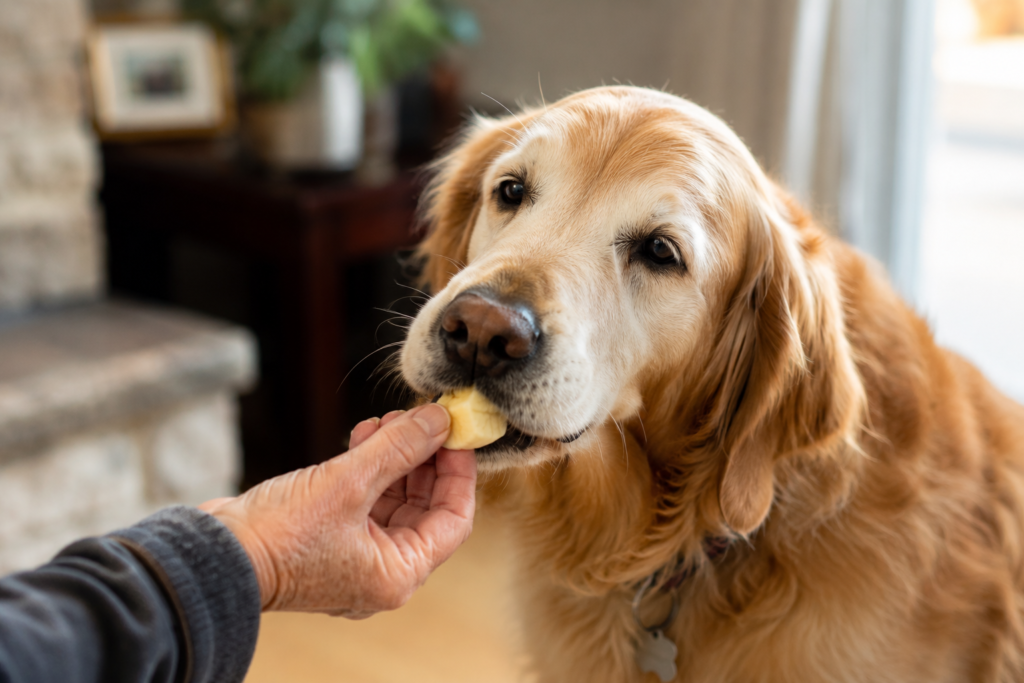
Top 3 Recommended soft fruits for senior dogs
When trying out new treats, preventing choking hazards is the golden rule. Always cut the fruit much smaller than bite-size or mash it into a puree. Even the healthiest soft fruits for senior dogs can cause gas or loose stools depending on their constitution, so monitor their bathroom habits closely during the first few days. Let’s explore the best options!
1. Bananas: Easy to Digest and Energy-Boosting
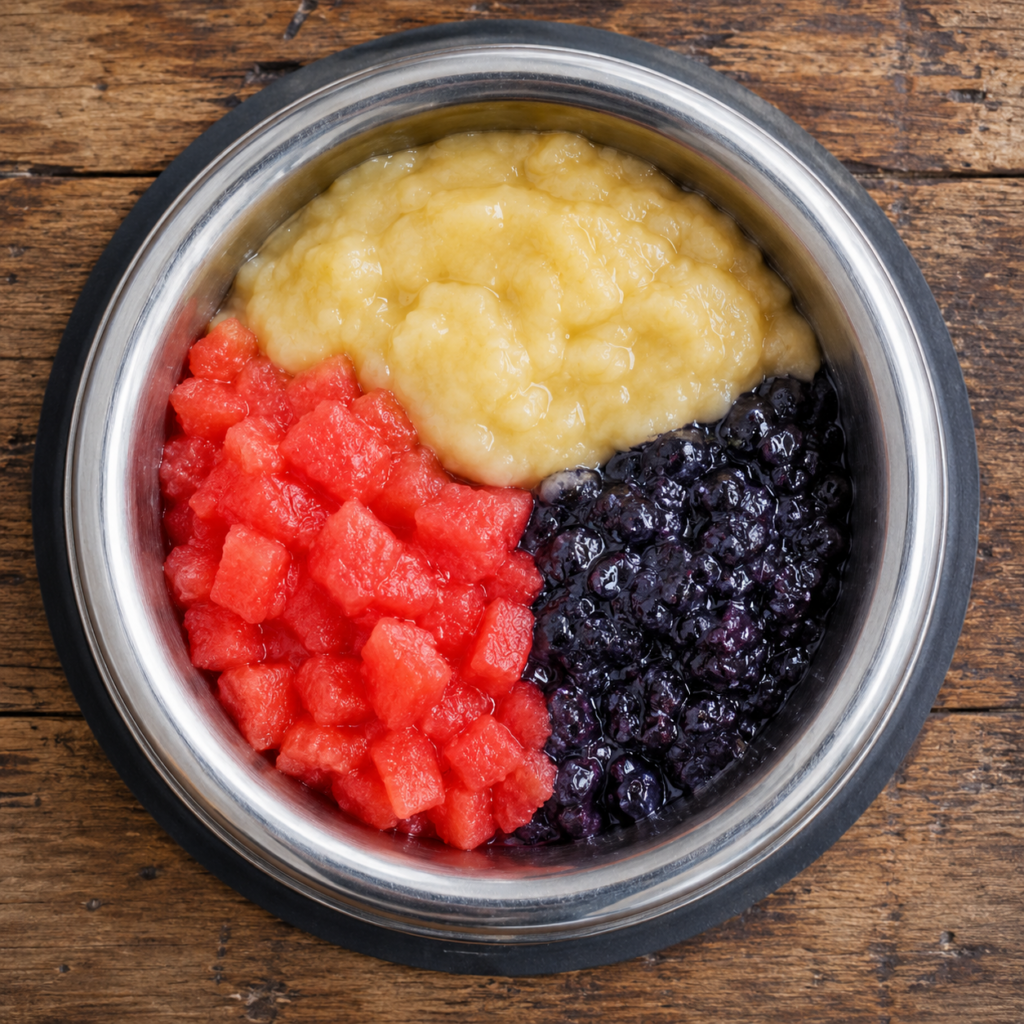
Bananas have an incredibly soft texture, making them one of the best choices for senior dogs with almost no teeth. They can easily mash it just using their gums. Rich in potassium, Vitamin B6, and Vitamin C, bananas are excellent for restoring energy.
- Caution: Because they are high in carbs and sugar, limit the amount for dogs needing weight management.
- Feeding Tip: Bananas can slow down bowel movements. If your dog suffers from constipation, keep the portion minimal and serve it thinly sliced or fully pureed.
2. Melons and Watermelons: Hydrating and Easy to Chew
With a water content of about 90%, watermelons and melons are fantastic hydration sources. They are highly beneficial for older dogs who might not feel thirsty often, aiding in overall hydration and urinary tract health.
- Caution: Seeds are hard to digest, and the tough rind can cause tooth damage and gastrointestinal distress. Never feed these parts!
- Feeding Tip: Only provide the soft red or yellow flesh cut into tiny pieces. However, diabetic dogs should have strictly limited access due to the sugar content.
3. Blueberries: Antioxidant-Rich for Anti-Aging
Blueberries are packed with antioxidants like anthocyanins. They are a superb treat that can help prevent cellular damage and maintain cognitive function in aging dogs.
- Caution: Because of their small, round shape, dogs might swallow them whole, posing a choking risk.
- Feeding Tip: For seniors with bad teeth, it is safest to cut them in half or mash them. They are relatively low in calories, making them less of a burden for dogs on a diet. You can read more about safe dog nutrition on the
[🔗American Kennel Club (AKC)]website.
Crucial Precautions When Feeding soft fruits for senior dogs
Older dogs often suffer from hidden chronic diseases even if they look healthy on the outside. Knowing which foods to avoid based on these conditions is critical for their safety.
Diabetes and Kidney Issues
For senior dogs with reduced kidney function, their ability to excrete potassium drops. Feeding them high-potassium fruits like bananas or melons can severely strain their health.
- Diabetes: The sugar in fruits can spike blood sugar levels. You should ideally pause fruit treats or strictly consult a vet for proper portion control.
- No Grapes: Regardless of underlying conditions, grapes and raisins are highly toxic and can cause acute kidney failure. Never feed them!
💡 Important Note: Managing the diet of a dog with underlying conditions (kidney, diabetes, heart disease) is highly sensitive. Rather than relying solely on internet information, always consult your attending veterinarian for a professional diagnosis.
Daily Limits and Allergy Testing for soft fruits for senior dogs
The total amount of all treats, including fruit, should never exceed 10% of your dog’s recommended daily caloric intake. Breaking this rule can lead to nutritional imbalance.
- Allergy Test: When introducing a new fruit, start with a tiny piece the size of your fingernail. Monitor them for at least 24 hours for signs of vomiting, diarrhea, skin redness, or itching.
- Portion Control: To prevent obesity, calculate their calorie limit based on their “target weight” (ideal weight) rather than their current weight. You can check our
[🔗senior dog diet guide]for more detailed meal planning.
Conclusion
Fruit should only ever be a supplemental treat that brings joy, never interfering with their intake of essential, nutrient-rich staple foods. Additionally, soft diets can cause plaque to build up faster. After feeding soft fruits for senior dogs, pay extra attention to their dental hygiene by brushing or using oral care products.
Because an older dog’s digestive capabilities can shift as they age, regular vet check-ups are highly recommended to ensure their diet matches their current health status. Seeing our old companions comfortably enjoying safe and tasty treats is the greatest joy for us pet parents. By carefully checking their teeth and health, I hope this guide to soft fruits for senior dogs helps you gift your furry friend a sweet and vibrant day!
💬 What special treats do you give your senior dog with weak teeth? Share your precious know-how in the comments below!