For over a decade, I have been deeply involved in the pet snack manufacturing and distribution industry, constantly researching better ingredients and recipes for our furry companions. Throughout my journey of studying animal behavior and nutrition to create healthier treats, I’ve frequently encountered widespread nutritional misconceptions among pet owners. One of the most shocking realizations is the massive gap between popular media images and actual animal health. Today, I want to fact-check one of the most famous myths: the truth about feeding rabbits carrots.
Table of Contents
The Fairytale Myth vs. The Reality of Feeding Rabbits Carrots
Animation and storybooks always show a cute bunny munching on an orange carrot. Because of this adorable image, many owners consider it completely natural to offer these root vegetables. However, wild rabbits rarely dig up root vegetables. Their natural diet consists of rough grasses, weeds, and leafy greens growing in harsh environments.
When it comes to feeding rabbits carrots, you must remember that the orange roots are quite high in carbohydrates and sugar. For a fragile rabbit digestive system, a carrot is basically a highly stimulating, high-calorie dessert. Replacing their essential fiber intake with this sugary snack can lead to severe systemic diseases.
Top Side Effects of Feeding Rabbits Carrots Excessively
1. Diabetes and Obesity Risks from High Sugar
100g of carrots contains about 4.7g of sugar. This easily exceeds a small rabbit’s daily limit. Long-term exposure can induce insulin resistance and lead directly to metabolic diseases. Furthermore, excessive sugar turns into body fat, causing obesity. Obese rabbits cannot reach down to consume their nutrient-rich cecotropes (special feces), a vital behavior for their survival.
- The Result: Nutritional imbalance and painful skin dermatitis around their hindquarters. If your rabbit drinks excessive water or gains weight rapidly, consult a vet immediately.
2. Gastrointestinal (GI) Issues from Microbial Imbalance
Rabbits are hindgut fermenters with a massive cecum, where microbial fermentation extracts nutrients. Overloading this delicate area with high-sugar root veggies destroys the internal pH balance. This reduces beneficial bacteria and allows harmful bacteria to multiply, resulting in deadly gas buildup known as Gastrointestinal (GI) Stasis. Many severe cases at the vet clinic stem from a lack of fiber caused by improper rabbit treats.
3. Poor Dental Attrition and Malocclusion
A rabbit’s teeth grow continuously by 10 to 12 cm a year. They must grind them down by chewing silica-rich rough hay all day like a millstone. A soft, sweet diet reduces the frequency and intensity of their chewing. Unworn, overgrown teeth (spurs) can pierce their inner cheeks or tongue, leading to painful abscesses (Malocclusion). The absolute best prevention is unlimited hay, not feeding rabbits carrots daily.
The Veterinarian-Approved Rabbit Diet Guide
The Golden Ratio of Timothy and Alfalfa Hay
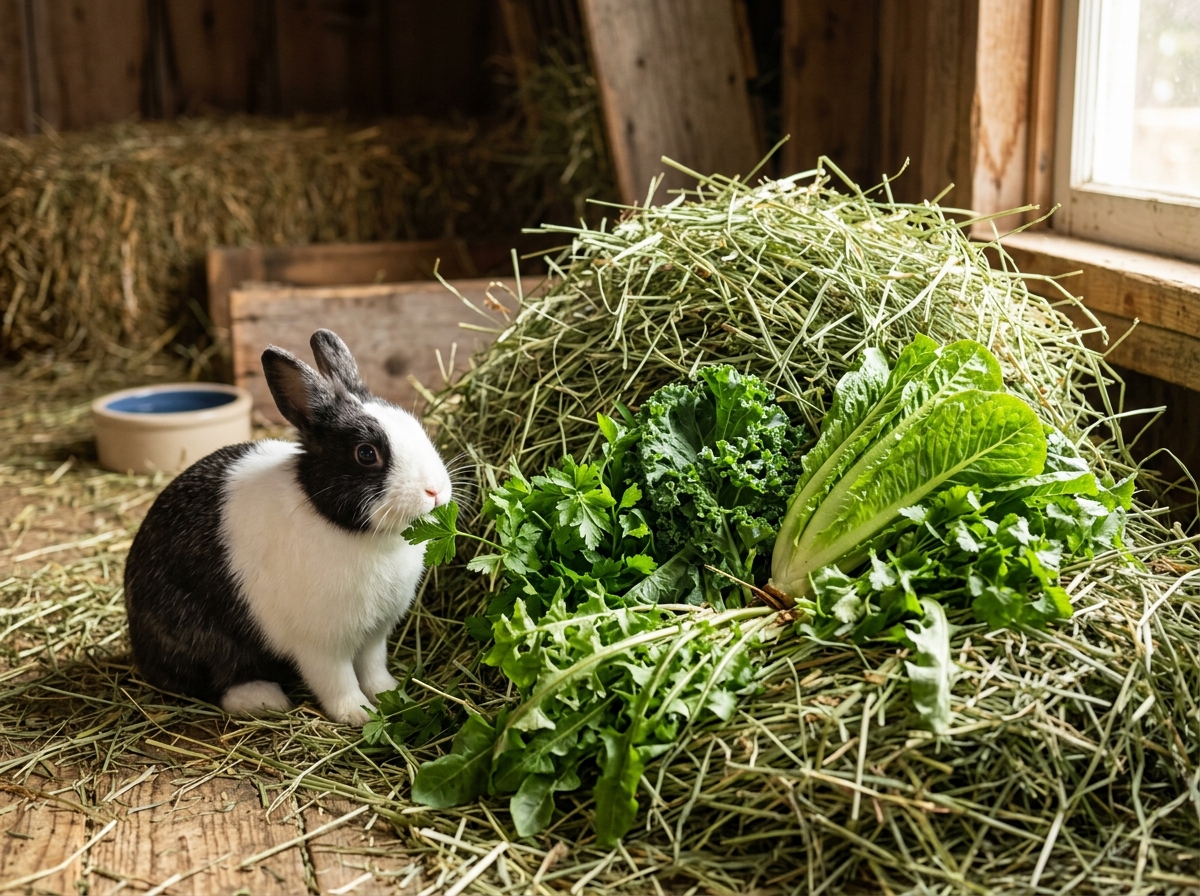
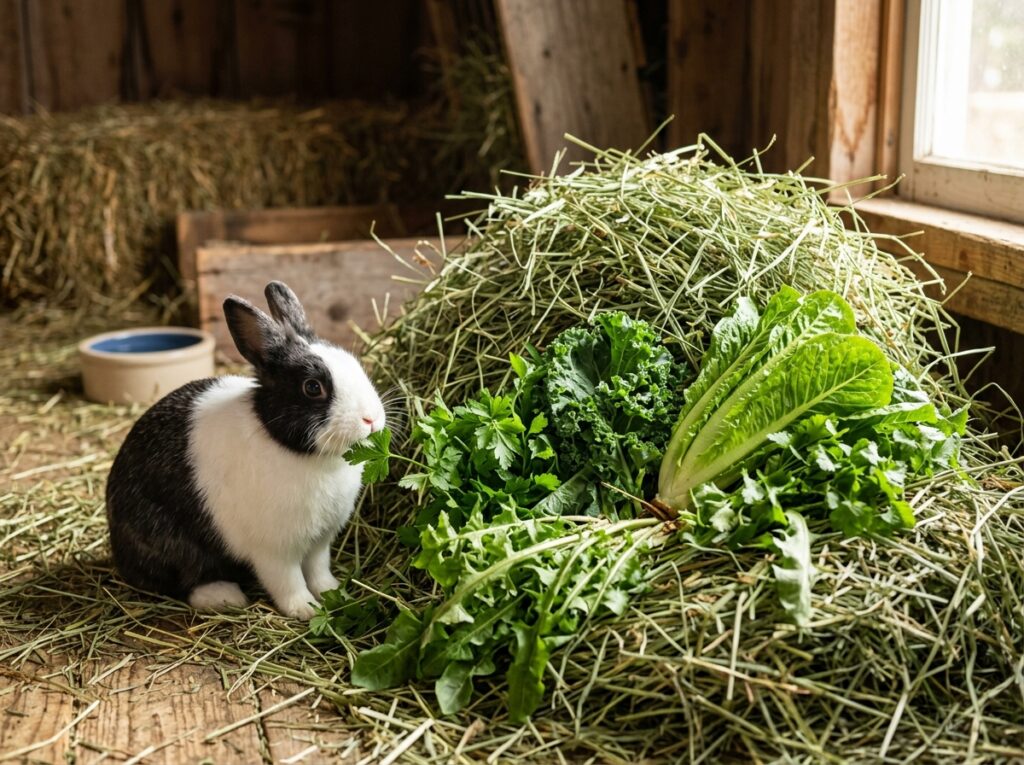
A rabbit’s staple diet must change with age. Growing bunnies under 6 months need Alfalfa hay—rich in calcium and protein for strong bone growth. Adult rabbits over 6 months must switch to Timothy hay, which is high in fiber and low in calcium, to prevent bladder stones.
- Unlimited Hay: 80~85% of the daily diet
- Fresh Leafy Greens: 5~10%
- High-Quality Pellets: 5~10%
- Treats (like carrots): Less than 5%
The Correct Way to Offer Carrots as Treats
If you insist on feeding rabbits carrots, remember it is an occasional treat, not a staple. Limit it to 1 to 2 teaspoons (about 5-10g) per day for an adult rabbit—no larger than an adult’s thumb joint. Feed it only 1 to 2 times a week as a special training reward.
- Nutritional Tip: The green carrot tops are actually much healthier than the orange root! They are packed with fiber and low in sugar.
Safe Green Alternatives to Carrots
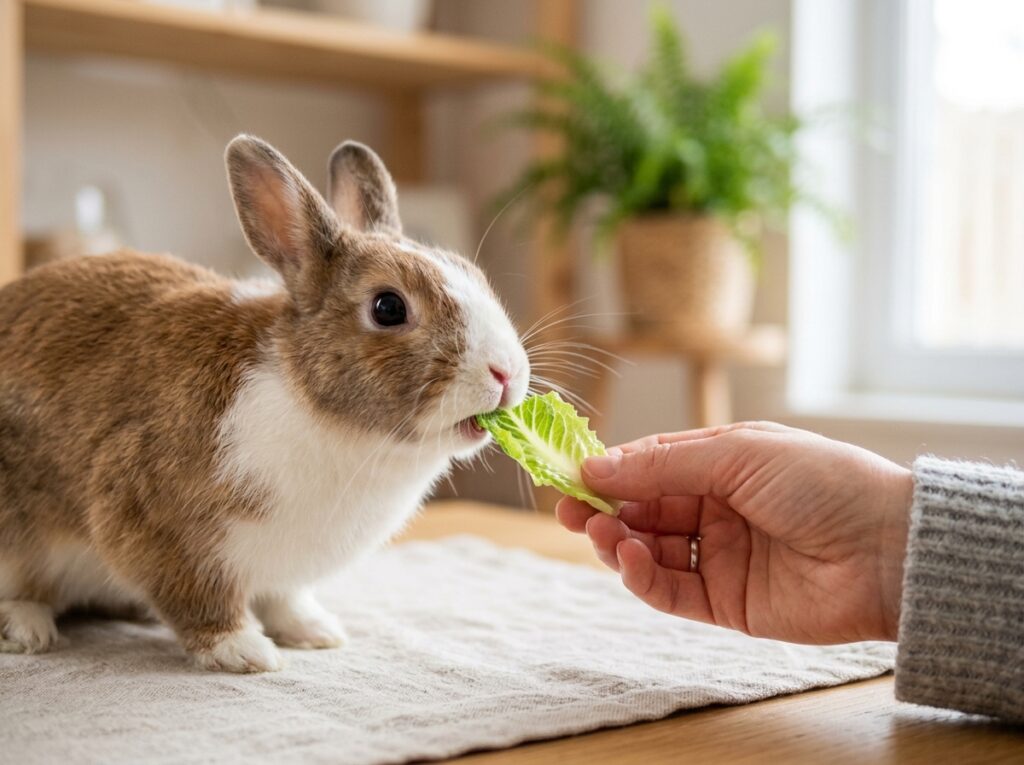
Instead of sweet roots, opt for high-fiber, low-sugar leafy greens. Celery (cut into small pieces to avoid choking on strings), romaine lettuce, bok choy, parsley, and cilantro are excellent choices.
- Warning: Avoid iceberg lettuce completely. It contains a compound called Lactucarium that can severely harm your rabbit’s digestive system. You can always check safe vegetable lists at the ASPCA. Always introduce new veggies in tiny amounts and monitor their droppings for 24 hours before increasing the portion.
Conclusion: A Healthier Future for Your Bunny
Ultimately, feeding rabbits carrots is like giving a child candy every single day. While we do it out of love, it risks their gut health and causes complicated dental diseases. The absolute best way to ensure a long, healthy life for your bunny is “unlimited hay.”
Having spent years evaluating healthy pet foods, I urge you to reduce the carrots today. Fill their bowls with premium Timothy hay and safe leafy greens instead, and enjoy a much longer, happier life with your furry friend! What is your bunny’s favorite healthy green treat? Share your feeding tips in the comments below!