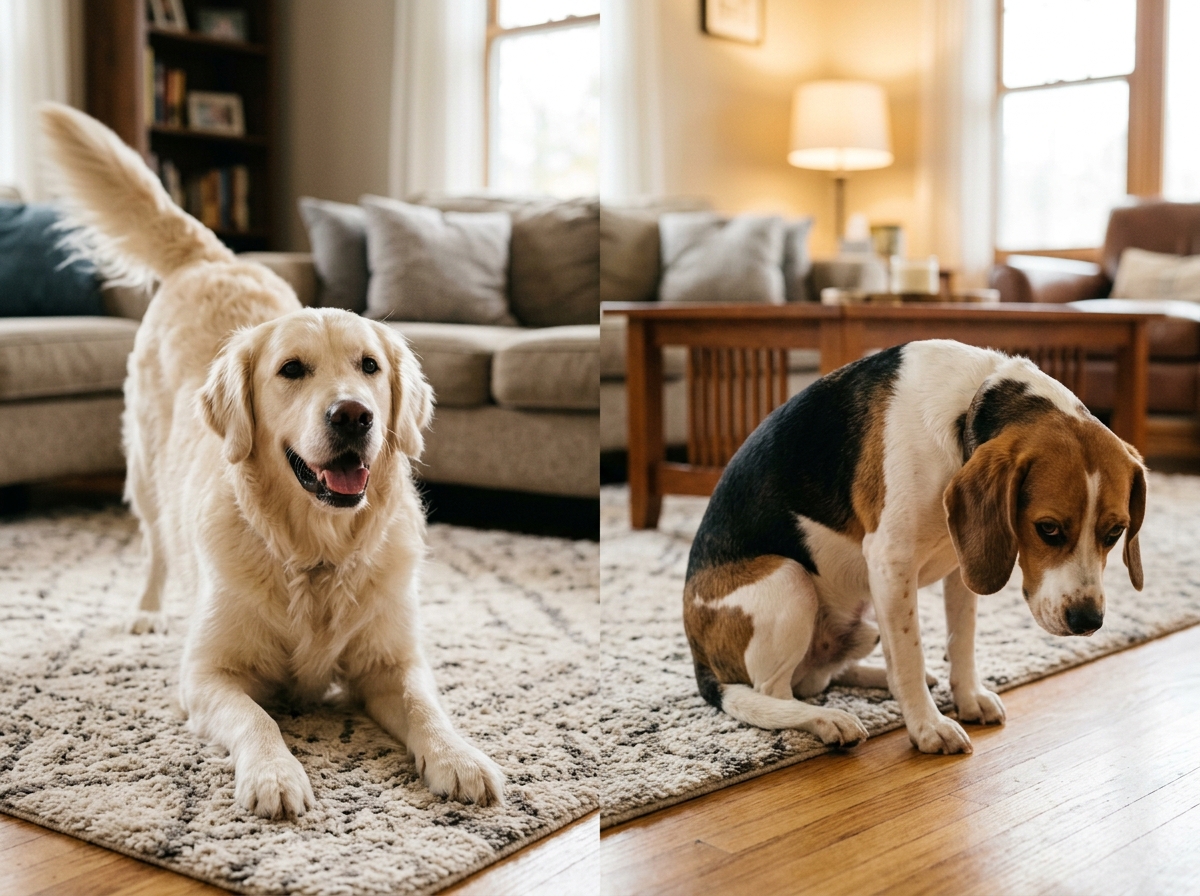
The living room is quiet. Your dog suddenly dips their front legs to the floor, pushing their hips high into the air. At first glance, it looks like a standard stretch after a long nap. But as the seconds tick by—one minute, then two—they remain frozen in that exact posture. Their eyes are slightly narrowed, their tail is firmly tucked between their legs, and a faint tremble runs through their body. This isn’t a playful greeting. It’s a silent cry for help.
Understanding the subtle differences between a joyful “play bow” and the dangerous dog praying position can literally save your furry best friend’s life. While one means your dog is ready for a game of fetch, the other is a classic defensive posture designed to relieve severe abdominal pressure caused by gastrointestinal distress or pancreatitis. Let’s dive into how you can decode your dog’s body language before it’s too late.
Table of Contents
Visual Clues: Dog Praying Position vs. Play Bow
To the untrained eye, both postures look like a simple stretch. However, observing the duration and muscle tension reveals an entirely different story.
Duration and Stance Stability
A play bow is highly dynamic. When a dog initiates play, they will drop their chest to the floor and raise their hips, but this posture usually lasts only one to two seconds. They will bounce around, shifting their weight eagerly. Conversely, the dog praying position is static. Because the animal is trying to physically lift pressure off their inflamed internal organs, they will hold this rigid stance for several seconds to several minutes, rarely moving from the spot.
Muscle Tension and Facial Expressions
When a dog is happy, their face shows it. A playful stretch is accompanied by relaxed facial muscles, an open mouth, and a soft expression. However, when experiencing abdominal pain, their entire body becomes stiff. You might notice them squinting, holding tension around their muzzle, or engaging in uncomfortable, heavy panting without having exercised.
Reading the Mind Through Eyes and Tails
Your dog’s tail and gaze are the most honest indicators of their current physical state.
Eye Contact
A dog eager to play will lock eyes with you. They shoot you bright, curious glances, waiting for you to make the first move. If they are in pain, eye contact breaks down. A dog holding the praying posture will often stare blankly at the floor or fixate on a random corner of the room with a dull, distant look.
The Tell-Tale Tail
Watch the tail closely. In a healthy play bow, the tail is held high and wags broadly from side to side. In stark contrast, a dog suffering from gastrointestinal issues will tightly tuck their tail between their hind legs or let it drop limply toward the floor with zero movement.
Desire for Interaction
After a normal stretch, a healthy dog will immediately approach you for affection or play. A sick dog will do the exact opposite. They may seek out a dark corner to hide, actively avoid your touch, or flinch away if you try to approach them.
Normal Stretches vs. Dangerous Pancreatitis Symptoms
How do we differentiate a morning stretch from a medical emergency? It comes down to context and accompanying symptoms.
The Healthy Morning Stretch
It is perfectly normal for a dog to stretch to loosen up their joints after a deep sleep. Usually, this is followed by a healthy “shake off” (a common calming signal) and an immediate return to their normal gait. They might even give a gentle play slap against the floor to burn off waking energy.
The Pancreatitis Connection
When a dog suffers from canine pancreatitis, the inflammation causes agonizing pain in the upper abdomen. The praying posture mechanically pulls the stomach and organs away from the spine, offering fleeting relief.
- Accompanying Symptoms: Keep an eye out for concurrent signs such as vomiting, loose stools, or severe lethargy.
- The Treat Test: Appetite is a major indicator. Try offering them a notoriously high-value treat. If they completely ignore something they usually go crazy for—like a savory beef liver, a chewy turkey tendon, or a piece of oven-baked meat—it is a massive red flag that their digestive system is in deep distress.
The Ultimate Action Guide for Pet Parents
If you suspect your dog is doing the praying stretch, do not panic. Follow this simple checklist to determine your next steps.
At-Home Vitality Checklist
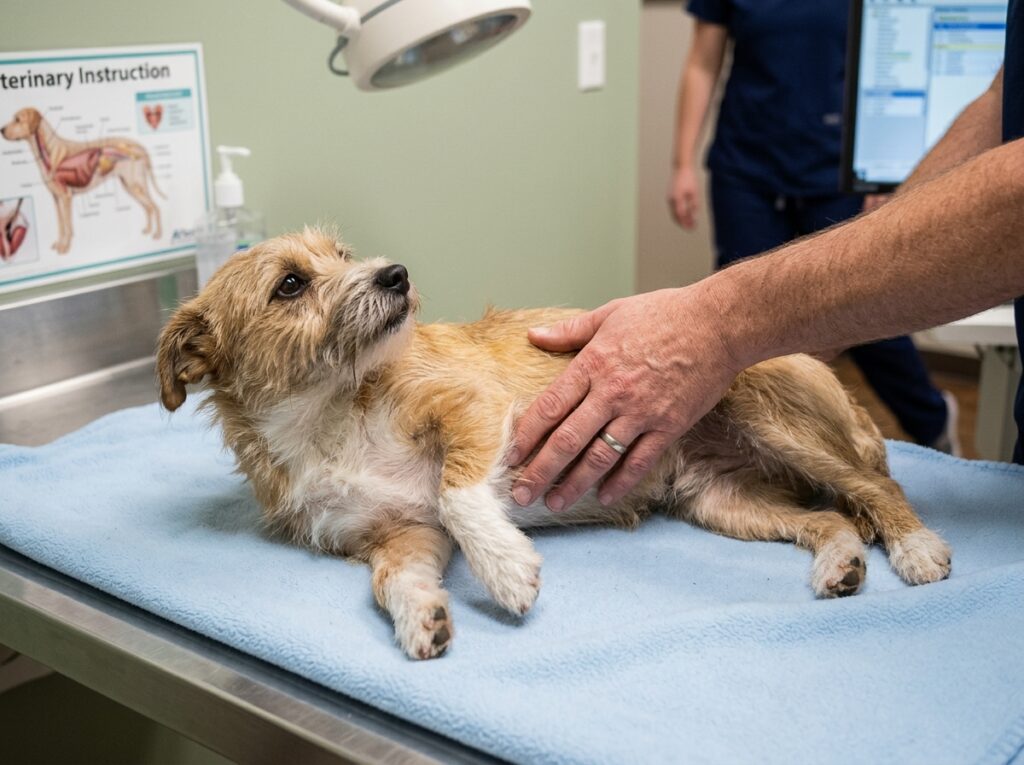
- Belly Check: Very gently stroke their abdomen just behind the ribcage. If they dramatically flinch, tense up, or try to escape, they are in pain.
- Gum Color: Lift their lip and check their gums. They should be a healthy bubblegum pink. If they look pale or grayish, this indicates poor circulation or shock.
- Breathing Rate: Monitor their breathing while they are resting. Unusually rapid or shallow breathing is a clear indicator of distress.
When to Hit the Golden Time for the Vet
If the strange stretching posture is repeated multiple times throughout the day, accompanied by even a single episode of vomiting or diarrhea, call your vet. Emergency care is required immediately if you notice pale gums, extreme lethargy where they collapse, bloody stool, or a visibly bloated stomach.
Pro Tip: Before you rush to the American Kennel Club recognized local veterinary clinic, quickly record a 10 to 20-second video of your dog in the posture. Showing this footage to your vet takes out the guesswork and drastically speeds up the diagnostic process.
While the exact cause could range from foreign body ingestion to gastric dilatation-volvulus (GDV) or pancreatitis, never rely solely on home remedies when abdominal pain is involved. Trust your gut, read your dog’s signals, and seek professional help.
What cute habits does your dog have when they stretch? Have you ever had a scary moment where you confused a play bow with pain? Share your experiences in the comments below!