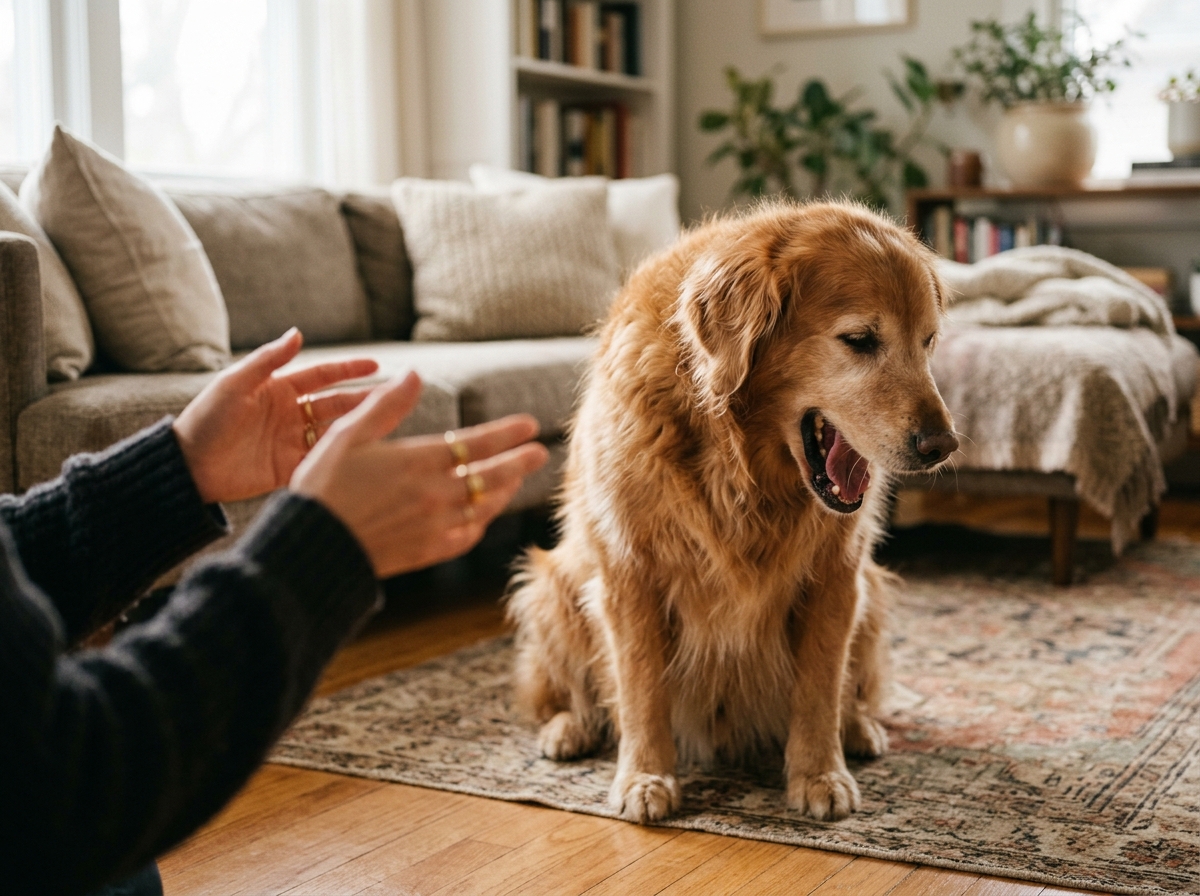
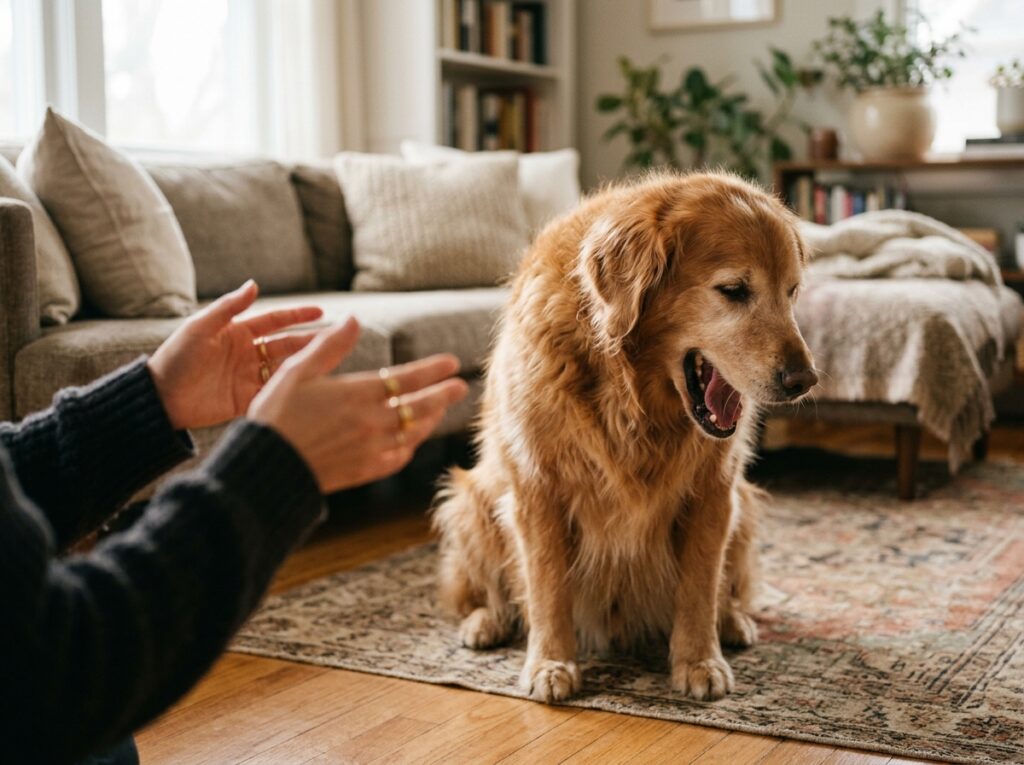
Hello! I am a fellow pet parent and the CEO of Greenbone, a pet snack brand I have been proudly running for over 10 years. Over the years, I’ve met countless furry friends, but recently, I had a heartbreaking moment with my own dog at home. My pup secretly chewed up the prototype packaging for our upcoming “The Senior” snack lineup. I was so upset that I raised my voice, “Who did this?!” Suddenly, right in front of me, my dog let out a massive, jaw-stretching yawn.
At first, I felt a little betrayed. I thought, Are you really bored while I’m telling you off? But as someone who constantly studies veterinary behavioral science, I quickly realized the true meaning behind this action. My heart sank, and I felt incredibly sorry. Today, for all the pet parents who might have misunderstood their furry friends just like I did, I want to explain the scientific facts behind dog yawning when scolded.
Table of Contents
Did You Misunderstand Dog Yawning When Scolded?
When we try to interpret our pet’s behavior from a human perspective, tragic misunderstandings often occur. One prime example is a dog yawning when scolded. While humans yawn when they are tired or bored, a dog’s yawn carries a completely different meaning.
Your pet’s yawn is not an expression of boredom. It is a physiological response that appears when their anxiety or stress levels skyrocket. Interpreting this by human standards is called the fallacy of anthropomorphism. According to research from the [🔗American Veterinary Society of Animal Behavior], the reasons behind a dog yawning when scolded are clearly defined:
- An Indicator of Extreme Stress: It is absolutely not an act of rebellion or an attempt to ignore the owner.
- Involuntary Heart Rate Control: It is an unconscious physical response designed to lower a spiking heart rate caused by tension, supplying oxygen to the brain to calm themselves down.
💡 In short: If you see your dog yawning when scolded, remember they are not thinking, “This lecture is boring.” Instead, they are desperately telling you, “I’m terrified, my heart is going to explode,” and they are trying their best to soothe themselves.
The Magic Language of Peace: Calming Signals
To truly understand this non-verbal communication, we need to learn about “Calming Signals.” Systematized in the 1990s by Turid Rugaas, a renowned Norwegian animal behaviorist, this theory encompasses about 30 non-vocal communication methods used by dogs.
This instinctual “peace-keeping language” evolved over centuries of pack living to maintain harmony.
- Blocking Unnecessary Conflict: It is a language system naturally developed to prevent serious fights or physical conflicts in advance.
- Appeasement Behavior: Modern veterinary behavioral science classifies this as a crucial appeasement behavior used in communication between dogs and even with humans.
When we raise our voices or lean forward to discipline them, our dogs perceive it as a direct threat. In this moment, a dog yawning when scolded is an earnest visual signal directed at you. It’s a message of peace saying, “Please calm down,” and a sincere plea: “I have no intention of fighting back, so please don’t be mad.”
If you mistake this desperate signal for rebellion and get angrier, your dog will experience severe fear and frustration. This requires extreme caution, as they might eventually fall into “Learned Helplessness,” completely giving up because they feel they cannot control any outcome.
Dog Body Language You Must Know During Discipline
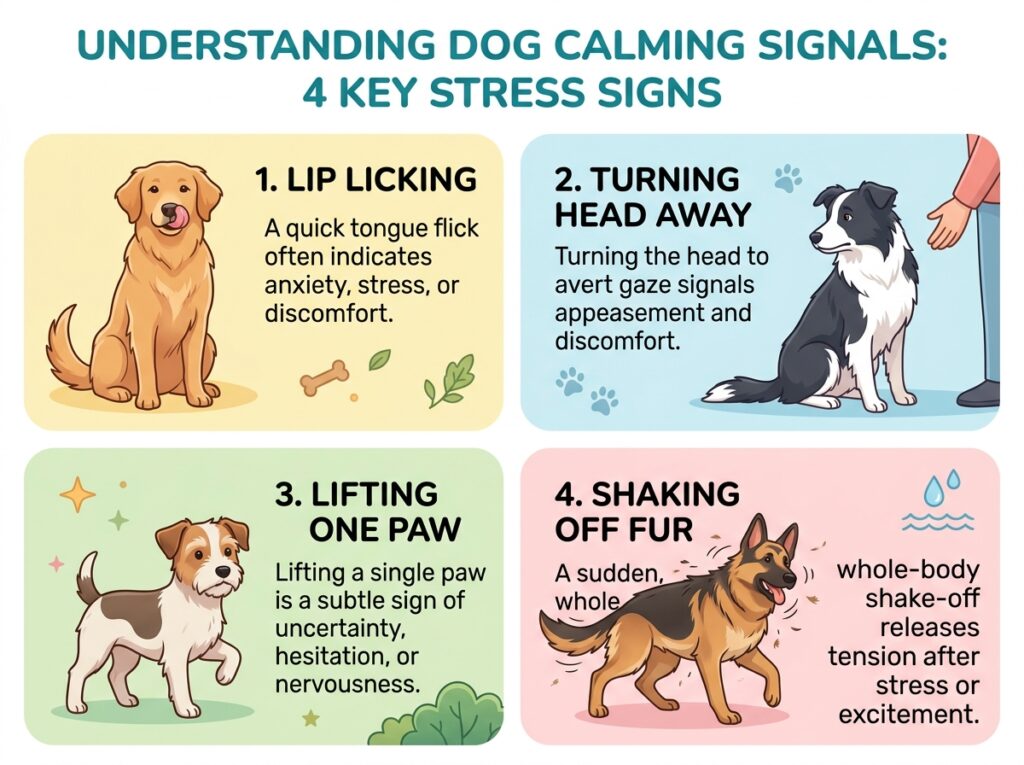
In addition to yawning, dogs express their stress in various ways. In my earlier story, my dog also dropped his gaze to the floor, actively avoiding my eyes while yawning. Here is a table of common calming signals that frequently accompany a dog yawning when scolded.
| Body Language | Meaning & Hidden Intent |
| Lip licking | Licking the nose or lips to soothe their own anxiety and tension. |
| Averting gaze | Turning the head away and avoiding direct eye contact to show absolutely no hostility. |
| Paw lift | Briefly lifting one front paw and pausing in an anxious, uncertain situation. |
| Shake off | Shaking the whole body to relax tense muscles and literally brush off extreme stress. |
※ Health Check Point: If your dog yawns too frequently or licks their lips excessively even when not in a stressful situation, please pay close attention. This could be a sign of physical discomfort, such as oral pain or gastrointestinal issues. We highly recommend visiting an [🔗animal hospital] for a veterinarian’s proper diagnosis.
How to Resolve Misunderstandings and Build Trust
So, how should we react when our dogs send us these vital calming signals?
The most important first step is immediate pressure cessation. If your dog sends a calming signal, it means they have grasped the severity of the atmosphere and are terrified. You must lower your voice and stop right away.
- The Futility of After-the-Fact Scolding: Scolding your dog long after an accident has occurred has minimal behavioral correction effect in veterinary medicine.
- Positive Reinforcement: Instead of pointing out bad behavior, utilizing instantly praising and rewarding them when they do the right thing—is much more effective.
Guardians can actively use calming signals, too. When your dog is overly anxious, intentionally yawning broadly and slowly, or gently averting your gaze, can greatly help ease their tension.
Becoming a Wise Guardian Who Reads Their Pet’s Mind
Accurately understanding your dog’s body language goes beyond simply satisfying curiosity; it is the fundamental first step in ensuring animal welfare and preventing abnormal behavior.
If you constantly ignore your dog’s calming signals and back them into a corner, even the gentlest dog might instinctively show aggressive behavior to defend themselves out of sheer terror. Conversely, a guardian who listens to their dog’s subtle language and responds correctly is always perceived as a “Secure Base” they can trust and rely on.
Starting today, instead of getting angry when witnessing your dog yawning when scolded or turning their head, why not say, “You’re really scared, aren’t you? Okay, I’ll calm down,” and gently turn your gaze away? Proper understanding will bring you and your dog much closer and make your lives together infinitely happier!
💬 What calming signals does your dog show most often when being scolded? If you have your own warm and wise ways to handle it, please share them freely in the comments below!