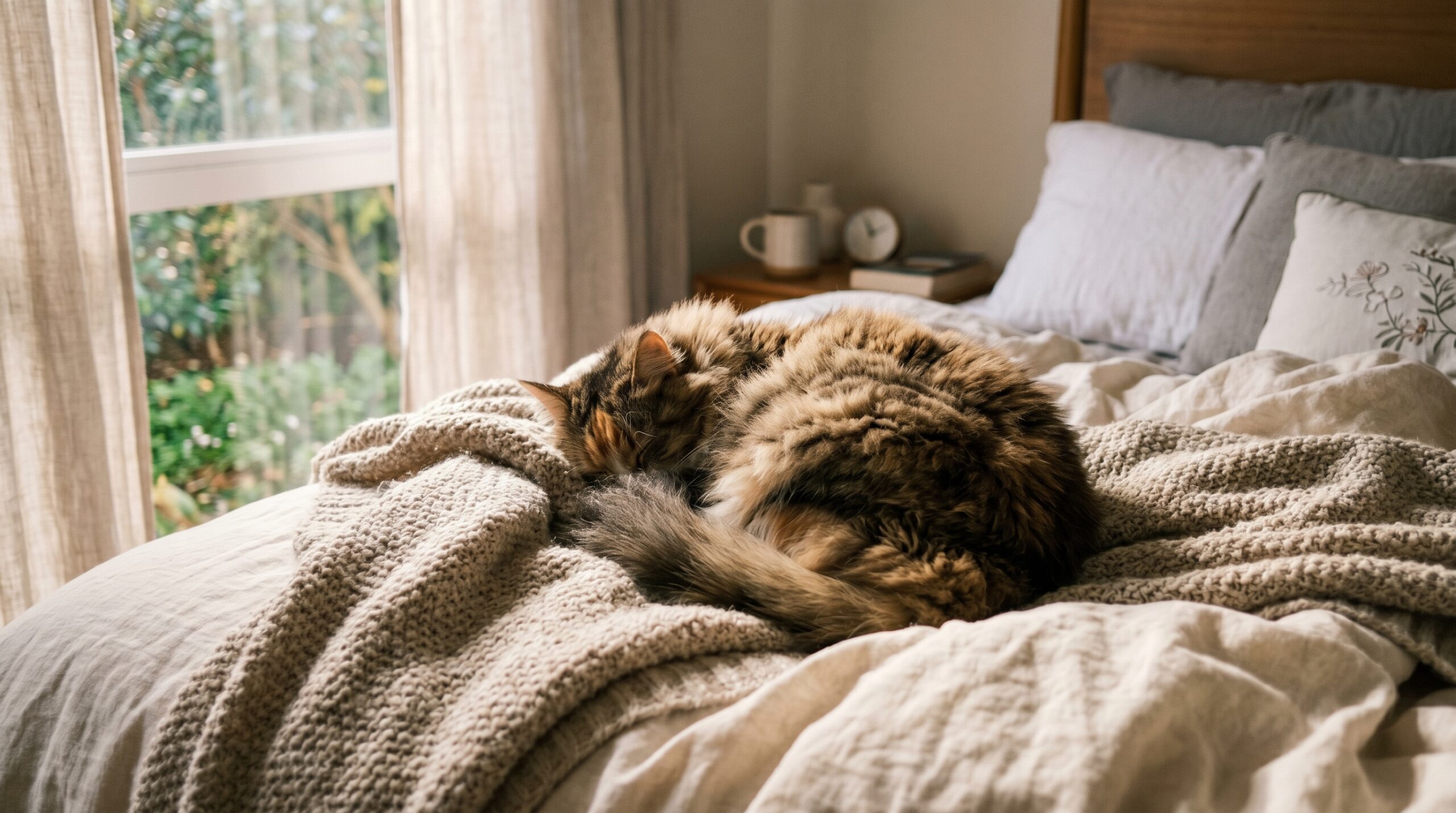
I still vividly remember waking up one lazy weekend morning, stretching my arms with a smile, only to open my eyes and find my fluffy furball’s behind hovering right over my nose. Yes, I had officially experienced a cat sleeping with bum in face, and I was completely baffled. At first, I thought my cat was ignoring me or even being slightly rude. However, as I started observing my pet’s daily routines and diving into veterinary behavioral science, I realized this quirky habit is completely misunderstood. If you’re a cat parent who frequently wakes up to a furry tail tickling your nose, don’t be offended. Let’s uncover the fascinating psychology behind your feline friend’s sleep positions and how to create the best environment for them.
Table of Contents
The Real Meaning Behind a cat sleeping with bum in face
The Ultimate Sign of Trust: You might feel slightly weirded out, but a cat sleeping with bum in face is actually a profound sign of absolute trust.
In the wild, a cat’s back is its most vulnerable blind spot, making it difficult to defend against sudden attacks. By turning their back and aiming their hindquarters at you, they are essentially saying, “I trust you to watch my back.” They are completely surrendering their most defenseless side to the person they feel safest with.
Furthermore, a cat’s scent glands are highly concentrated around the base of their tail and anal area. By positioning this part of their body near your face, they are actively trying to mingle their unique pheromones with yours. It is a powerful bonding ritual. So, the next time you find your cat sleeping with bum in face, know that it is a pure, instinctual declaration of love and intimacy. Feel free to gently pat their back in return!
Understanding Cat Sleep Positions and Instincts
Why do cats insist on sleeping on top of us instead of their expensive beds? It all boils down to their primal instincts and biological needs.
Temperature Control and Survival: A cat’s normal body temperature ranges from 37.7 to 39.2 degrees Celsius, which is slightly higher than ours.
To maintain this warmth while resting, they use our bodies like a biological heating pad. Additionally, survival instincts drive them to seek out the safest possible defensive zone. Instead of an exposed cold floor, they prefer elevated spots or lying directly on their trusted human. Clothes or blankets that carry a strong scent of the owner act as a massive psychological anchor, helping them release tension and relax their minds completely.
What Different Sleep Locations Mean
Cats are very specific about where they snooze. Here is what their chosen spot on your body reveals about their inner thoughts:
- At Your Head: The head area moves the least during sleep and radiates a lot of heat. Rather than a cat sleeping with bum in face, you might find them curled up on your pillow to enjoy uninterrupted warmth without being kicked.
- On Your Chest: This position allows them to feel the rhythmic beating of your heart and the rise and fall of your breathing. It mimics the deep emotional security they felt as kittens nursing with their mother.
- At Your Feet: They want to stay close to you, but they also want to maintain an escape route. This is a smart, instinctual choice that prevents them from getting squished if you toss and turn in your sleep.
Is Your cat sleeping with bum in face Due to Separation Anxiety?
While cuddling up to you is incredibly sweet, some owners worry if their clingy cat is suffering from separation anxiety.
Watch for Warning Signs: Simply wanting to sleep next to you isn’t enough to diagnose anxiety. However, you should pay attention to other behavioral clues.
If your cat exhibits excessive vocalization when you prepare to leave the house, sudden litter box accidents, or destructive scratching, these are clear indicators of severe emotional distress. Extreme clinginess at night, paired with over-grooming (licking their fur until bald spots appear) or a sudden drop in appetite when left alone, are red flags. If you notice these symptoms, it’s highly recommended to consult a professional veterinarian or check out authoritative resources like the [🔗ASPCA] to learn proper behavioral modification techniques.
Tips to Create a Stress-Free Sleeping Environment
As a pet parent, closely monitoring your cat’s sleep habits is essential for their overall well-being. If your cat suddenly changes their sleep position or hides away in unfamiliar spots, it could be a sign of physical discomfort or illness.
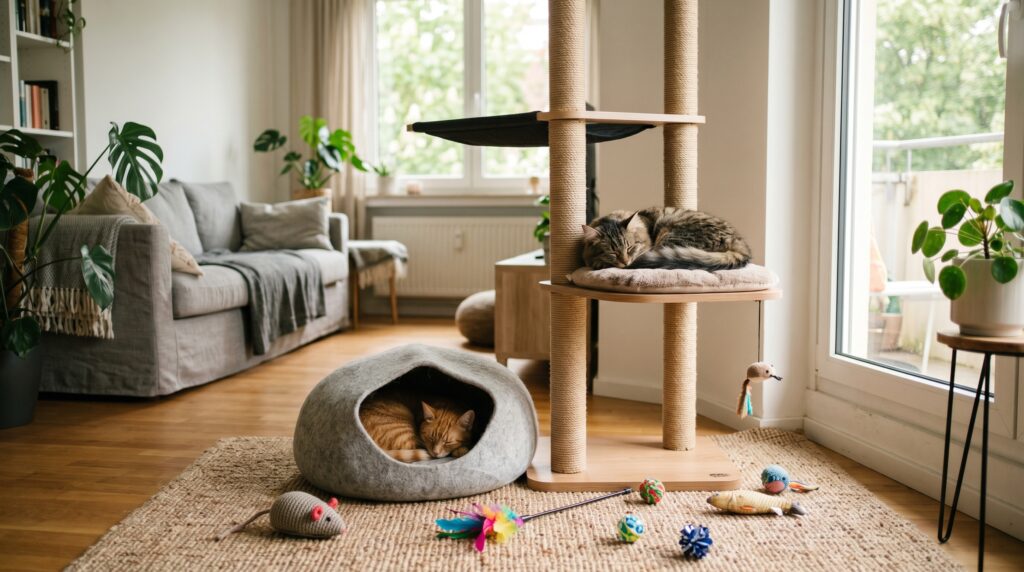
To address the root cause of an overly anxious cat sleeping with bum in face, try providing alternative safe spaces where they feel equally secure. Set up vertical territories like tall cat trees, or place dark, cozy “cave beds” in quiet corners of your house. For more details on optimizing your home, check out our comprehensive [🔗cat behavior guide].
Additionally, using feline pheromone diffusers near their sleeping area can dramatically reduce stress. Don’t forget to engage them in a vigorous play session with a wand toy right before bedtime! Burning off that excess hunting energy will ensure both you and your cat enjoy a deep, uninterrupted night of sleep.
Conclusion
Understanding your furry friend’s behavior brings you one step closer to an unbreakable bond. So, the next time you encounter your cat sleeping with bum in face, don’t push them away out of frustration. Recognize it for what it truly is: the highest compliment and a display of absolute trust from your beloved companion.
Where does your cat usually sleep at night? Do you have any funny bedtime stories with your pets? Share your unique experiences in the comments below!