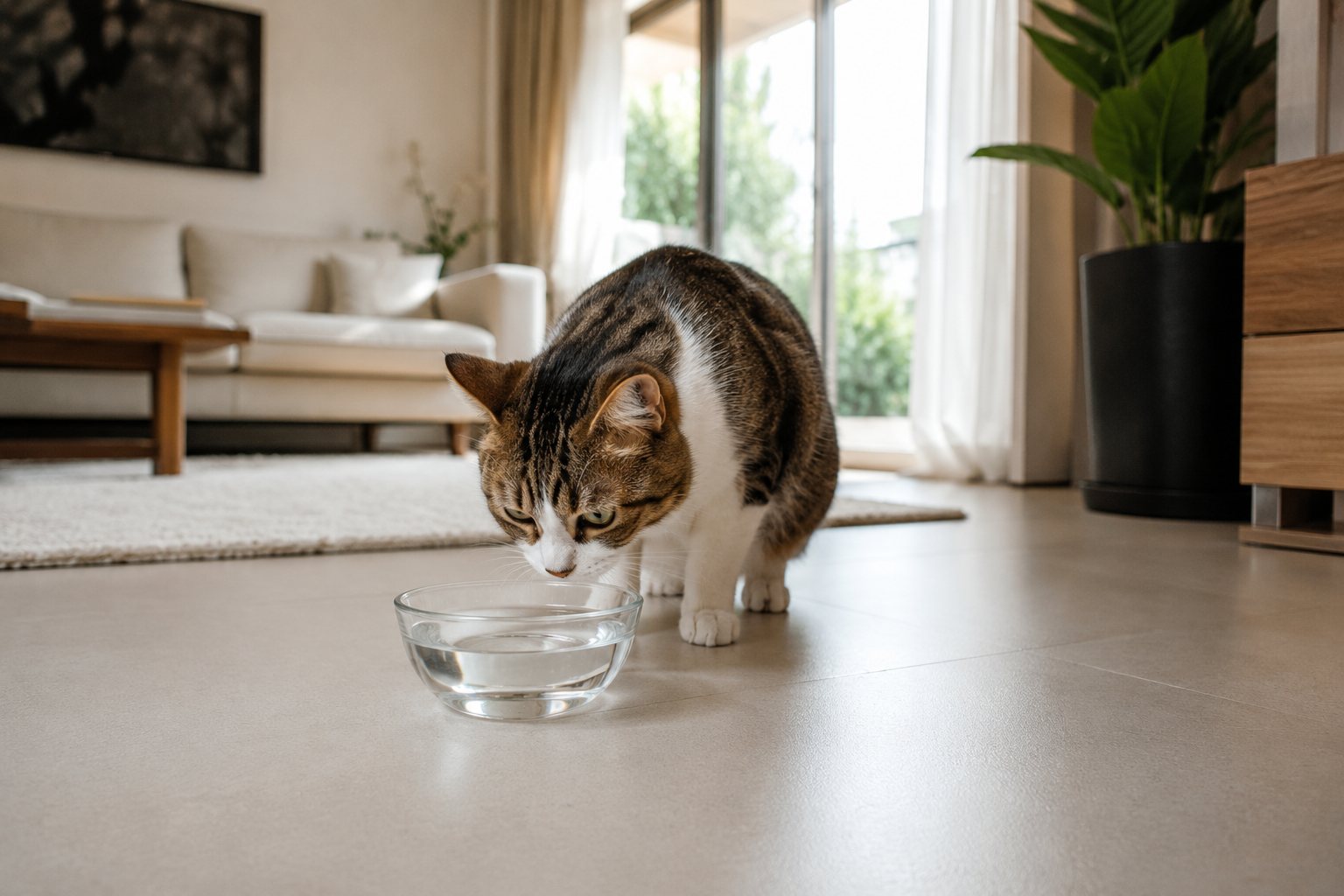
Have you ever caught your furry friend shoving their little face into your coffee mug on the desk just to steal a sip of water? At first, I thought my cat’s behavior was purely adorable, and I was always busy snapping photos of the moment. But recently, while cleaning the litter box, I noticed the size of the urine clumps (what we cat parents affectionately call “potatoes”) had noticeably shrunk, and my heart dropped.
After doing some frantic research, I realized that coveting my mug wasn’t just cute curiosity. It was a desperate behavioral signal rooted in a cat’s instinctual preference for “freshly drawn water.” Since cats originate from desert environments, their thirst drive is quite low, making their voluntary water intake minimal. A healthy cat needs about 40 to 50 ml of water per kilogram of body weight daily, a target that is incredibly hard to hit with a strictly indoor lifestyle.
When hydration is insufficient, their urine becomes highly concentrated, which is a leading cause of feline lower urinary tract disease (FLUTD) and severe kidney issues. Today, for all the cat parents who have panicked just like I did, I am going to share everything you need to know about optimizing your cat water bowl placement to naturally boost their daily hydration and keep them healthy.
Table of Contents
The Science Behind Cat Water Bowl Placement and Feline Behavior
According to feline behavioral experts, a drop in an indoor cat’s water intake is almost always tied to environmental factors—specifically the location, shape, and cleanliness of their water source.
Cats will only comfortably quench their thirst when they feel their water is safely located and perfectly clean within their territory. Poor cat water bowl placement can induce psychological stress, ultimately making them reluctant to drink.
The Wild Instinct: Why Water Next to the Food Bowl is “Contaminated”
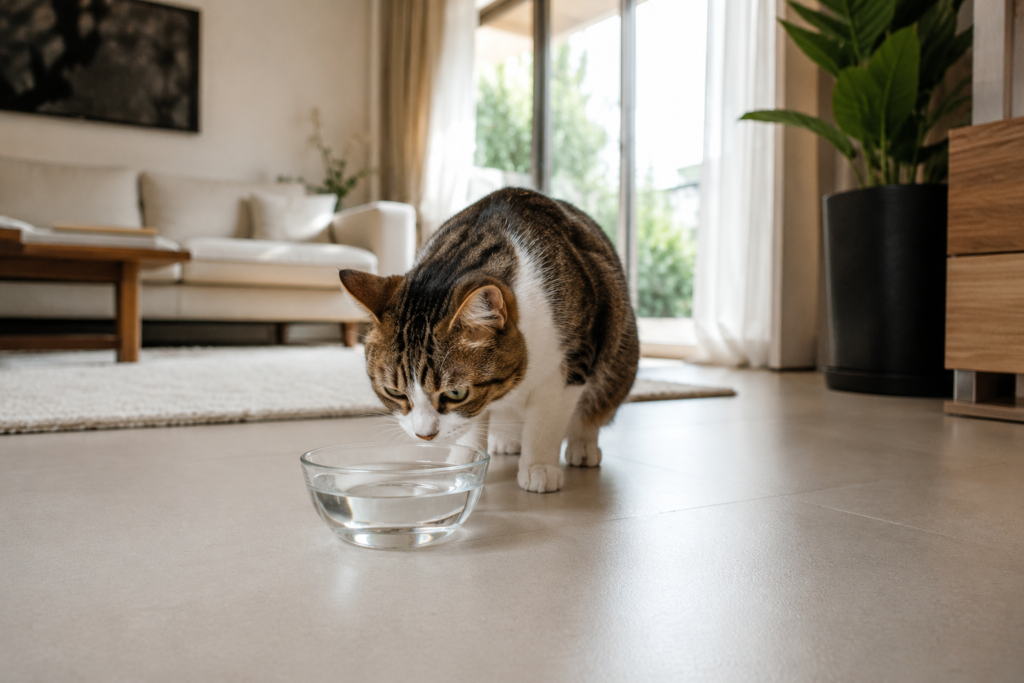
In my early days as a cat parent, I used a visually appealing two-in-one attached food and water bowl. I later learned that in the wild, cats instinctively avoid water located right next to their freshly caught prey (their food), viewing it as contaminated.
In reality, water placed right next to the food bowl easily gets polluted with kibble dust and grease, making it highly unsanitary. Commercially sold attached bowls can actually hinder hydration, so the golden rule of cat water bowl placement is to always separate their dining and drinking areas. If you want to learn more about setting up the perfect feline environment, check out our guide on [🔗indoor cat enrichment strategies].
The Real Reason Your Cat Obsesses Over Bathroom Puddles
Sometimes, you might catch your cat sneaking into the human bathroom to lick the puddles on the tile floor. Thanks to the tiles, the water stays cool, and the leftover droplets from your shower are perceived by the cat as “fresh, running water,” heavily stimulating their curiosity.
While this might look cute, it requires serious caution for a few reasons:
- Chemical Residue: Bathroom puddles often contain microscopic traces of shampoo, body wash, and cleaning detergents.
- Hygiene Issues: The damp bathroom environment harbors invisible bacteria that can negatively impact your cat’s gut health upon ingestion.
If your cat frequently repeats this behavior, it is a clear protest signal that they are dissatisfied with the temperature or freshness of their current water source, meaning it is time to reevaluate your cat water bowl placement.
Proper Cat Water Bowl Placement to Double Your Cat’s Water Intake
Simply filling a bowl to the brim doesn’t mean your cat will drink it. Following the principles of environmental enrichment, designing the right location and shape that makes the cat want to drink is the most effective approach.
Apply these cat water bowl placement setups around your home, and within a few days, you will experience the joy of scooping much heavier “potatoes” from the litter box!
The 1-Meter Rule: Separate Food and Water
It is highly recommended to physically separate the food bowl and water bowl by at least 1 meter (about 3 feet). If space permits, placing them in completely different rooms is even better.
Just by separating the water from the food, your cat can clearly distinguish their dining space from their resting and hydration space, granting them psychological comfort. To prevent contamination from waste, ensure the litter box is also kept as far away from the water station as possible.
The “Multiple Bowls” Strategy for Optimal Cat Water Bowl Placement
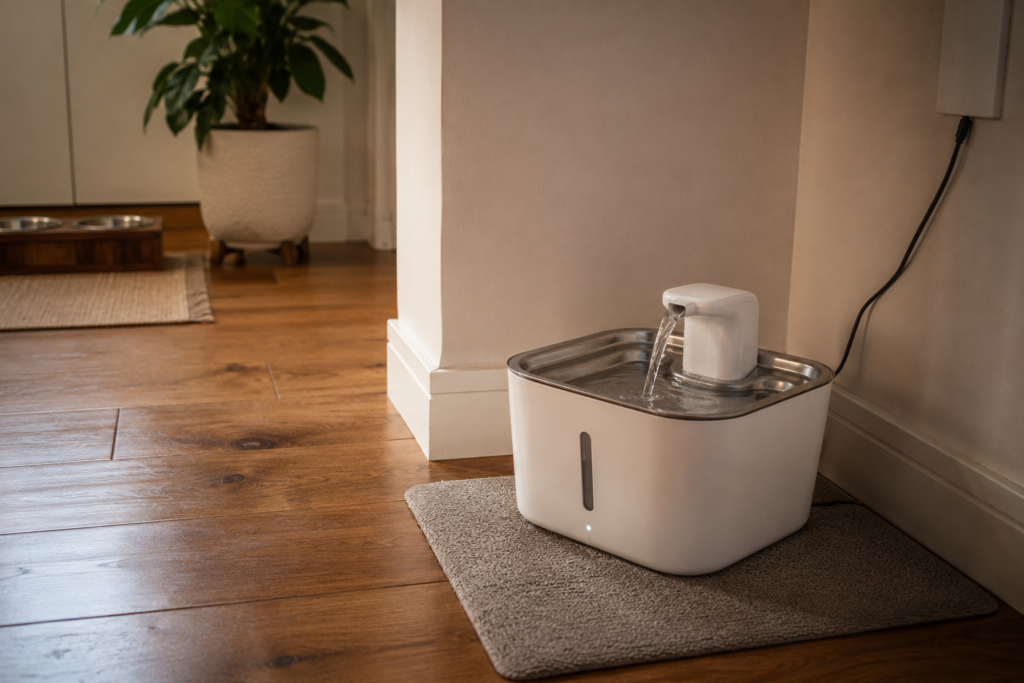
Even if you only have one cat, you should never have just one water bowl. A fundamental rule of cat water bowl placement is to have at least “number of cats + 1” water bowls available.
The key is to place them along their main traffic routes—the center of the living room, near the cat tree, or in a safe corner of a bedroom—so they can easily access water wherever they roam. Avoid blind spots where sudden noises occur (like next to a washing machine) or behind doors, as these areas can make your cat feel threatened.
Preventing Whisker Fatigue with Wide Bowls and Cat Fountains
A cat’s whiskers are incredibly sensitive sensory organs capable of detecting minute changes in air currents. If their whiskers constantly brush against the sides of a bowl while drinking, they can suffer from sensory overload known as “whisker fatigue.”
- Proper Material and Shape: Opt for wide, shallow bowls made of glass or ceramic so their whiskers don’t touch the edges. Plastic bowls easily scratch, becoming a breeding ground for bacteria and a leading cause of feline acne.
- Feline Water Fountains: Fountains that feature rippling, moving water excellently stimulate a cat’s visual and auditory senses, encouraging them to drink. However, strict maintenance is required; if the internal motor isn’t cleaned meticulously, serious hygiene issues can arise. You can read more about feline health and hygiene standards provided by the
[🔗ASPCA].
Extra Hydration Tips Beyond Cat Water Bowl Placement
Alongside improving your cat water bowl placement, increasing water intake through their diet is a fantastic way to maintain optimal kidney health.
Note: If you notice sudden symptoms like polyuria and polydipsia (excessive drinking and urination), frequent vomiting, or rapid weight loss, do not try to force hydration. Instead, visit a vet immediately for a proper diagnosis.
Transitioning to Wet Food and “Treat Soups”
The moisture content in typical dry kibble is usually less than 10%. In contrast, wet food boasts a rich 70-80% moisture content. Feeding just one can a day can effortlessly meet a significant portion of their daily hydration needs.
Additionally, creating a “treat soup” by mixing water into their favorite lickable purees or high-quality, meat-based pet snacks serves as a brilliant supplementary method to encourage hydration.
💡 Diet Hydration Precautions:
- Water Ratio: If you dilute the treat with too much water, the flavor weakens, and they might refuse to eat it altogether.
- Portion Control: Overfeeding treats can lead to nutritional imbalance. Keep treats to within 10% of their daily metabolic energy requirements.
- Gradual Transition: Suddenly switching to wet food can cause diet rejection due to the unfamiliar texture. Mix it slowly with their current kibble over 1 to 2 weeks, requiring a bit of patience.
A Small Change in Cat Water Bowl Placement Saves Lives
A cat’s kidneys are delicate organs that, once damaged, struggle to regain their original function. Cultivating proper hydration habits while your cat is still healthy is the ultimate secret to enjoying a long, happy life with your feline companion.
Preventing health issues caused by dehydration doesn’t require grand gestures. Start today with a small, simple action: move that water bowl sitting next to the food dish at least 1 meter away. Perfect your cat water bowl placement by providing plenty of wide, clean ceramic bowls throughout the house, and make it a daily habit to check the size and number of “potatoes” in the litter box. Meticulously monitoring our furry friends’ hydration status—isn’t that the most loving duty we have as cat parents?
What kind of water bowl does your cat love the most? Share your own tips for increasing your cat’s water intake in the comments below!