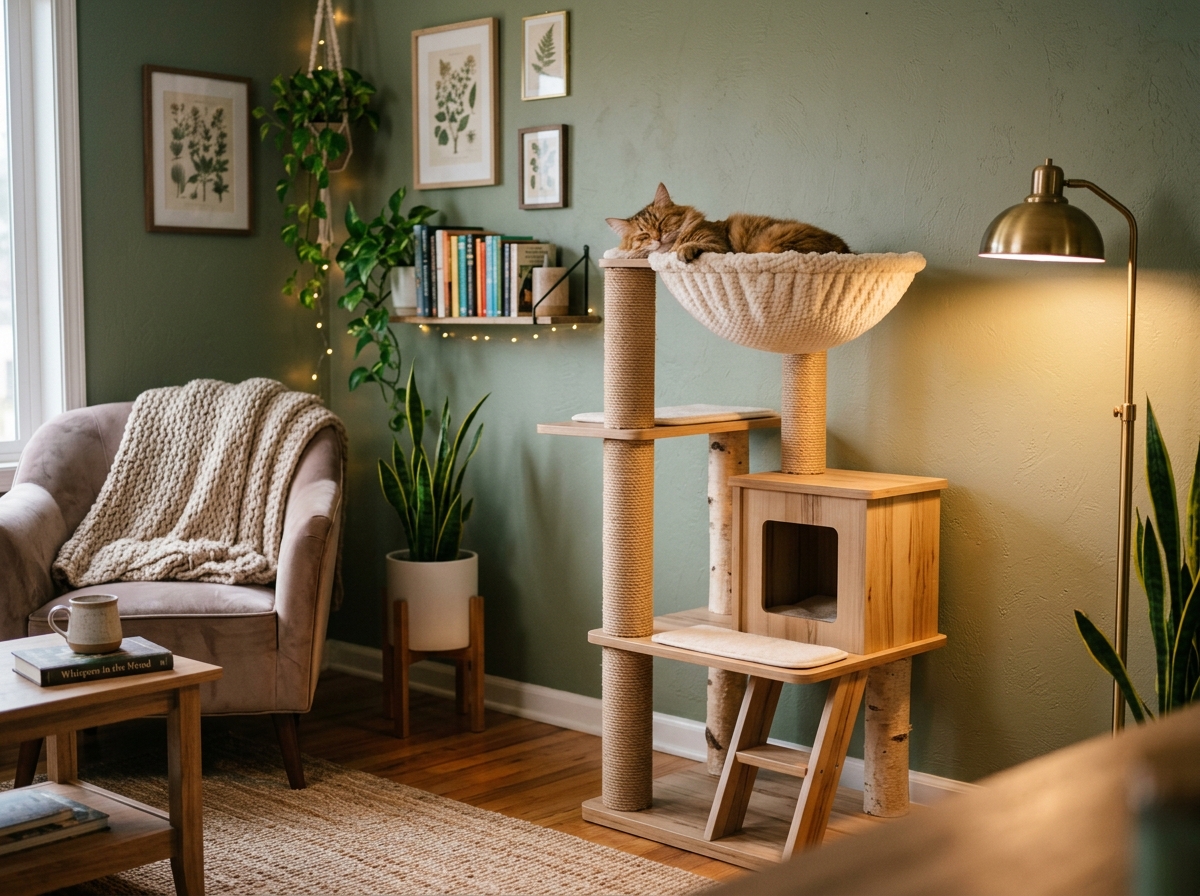
Most cat owners believe that placing a cat tree right next to a bright, sunny window is the absolute best choice. After all, cats love watching the outside world, right? Surprisingly, this universally accepted practice might be the exact reason your expensive feline furniture has turned into nothing more than an oversized laundry rack. While we think we are giving them a premium view, we might actually be putting them on the stressful front lines of territorial defense. Let’s uncover the veterinary and behavioral reasons why your furry friend ignores its tower, and explore the ultimate cat tree placement strategies to transform it into a stress-free sanctuary.
Table of Contents
The Real Reason Your Feline Friend Ignores It: Stress from Incorrect Positioning
Many owners prioritize interior aesthetics or human convenience when deciding on locations for pet furniture. However, from a feline perspective, that visually pleasing spot might be a highly anxiety-inducing environment.
Why the Window Seat Isn’t Always the Perfect Solution
It is a standard rule of thumb to position the tower by the window so the cat can enjoy the view. Yet, this isn’t universally true for every feline.
- Anxiety Over Territorial Invasion: Windows expose cats to outdoor stray animals, birds, and the sudden movements of strangers. For a territorial animal, this space isn’t always a relaxing retreat; it can become a continuous “defense frontline,” causing severe visual fatigue.
- Unstable Environmental Factors: Direct sunlight causing rapid overheating, sudden temperature drops from drafts, and loud rain noises can make it incredibly difficult for them to feel secure.
- Behavioral Advice: If your cat chatters its teeth or rapidly swishes its tail while looking outside, it is a clear sign of overstimulation and tension. Consider using blinds to block the view partially or moving the tower further inside the room to reduce exposure.
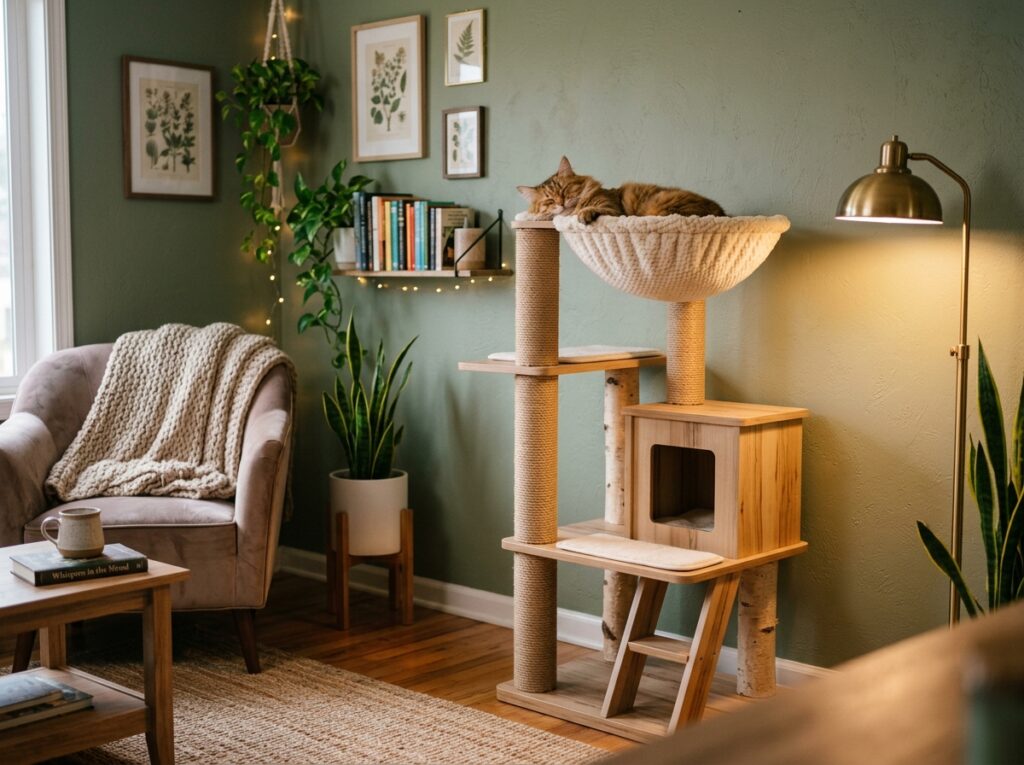
Anxiety Induced by Appliance Noise and Blocked Routes
White noise might relax humans, but it can be torture for highly sensitive feline ears.
- Micro-Vibrations and High-Frequency Noise: Placing the setup next to a TV, refrigerator, washing machine, or air purifier exposes them to high-frequency noises and micro-vibrations that humans cannot detect. This constantly interrupts their deep REM sleep.
- The “Dead End” Effect: If the tower is squeezed into a corner or tightly between furniture with only one way up and down, cats feel trapped. They instinctively avoid these spaces due to the “dead end effect.”
- Caution: If your cat loses its appetite, over-grooms a specific body part, or changes its litter habits after visiting a specific spot, it could signal a severe drop in condition. In such cases, consulting the ASPCA or a certified veterinary behaviorist is a safe approach.
3-Step Cat Tree Placement Guide for a Stress-Free Haven
Where exactly is the ultimate sweet spot where your cat can rest with peace of mind? Follow this three-step guide to audit your home environment.
Step 1: Secure an ‘Observation Post’ with a Full View
For cats, high places are not merely play areas; they are directly linked to psychological stability.
- Vertical Space and Control: Behaviorally, high vertical spaces act as the ultimate safe zones where they can protect themselves from external factors and observe their territory.
- Living Room Center or Main Living Area: A wall or corner in the living room where they can observe family movements without blocking foot traffic is the most ideal.
- Providing Security: When executing your cat tree placement plan, ensure the back of the furniture is against a solid wall so they don’t have to worry about rear ambushes. A clear forward view of the entire house is required for them to finally fall into a deep slumber.
Step 2: Design Escape Routes for Multi-Cat Households
If you have a multi-cat household, positioning the tower becomes the most crucial key to maintaining peace.
- Alleviating Hierarchy Conflicts: If one cat occupies the top tier, there must be at least two entry and exit routes (escape routes) so they can avoid each other naturally without a physical confrontation.
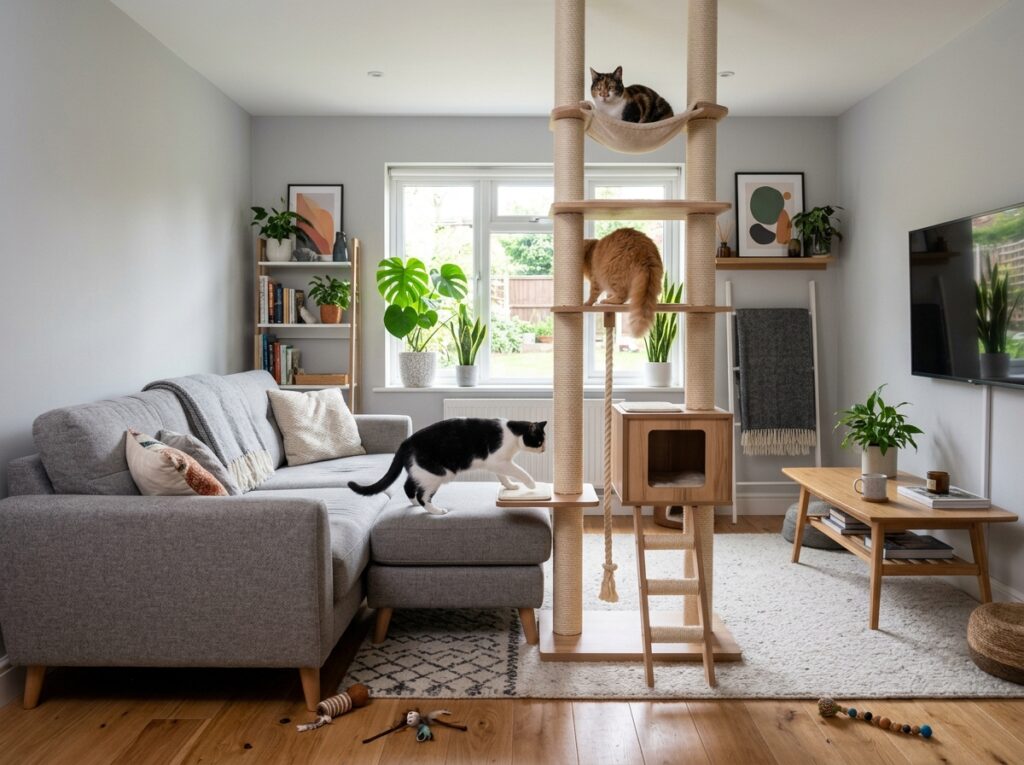
- Connecting with Surrounding Furniture: I actually learned this the hard way. I once placed a large wooden cat tree in a narrow corner next to the TV to match my interior decor, and my cat completely ignored it for a month. Once I realized the “dead end effect” and TV noise were the culprits, I relocated it to an open wall. More importantly, I placed it next to the living room sofa, creating a natural stepping stone. Seeing my cat snoring soundly in the top hammock that very evening was incredibly rewarding. Connecting the tower with desks, sofas, or shelves creates a seamless route without dead ends, greatly reducing territorial friction.
- Quantity Rule: A lack of vertical space is a primary cause of discord among feline siblings. Distribute vertical spots throughout the house, aiming for at least one per cat, or at the absolute minimum, [number of cats – 1].
Step 3: Maintain Proper Distance from Food and Litter
Just as humans don’t want to eat or sleep right next to the toilet, neither do fastidious cats.
- Minimum Behavioral Distance: The resting area must be at least 1.5 to 2 meters away from their dining space (food and water bowls) and their bathroom (litter box).
- Preventing Instinctual Aversion: With their wild instincts still intact, cats are extremely reluctant to sleep in a vulnerable, defenseless state near the strong scents of their own waste or food.
- Hygiene and Health: If the litter box is too close, litter dust can drift into their resting spot, negatively impacting not only their hygiene but also their respiratory health and overall comfort.
Conclusion: Creating a Sustainable Environment for Territorial Security
A cat tree is not just a simple piece of furniture or an interior prop. It is a core element of environmental enrichment, often emphasized by institutions like the Cornell Feline Health Center, that satisfies their wild instincts and provides deep territorial security.
Instead of prioritizing a location that looks good to the owner, it requires continuous effort to periodically observe and adjust the environment from the cat’s eye level. Are there any visual or auditory stressors? Are the routes securely established? If you have optimized the cat tree placement and your pet still seems lethargic or hesitates to climb, it might be a sign of joint discomfort or another underlying issue, so a light consultation with your veterinarian is highly recommended.
Where did you place your cat tree in your home? If you have found a special sweet spot for your furry friend, please share it in the comments below!