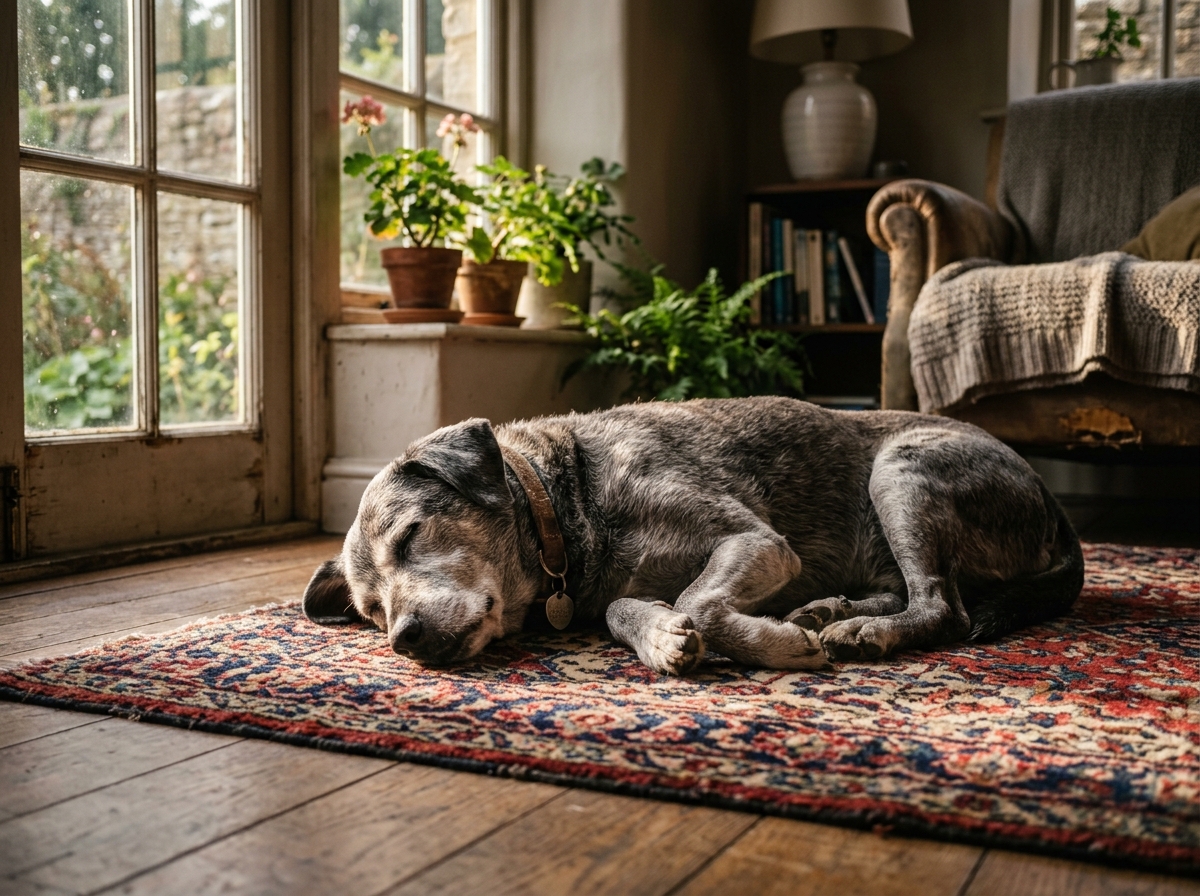
Lately, my heart sinks a little when I see my dog, Bokdol, sleeping more and more. He used to greet me at the door, tail wagging furiously, the second I got home from work. Now, he spends most of his day just lying there, staring blankly or dozing off. Naturally, I began to worry—is he sick, or is this just what getting older looks like? For over 10 years, I’ve run the pet snack brand “Greenbone,” dedicating my life to animal health, but when it’s my own dog whose routine changes so drastically, the anxiety is completely different.
Many pet parents feel relieved, yet sometimes concerned, when they see their furry friends sleeping all day. While adult dogs naturally sleep 12 to 14 hours, and seniors or puppies can sleep up to 18 to 20 hours, quality matters just as much as quantity. If they lack deep, restorative rest, your seemingly peaceful pet might actually be suffering from hidden dog sleep deprivation. Let’s explore why this happens and how we can help.
Table of Contents
The Core Causes Behind Dog Sleep Deprivation
The Difference in REM Sleep Cycles
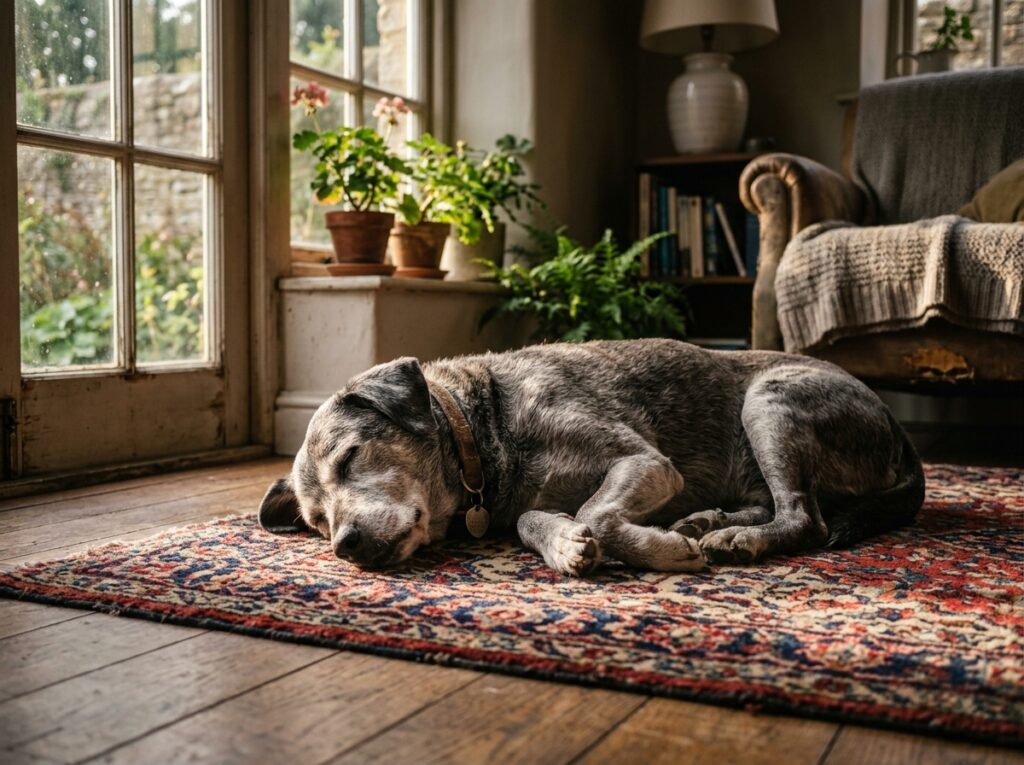
Humans and dogs have fundamentally different sleep patterns. While humans spend about 20-25% of their rest in light REM sleep, dogs spend only 10-12% in REM. This means they are constantly hovering in a state of light sleep, making them highly susceptible to dog sleep deprivation if their environment isn’t optimal.
- Polyphasic Sleep: Because of their wild instincts to stay alert against predators, a dog’s brain wakes up easily at the slightest noise or scent.
- Environmental Disruptions: If your home is noisy or your pet suffers from separation anxiety, they will struggle to transition from REM to deep NREM sleep. In Bokdol’s case, when he slept in the living room, even the faintest footsteps outside would make his ears twitch. Everyday environmental factors are huge culprits behind poor sleep quality.
Physical Changes and Discomfort from Aging
Recently, while researching and developing a Senior Line Snack at Greenbone, I realized just how profoundly age-related physical changes affect rest. When Cognitive Dysfunction Syndrome (CDS)—often called canine dementia—sets in, it disrupts the melatonin cycle, causing day-night reversal and night wandering. Physical aging also directly contributes to dog sleep deprivation:
- Joint Discomfort: Aching joints make it hard to find a comfortable sleeping position, leading to constant tossing and turning.
- Cardiovascular and Respiratory Issues: Poor circulation can cause breathlessness or coughing during the night.
- Urinary Changes: Increased frequency of nighttime urination interrupts continuous rest.
If your dog’s sleep schedule changes drastically, it could be a signal of an underlying illness. I strongly recommend seeking a veterinary consultation rather than making assumptions.
Practical Solutions to Prevent Dog Sleep Deprivation
Creating a Restful Environment and Using White Noise
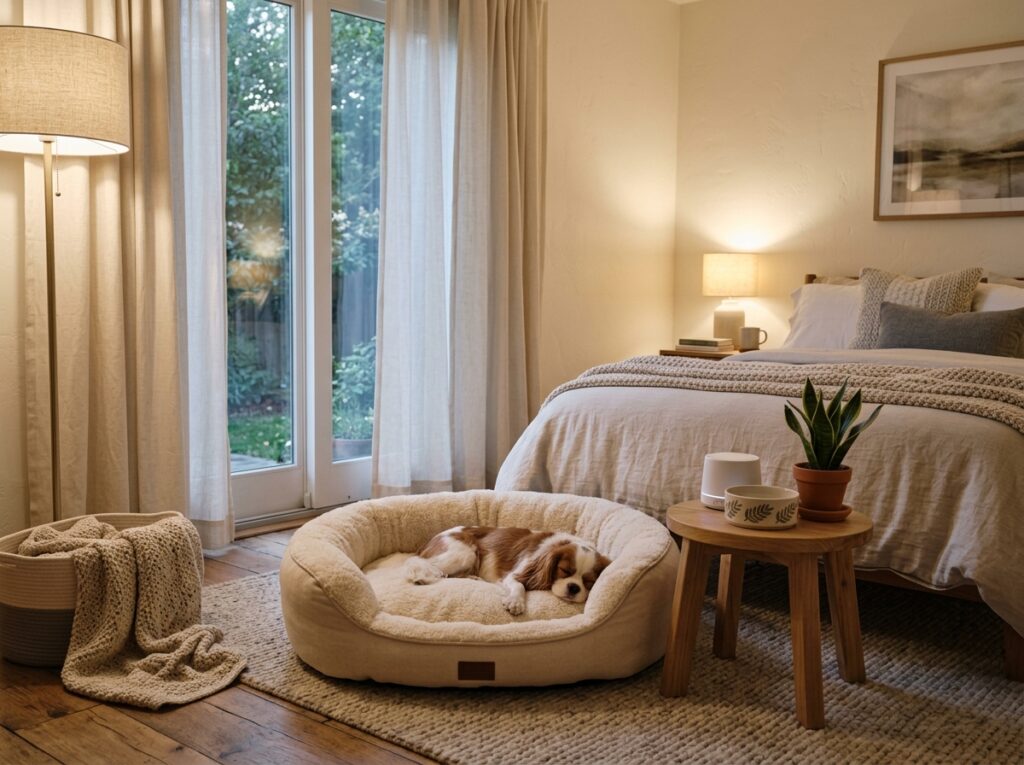
A dog’s hearing is at least four times more sensitive than a human’s, making them incredibly vulnerable to noise. When Bokdol couldn’t sleep soundly, I started playing white noise and soothing pet music. I noticed his heart rate visibly stabilize. Tweaking the environment can significantly improve sleep quality and combat dog sleep deprivation.
- Provide a Secure Bed: Create a soft bed in a draft-free corner or use a crate, which offers psychological security by enclosing them safely.
- Optimal Temperature and Humidity: Maintain an indoor temperature of 20-23°C (68-73°F) and humidity between 50-60%.
- Encourage Sleep Independence: Instead of sharing your bed, provide a dedicated dog bed. Separating sleeping spaces prevents you from waking each other up with nighttime movements.
Pre-Sleep Dietary Habits and Customized Nutrition
As someone who holds a simple feed manufacturing license and has spent years agonizing over healthy pet food, I must emphasize the importance of “pre-sleep dietary habits.” Heavy snacks or overeating right before bed forces the digestive system to work all night, ruining deep sleep. Ensure their last meal is finished 2-3 hours before bedtime.
If you are considering nutritional supplements to support your pet’s relaxation, these ingredients can help:
- Lactium: Helps soothe the nervous system.
- L-Theanine: Aids in stress relief.
- Tryptophan: Essential for synthesizing sleep hormones.
However, if your dog has underlying liver or kidney issues, approach any supplement with caution. Verify the safety of the ingredients and consult your vet before feeding.
Conclusion: Healthy Sleep Starts with the Owner’s Observation
For dogs, sleep is not just rest; it is the most vital physiological process for washing away fatigue and maintaining daily health. If you have a pet that seems to be sleeping more than usual, focus less on the total hours and more on whether they are getting deep, uninterrupted rest to avoid dog sleep deprivation.
Tonight, why not move your dog’s bed to a quiet, cozy spot and help them burn healthy energy with nose work and a walk during the day? Your immediate, warm consideration will gift your beloved dog with sweet, restful sleep and a healthier tomorrow. How does your dog sleep tonight? If you have your own tips or concerns about your dog’s sleep, please share them in the comments below!