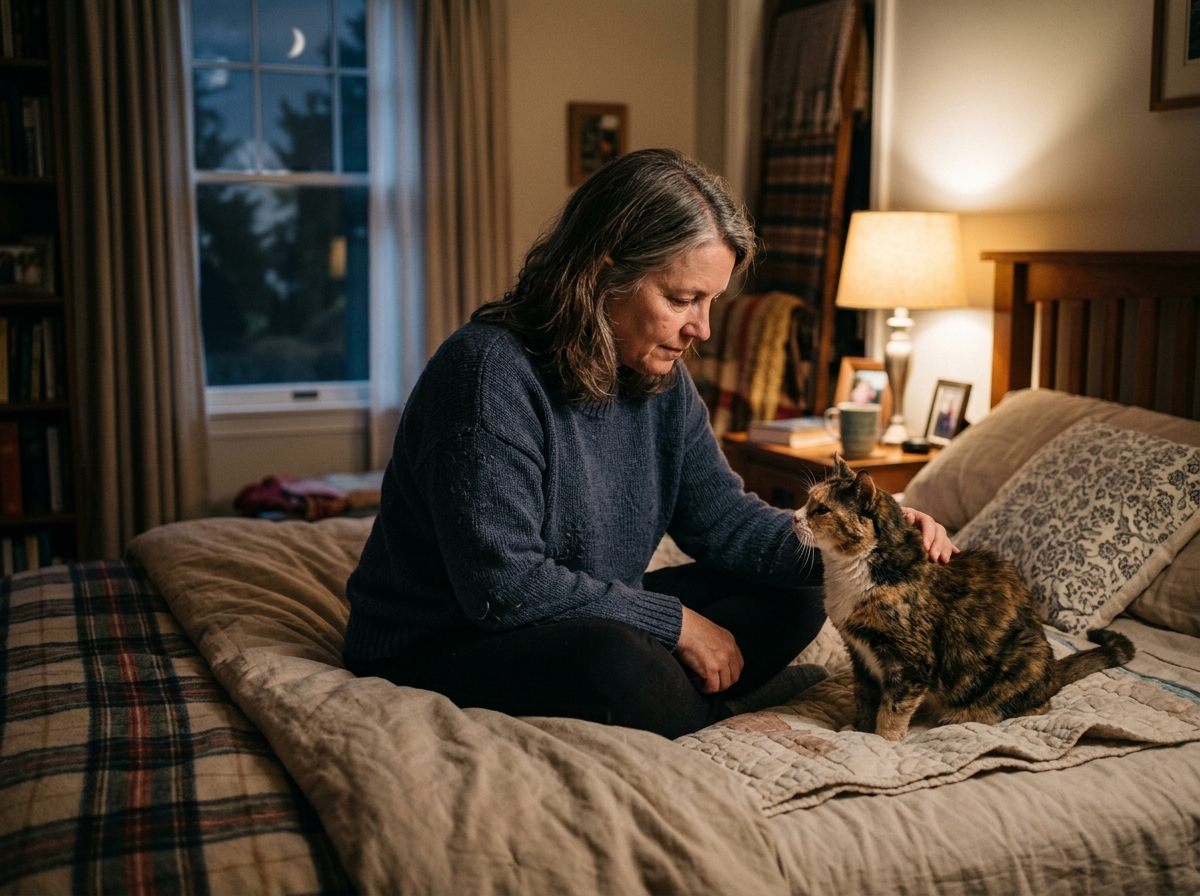
Over my past 10 years working in the pet industry, dedicating my days to developing comforting solutions like calming music for pets and nutritious treats for senior animals, I have heard countless stories from struggling pet parents. However, one memory always breaks my heart. A former office colleague rescued a stray kitten with a heart full of joy, only to face a harsh reality that very night. Because of the endless cat crying at night, my coworker didn’t get a proper night’s sleep for weeks. Exhausted and sleep-deprived, they sadly had to rehome the kitten.
As someone who constantly thinks about pet happiness, it deeply hurt that I couldn’t prevent that painful goodbye. Many owners are stressed by this issue, but you must know that a cat crying at night is never an intentional attempt to torment you. Rather, it’s a crucial signal of physical discomfort or psychological anxiety. Behaviorally, cats are not strictly nocturnal; they are crepuscular animals, meaning they are most active during dawn and dusk. Clashing with human sleep cycles is a completely natural physiological phenomenon. Today, we will explore the medical and environmental causes of this behavior and share practical solutions to improve the quality of life for both you and your feline companion.
Table of Contents
1. Medical and Physical Causes of a Cat Crying at Night
If there is a sudden increase in night vocalization, do not dismiss it as a mere bad habit. It is highly likely caused by pain or hormonal changes. Before attempting any behavioral training, a thorough medical check-up is essential.
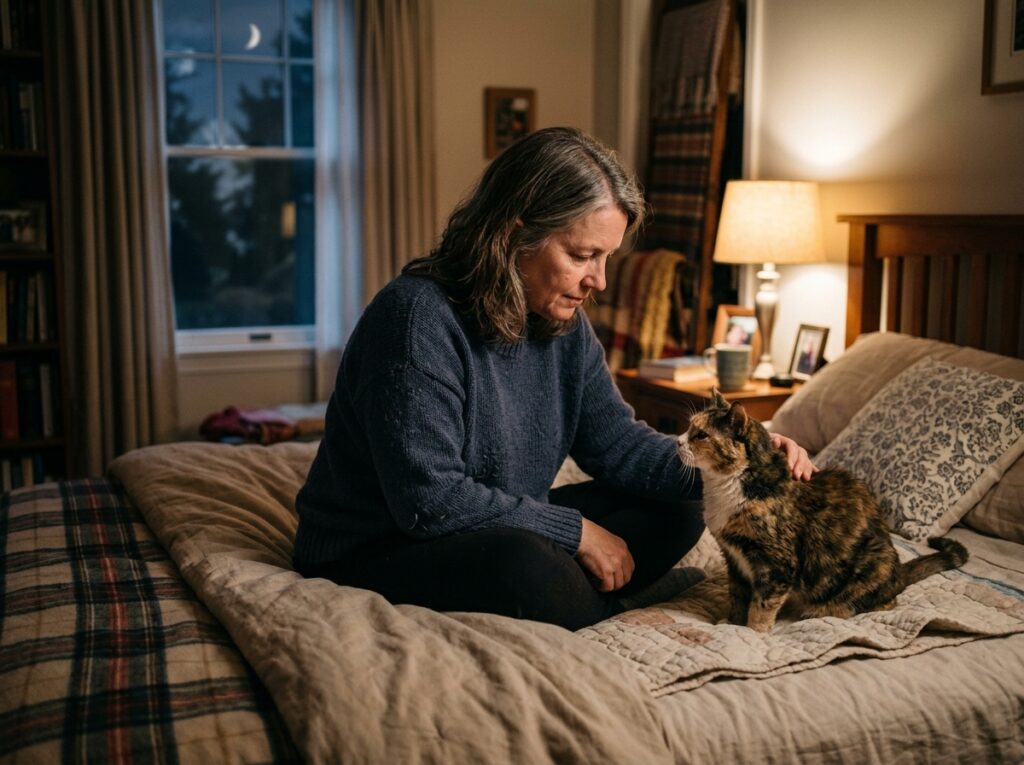
Heat Cycles and Instinctual Stress
Female cats that haven’t been spayed experience persistent heat cycles from spring to fall. The sharp, distinctive caterwauling is not just a cry; it is an intense outward expression of instinct and stress driven by hormonal shifts. This cannot be fixed by training. Consulting your veterinarian for appropriate medical steps, such as spaying, is the most humane way to reduce their stress.
Cognitive Dysfunction and Hyperthyroidism in Senior Cats
Just like humans, cats can experience cognitive decline as they age. Feline Cognitive Dysfunction Syndrome (CDS), or dementia, often affects cats over 11 years old. With declining sight, hearing, and spatial awareness, they often get disoriented in the dark, leading to a senior cat crying at night out of anxiety. Additionally, feline hyperthyroidism is common in older felines. This condition artificially spikes their metabolic rate, keeping them in a highly agitated state even at midnight.
Hidden Pain and Underlying Diseases
Cats are masters at hiding pain, but they often suffer from chronic discomfort out of sight. Many older cats show signs of degenerative arthritis. When temperatures drop at night, joint stiffness worsens, prompting them to vocalize their pain. Other culprits include Feline Lower Urinary Tract Disease FLUTD, Chronic Kidney Disease (CKD) which causes frequent urination, and headaches from high blood pressure.
2. Psychological and Environmental Triggers
If a vet visit rules out physical issues, it’s time to check the environment. An otherwise healthy cat crying at night is usually dealing with boredom, environmental stress, or inadvertently reinforced “reward behaviors.”
Boredom from Lack of Activity
When owners leave for work, indoor cats are left alone to sleep and stockpile energy all day. This pent-up energy inevitably explodes at night when you are trying to rest. It is a classic symptom of boredom that occurs when they lack sufficient stimuli to satisfy their hunting instincts during daylight hours.
Environmental Dissatisfaction (Hunger or Dirty Litter Boxes)
Felines have highly regular and sensitive biological rhythms. If the fasting period after their last meal exceeds 8 to 10 hours, they might wake you up out of sheer hunger. Furthermore, they are incredibly fastidious. If the litter box is not completely clean overnight, they may express their frustration by vocalizing near the area.
Separation Anxiety and Attention-Seeking
Have you ever groggily called your cat’s name or handed out a treat just to quiet them down at 3 AM? Unfortunately, this creates a learned effect: “If I scream loudly, my human rewards me!” These small actions intended to buy peace actually serve as positive reinforcement, creating a vicious cycle of a cat crying at night.
3. Practical Solutions for a Peaceful Night
Correcting entrenched behaviors doesn’t happen overnight. It requires a combination of consistent boundaries, an optimized sleep environment, and fulfilling natural feline instincts.
Vigorous Play Before Bed
The most effective way to stop a cat crying at night is to burn off that excess energy. Spend 15 to 30 minutes right before your bedtime engaging them in vigorous play with a wand toy until they are panting slightly. A cat’s natural cycle flows from Hunting (Play) ➔ Catching ➔ Eating (Grooming) ➔ Sleeping. Providing a hearty meal right after the hunt naturally induces a deep, satisfying sleep.
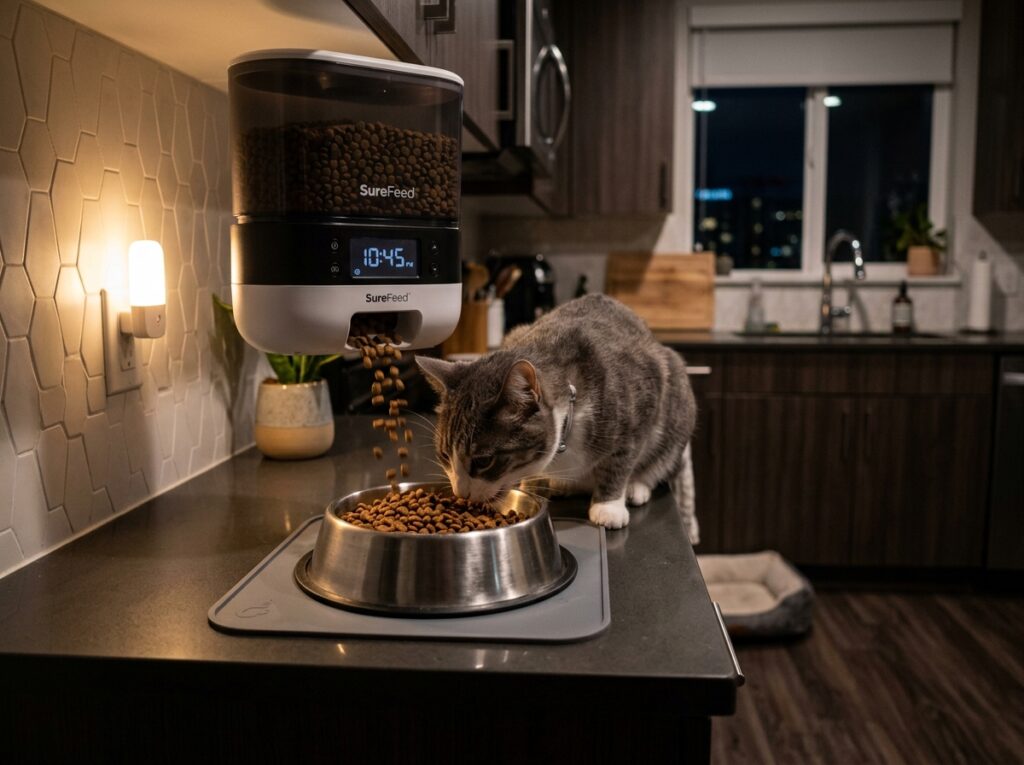
Utilizing Automatic Feeders
If dawn hunger is the main trigger, enlist the help of an automatic feeder. Setting it to dispense a small portion of food during the exact early morning hours when your cat usually wakes up shifts their demanding cries away from you and toward the machine. Also, make your bedroom a clear “sleep zone” using blackout curtains, and place a window hammock or a nose-work mat in the living room so they can entertain themselves if they wake up early.
Consistent Ignoring and Stress Relievers
Attention-seeking behavior requires absolute firmness. You must practice complete “extinction” by never making eye contact or speaking to them when they vocalize at night. Maintain this for at least 2 to 3 weeks. You might initially experience an “extinction burst” where the crying temporarily worsens, but reacting then will ruin all your progress. For anxiety-driven vocalizations, using a pet-specific stress reliever like a Feliway diffuser can create a calming atmosphere.
⚠️ Editor’s Note: Please be aware that certain human-grade essential oils cannot be properly metabolized by a cat’s liver and can be toxic. If you are considering aromatherapy, only use scientifically verified, cat-safe products after consulting with a vet.
Conclusion: When to Seek Medical Help
Managing a cat crying at night requires patience. It is often a complex mix of physical discomfort, environmental deficits, and accidental reward learning. Steadily apply these steps: Check for diseases ➔ Burn energy before bed ➔ Resolve nighttime hunger ➔ Ignore consistently. By patiently listening to your cat’s needs, you can reclaim your peaceful routines.
However, if your cat crying at night is accompanied by any of the following symptoms, halt behavioral training and visit a vet immediately:
- Urinary Issues: Visiting the litter box dozens of times, straining, or unusual urine patterns.
- Rapid Weight Loss: Visibly losing weight despite an increased appetite.
- Pain Responses: Showing extreme sensitivity, avoidance, or aggression when you try to pet specific areas.
How does your feline friend communicate at night? If you have your own special tips for dealing with night vocalizations, please share them in the comments below!