
As someone who has spent the last decade in the pet food manufacturing industry, constantly developing healthy treats and calming music for our furry companions, I thought I had understood every facet of animal care. But the reality of adopting a stray cat is a heavy responsibility that always feels entirely new. Not long ago, one of my staff members at our pet brand brought home a stray feline, simply because the little one looked so pitiful and adorable out on the street.
However, warm intentions quickly clashed with a harsh reality. The endless, unfamiliar crying throughout the night and the fur covering every inch of the apartment became too overwhelming. Heartbreakingly, within less than a month, my employee had to return the cat to its original location. It was a stark reminder of a failed attempt at adopting a stray cat without proper readiness.
It requires immense responsibility, far beyond an emotional rescue mission. These outdoor survivors often carry hidden health issues, skin conditions, or internal parasites that lower their immunity. When you commit to adopting a stray cat, you must be fully prepared for the financial cost of initial checkups, vaccines, and neutering, as well as the environmental changes and potential property damage caused by their lingering wild instincts. Successful integration starts with strict isolation, immediate veterinary care, and a deep understanding of their highly territorial nature.
Table of Contents
5 Essential Preparations for the First Day of Adopting a Stray Cat
1. A Safe Isolation Space and a Dedicated Litter Box
When adopting a stray cat, opening up your entire house on the very first day can cause extreme terror for the animal. Dedicate a specific room with a closed door to create a safe isolation space; this will significantly minimize their territorial anxiety.
The most crucial element you need is the proper elimination environment. Given their outdoor background, using clumping bentonite litter—which closely mimics the texture of natural soil and dirt—is the most effective way to prevent litter box setup accidents.
- Size: Choose a litter box that is at least 1.5 times the length of the cat (from nose to the base of the tail).
- Placement: Keep the litter box at least 1.5 meters away from their food and water bowls to satisfy their natural hygiene instincts.
2. Age-Appropriate Food and Water Bowls
It is incredibly difficult to estimate the exact age of a rescued feline just by looking at its teeth or weight. Until a veterinarian gives a proper diagnosis, temporarily provide an All-Stage kibble or easily digestible wet canned food. This step is also fundamental to properly taming your new companion.

Because feline kidney health is paramount, encouraging sufficient, fresh water intake is vital.
- Bowl Material: Recommend wide ceramic or stainless steel bowls over plastic, which is prone to bacteria and hygiene issues.
- Feeding Tips: Their digestive system might be weak from street life. Avoid changing food abruptly or overfeeding on the first day, as it can cause severe indigestion. Feed them in small, frequent portions instead.
3. Hiding Spots and Scratchers for Stress Relief
A cat suddenly placed in an unfamiliar space only feels secure when it can completely hide its body. You must provide at least two cozy, enclosed hiding spots or clean cardboard boxes within the isolation room.
To help them release the tension of a new environment and mark their territory with pheromones, paper scratchers (both vertical and horizontal) are an absolute must. This will also protect your valuable furniture from being destroyed.
- Behavioral Warning: Never force a hiding cat to come out or try to pet them abruptly just because they look cute. A terrified cat may exhibit defensive aggression. Always maintain plenty of physical distance until they emerge on their own terms.
4. A Sturdy Carrier for Safe Transport
One of the absolute must-have items when adopting a stray cat is a sturdy carrier for safe transport and clinic visits. A hard plastic carrier that opens from both the top and the front is the most practical and secure. Fabric carriers can easily be torn by sharp claws or accidentally open if the cat thrashes in a panic. Placing the towel or blanket used during the initial rescue inside the carrier helps them feel secure through familiar scents.
- Loading Tip: Do not push them in head-first. It is much safer and easier to gently lower them in from the top door or guide them in rear-first.
5. Health Checklist Guide for the First Vet Visit
To wrap up the meticulous preparations on the first day, careful observation at home is required. Before heading to the American Society for the Prevention of Cruelty to Animals (ASPCA) or your local clinic, check their normal respiratory rate (20 to 30 breaths per minute), look for eye discharge or a runny nose, and take short videos or photos with your smartphone. These visual records are incredibly helpful during consultations. If you spot dark debris in their ears or abnormal stool, be sure to photograph it.
- Strict Hygiene: If you notice dandruff or hair loss, it could be a highly contagious fungal skin infection. Until the first vet visit is cleared, you must thoroughly wash your hands after handling the cat to maintain strict hygiene.
First Vet Visit Costs and Checkup Items for Adopting a Stray Cat
Visual observation at home is only a baseline. Internal parasites or underlying diseases cannot be accurately identified without a thorough veterinary examination. The core checkup items for your new arrival include:
- Physical and Skin Exam: Checking overall health, fungal skin diseases, and external parasites.
- Fecal Exam: Identifying internal parasites to prescribe the appropriate deworming medication.
- Blood Kit Test: Screening for major feline immune diseases. Retesting might be necessary after a few weeks due to the incubation period of certain viruses.
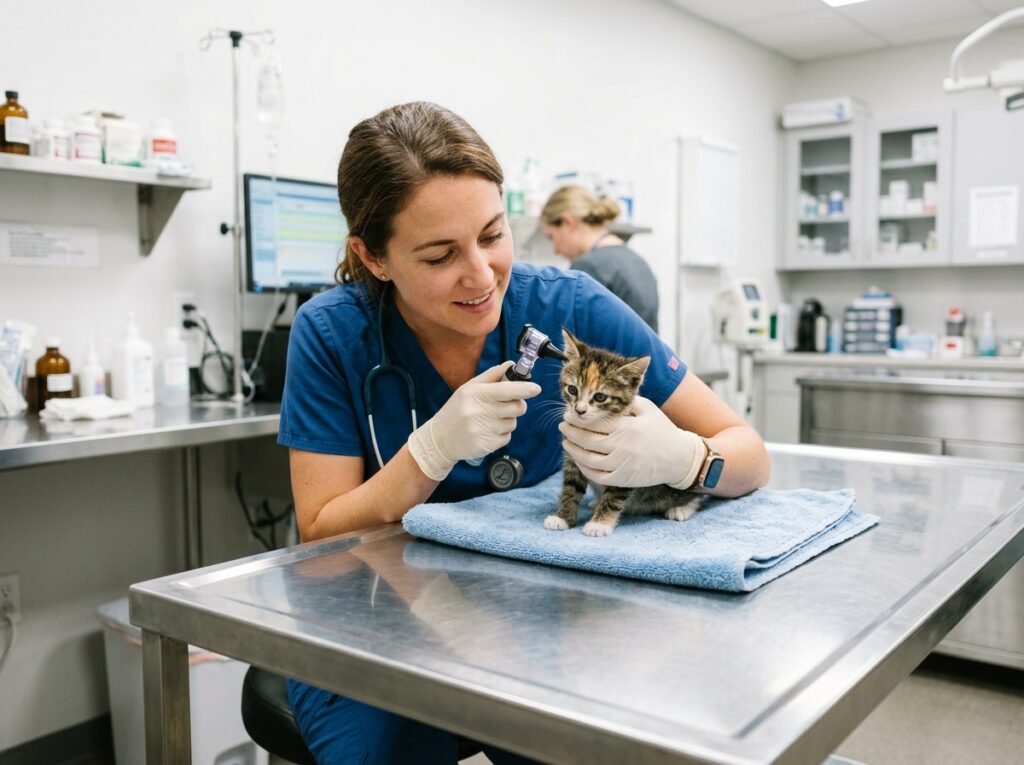
It is also good to be aware of the vaccination schedule and costs. The core comprehensive vaccines, which protect against fatal feline viruses, usually begin at 6 to 8 weeks of age and are administered in 3 doses, spaced 3 to 4 weeks apart. While initial checkup and kit testing costs vary by clinic, they generally range from $75 to $150. Subsequent vaccine doses typically cost between $25 and $40 each, so it’s highly recommended to call your chosen clinic in advance.
Conclusion: A Careful Choice Creates a Happy Companion Life
Bringing a street-dwelling animal into a domestic setting is a massive, challenging transition. Only with strict spatial isolation, veterinary care, and essential supplies prepared in advance can both the pet and the owner adapt safely without trauma.
It may take days or even weeks for the new arrival to truly open up. If they hide in a corner and cry without eating, do not scold them or force them out; wait patiently on their timeline. However, if they refuse food and water entirely for over 24 hours, it can cause severe internal damage. In such cases, consult a vet immediately. Remember, careful decision-making and thorough preparation are the only ways to guarantee a warm, regret-free journey after adopting a stray cat.
Have you ever seriously considered rescuing or taking in a stray? If you have any questions or warm stories of your own, please feel free to share them in the comments below!