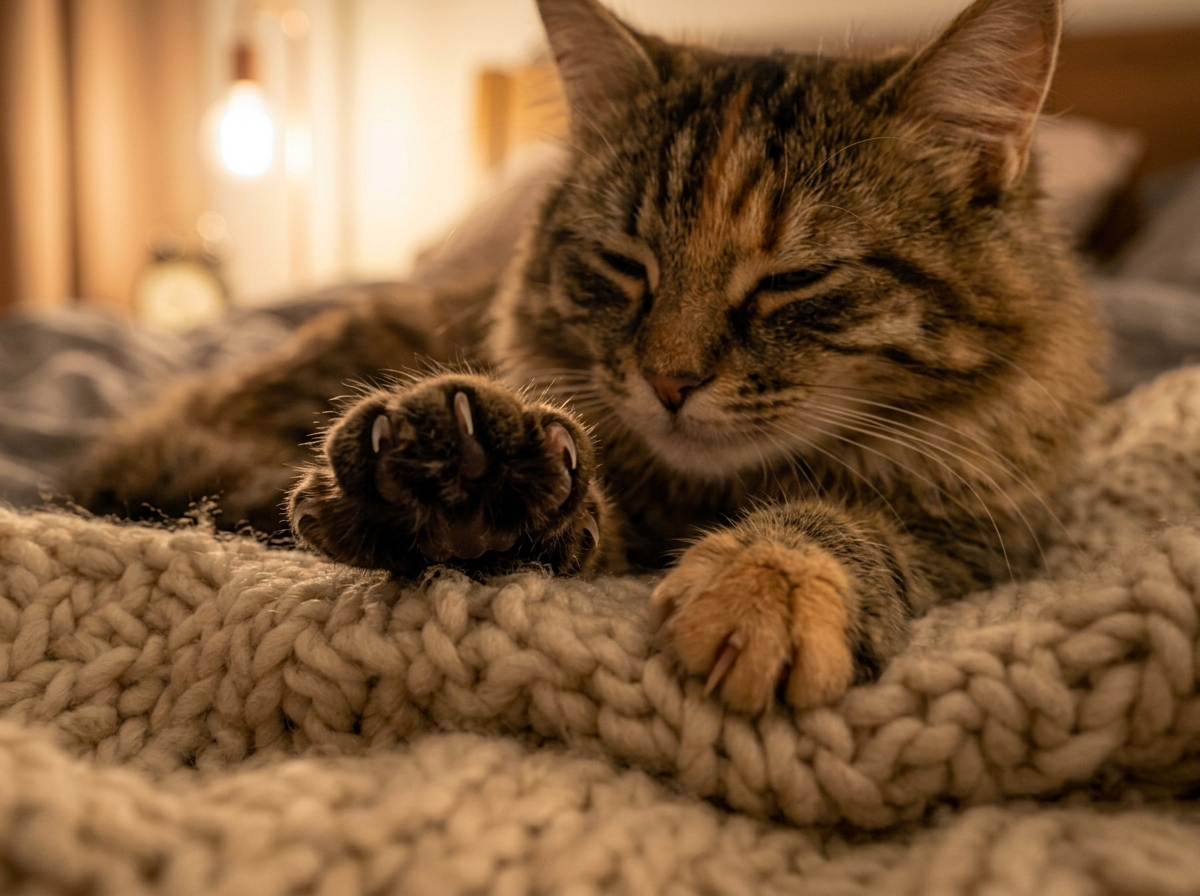
Late at night, when I finally lie down with a completely exhausted body, my cat gently hops up onto the bed. Within seconds, my fluffy companion settles onto my stomach or the soft blanket and starts rhythmically pressing their paws in and out. Have you ever experienced this? Whenever I watch these tiny, soft paws at work, the stress of my daily life simply melts away. It warms my heart so much that I often wonder, “Does my cat actually think I’m their mom?”
This adorable, heart-melting behavior is scientifically known as a ‘juvenile fixation.’ It’s an instinctual action left over from when they were kittens nursing from their mothers. Today, we are going to dive deep into the fascinating psychology and veterinary science behind cat kneading.
Table of Contents
The Meaning For Cat Parents & Veterinary Benefits
When your feline friend engages in cat kneading on or near you, it is a powerful emotional indicator. It means they feel as safe and comfortable in your space as they did in their mother’s embrace.
From a veterinary perspective, this isn’t just about feeling good. The rhythmic motion of cat kneading actually acts as a self-healing and emotional stabilization mechanism. It significantly reduces cortisol, the stress hormone, while stimulating the release of serotonin and oxytocin—often referred to as happiness hormones.
3 Hidden Instincts Behind Cat Kneading
1. Wild Instincts and Bed-Making Habits
The primary reason for cat kneading can be traced back to their wild ancestors long before domestication. Wild cats would rhythmically press down on tall grass or loose dirt to flatten the ground, creating a soft, safe, and hidden place to sleep away from predators.
Using the highly sensitive touch receptors in their paws, they checked if the temperature was right and if there were any hidden dangers. This ancient instinct still lives inside our modern indoor cats.
2. Warm Memories of Mom (Kitten Kneading)
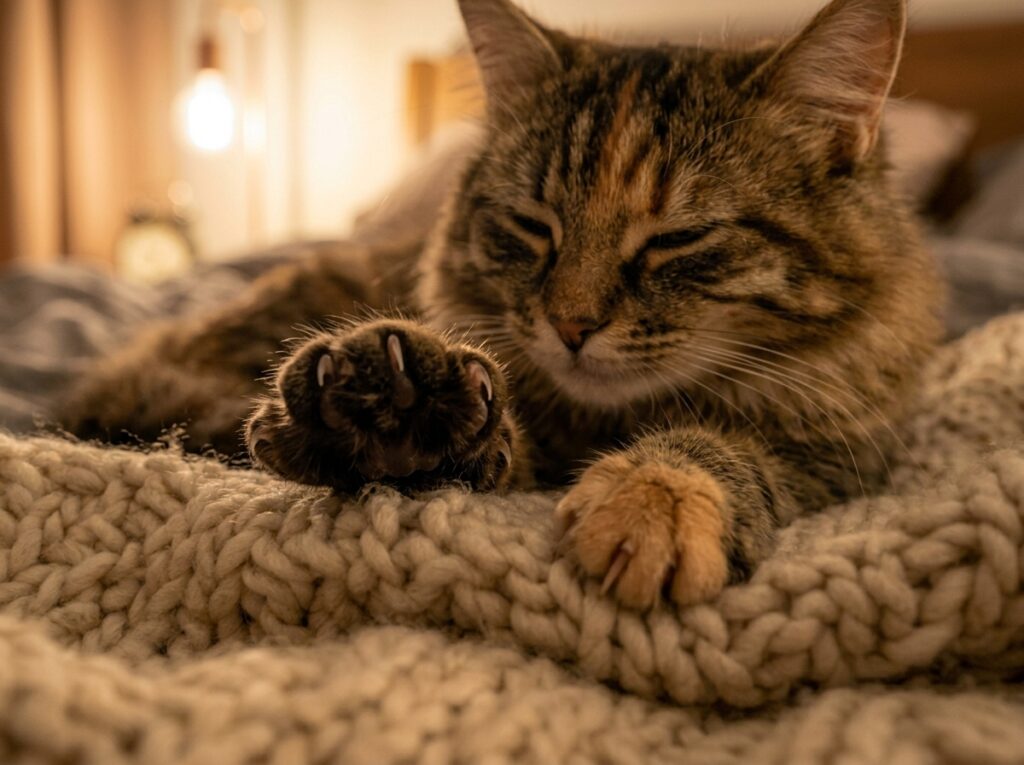
Another common trigger for cat kneading is the memory of their mother’s warmth. Right after birth, before their eyes are even open, kittens instinctively press on their mother’s mammary glands to stimulate milk flow.
Even as adult cats, when they feel entirely safe or are about to drift off to sleep, their brains recall the cozy memories of their infancy. This profound sense of satisfaction manifests physically through their paws. You might also notice them loudly purring or even sucking on the corner of a blanket. This means your cat is experiencing ultimate relaxation.
3. Scent Marking with Pheromones
Did you know that cats have specialized scent glands located between their soft footpads? When the pads are pressed down during the act of cat kneading, these glands naturally release pheromones.
By kneading on you or their favorite blanket, they are leaving an affectionate marking that says, “This is mine.” Unlike stress-induced urine spraying, this is a highly positive behavior reserved strictly for targets they deeply love and trust.
Purring and Other Forms of Feline Affection
The Secret of the Purr
Often considered the soulmate of cat kneading, purring is a vocal sign of peak physical and emotional satisfaction. However, a crucial note from organizations like the ASPCA reminds us that purring doesn’t mean 100% happiness all the time. Cats also emit low-frequency purrs to self-soothe and recover when they are in pain or stressed. If your cat is hunched over and purring in an unfamiliar situation, it’s wise to check their health.
Slow Blinks and Head Bunting
Beyond cat kneading, felines have a myriad of ways to say “I love you.”
- The Slow Blink: Often called a ‘cat kiss,’ slowly closing and opening their eyes while making eye contact is a peaceful message meaning, “I trust you completely.”
- Head Bunting: Rubbing their forehead, cheeks, or chin against you to leave pheromones. It’s their way of saying, “We are family.”
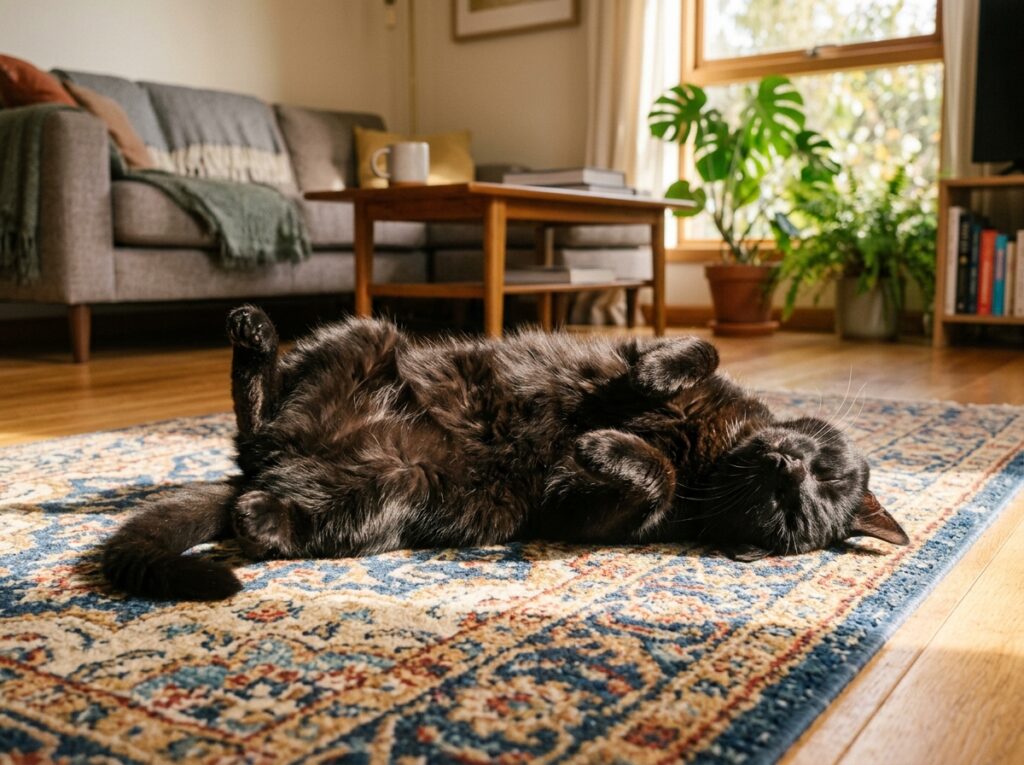
- Exposing the Belly: Showing you their most vulnerable body part means they feel completely secure in your presence.
Why Is My Feline Friend Not Doing Cat Kneading?
Many cat parents worry, thinking, “My cat never kneads. Do they not love me?” Please don’t be disappointed!
Weaning and Environment
Cats that nursed adequately and went through a natural weaning process are less likely to have a juvenile fixation, meaning they might not feel the need to engage in cat kneading as adults. Conversely, orphaned kittens or those weaned too early often cling to these behaviors. Additionally, a cold room or a noisy, unstable environment might make a cat too vigilant to relax and knead.
Personality and Trust
Some cats are just independent. For them, simply choosing to sit near you or sleeping in the same room is a strong sign of affection. They might prefer slow blinks and head bunting over physical paw pressing.
Note: If your cat used to be an avid kneader but suddenly stops, hides, or loses their appetite, they might be experiencing joint or muscle discomfort. A vet checkup is always recommended in such cases.
Conclusion: You Are the Best Cat Parent!
In conclusion, while cat kneading is a beautiful display of affection rooted in their kittenhood and pheromone marking, it is absolutely not a mandatory requirement for every cat.
To ensure your bonding time remains safe and painless, remember to regularly trim the tips of their claws so they don’t accidentally scratch you when they get excited. You can also dedicate a specific “kneading blanket” to make the experience better for both of you.
Never judge your bond solely by the presence or absence of cat kneading. Every quiet moment they spend sharing your space is a profound confession of love.
What is your favorite way your cat shows you affection? Share your heartwarming moments in the comments below!