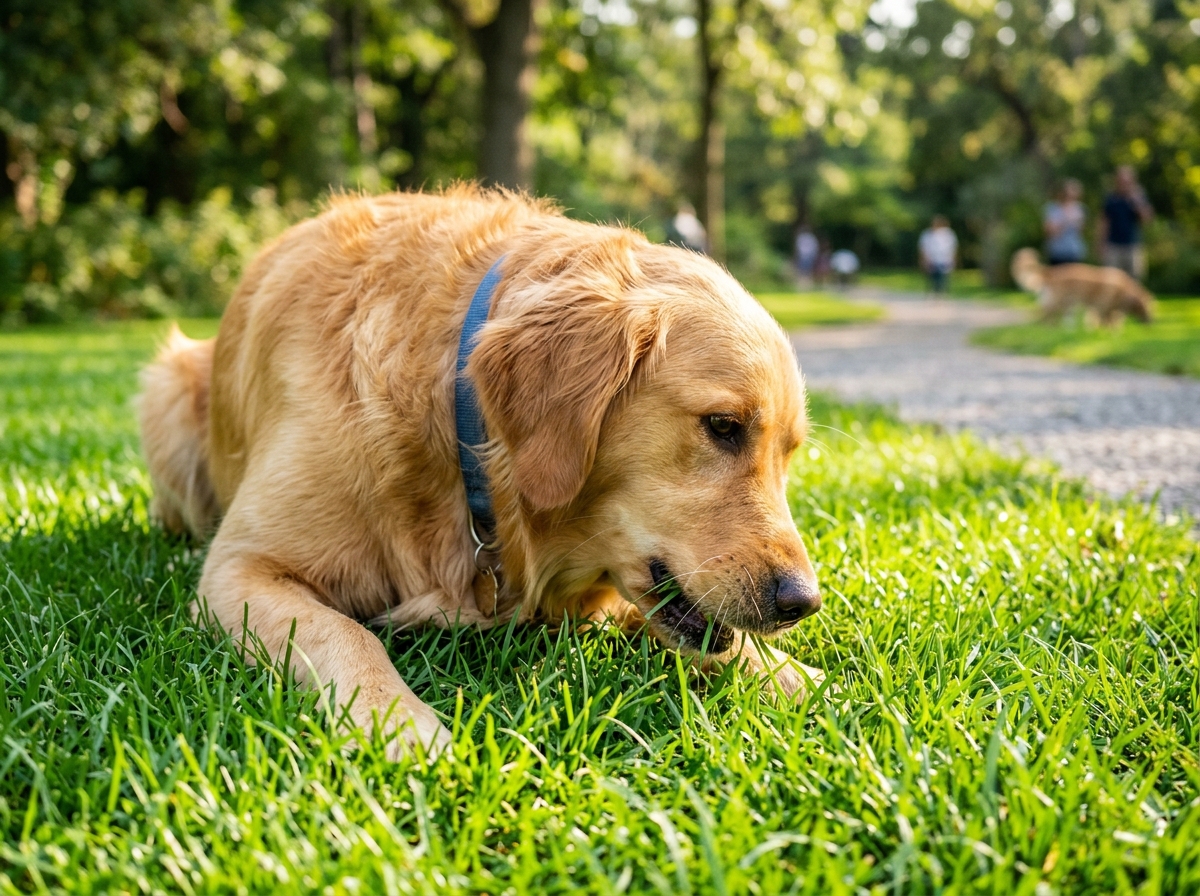
Picture this: You are on a perfectly peaceful afternoon stroll. The sun is shining, the breeze is gentle, and your furry companion is happily sniffing along the trail. Suddenly, they stop, drop their head into a patch of weeds, and start chomping away like a hungry miniature cow. You watch in a mix of confusion and mild panic as they frantically swallow mouthfuls of greenery.
If you have ever stared at your grazing pup and wondered exactly why do dogs eat grass, you are certainly not alone. Many dog owners instantly jump to frightening conclusions, fearing an underlying illness or a desperate cry for vitamins.
Having spent over a decade deeply involved in manufacturing and researching premium pet treats, and observing countless canine dietary habits along the way, the sight of a dog preferring a tough blade of street grass over a carefully crafted, nutritious meal is a familiar one. It seems baffling. However, before rushing to the veterinary clinic, it is essential to separate fact from fiction. Let’s dive into the veterinary facts and uncover the real reasons behind your dog’s grassy cravings.
Table of Contents
3 Common Myths About Dogs Eating Grass
When a dog suddenly starts chewing on lawn clippings, it is easy to panic. Unfortunately, many of the “facts” floating around dog parks are actually long-standing myths.
Myth 1: They Are Lacking Vitamins or Nutrients
Let’s get straight to the point: it is rarely about nutrition. Extensive research from the UC Davis School of Veterinary Medicine reveals that even dogs consuming a perfectly balanced, premium commercial diet will happily graze. Statistically, there is zero difference in grass-intake frequency between dogs with confirmed nutrient deficiencies and perfectly healthy ones.
Caution: Do not randomly over-supplement with multivitamins assuming your dog is deficient, as this can lead to dangerous fat-soluble vitamin toxicity. Always consult a vet first.
Myth 2: They Eat Grass to Make Themselves Vomit
This is perhaps the most widespread misunderstanding. The data tells a different story. Less than 8% of dogs show any signs of an upset stomach (like whining or drooling) before seeking out greenery. Furthermore, only about 22% actually throw up afterward. For the vast majority (78%), eating grass is just another snack that passes through normally. If vomiting does occur, it is usually just a natural reflex caused by the coarse blades tickling their stomach lining.
Myth 3: It is Always a Warning Sign of Pancreatitis
Grazing on the lawn is not a direct cause or an exclusive warning sign of pancreatitis. Pancreatitis is primarily triggered by high-fat diets or genetic factors that prematurely activate digestive enzymes. While a dog experiencing severe abdominal pain might compulsively eat foreign objects, they will not just eat grass in isolation. Look for accompanying systemic signs of pancreatitis: severe lethargy, loss of appetite, abnormal stools, or the “praying position” (front legs down, rear end up) signaling extreme belly pain.
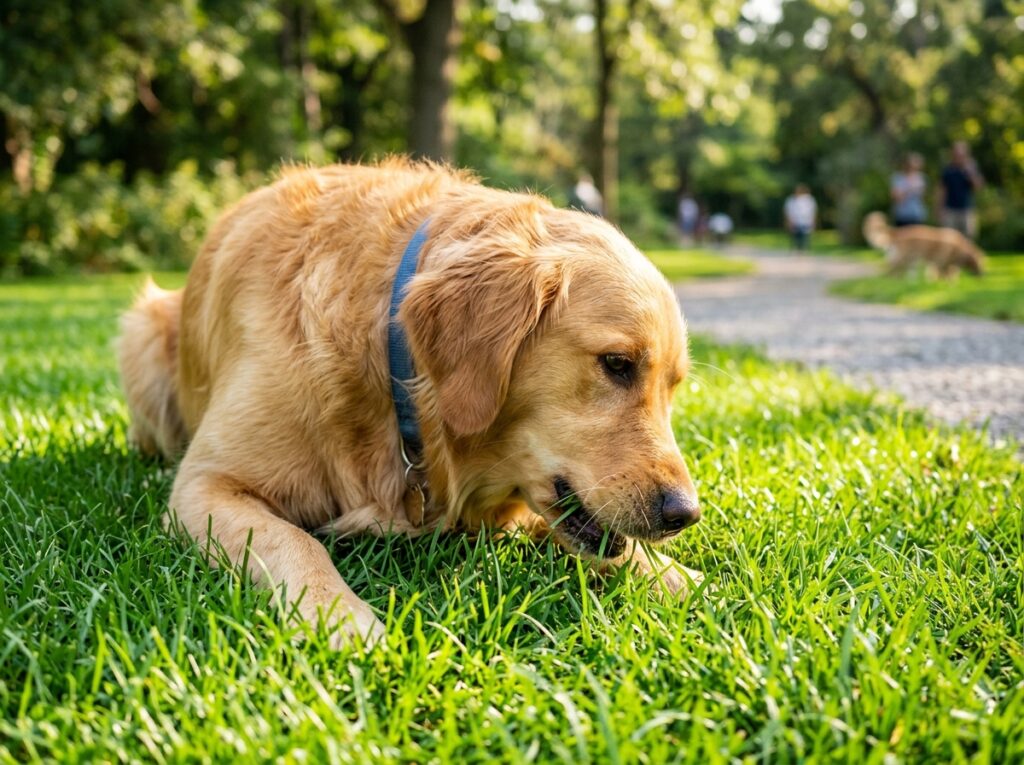
The Real Scientific Reasons Why Dogs Eat Grass
So, if it is not a desperate plea for vitamins or a self-induced detox, what are the actual reasons dogs eat grass? Veterinary science points to two main factors: behavioral evolution and physical needs.
1. Wild Instincts and Evolutionary Behavior
When analyzing the scat of wild canids (the ancestors of our domestic dogs), traces of plant matter are consistently found. Whether they consumed the stomach contents of herbivore prey or actively sought out rough foliage to clear their digestive tracts, this is an evolutionary trait. The urge is simply coded into their DNA. Since modern pets receive regular deworming treatments, they do not actually need to expel parasites this way; it is just a lingering ancestral habit that is completely natural.
2. Dietary Fiber and Stress Relief
A diet low in insoluble fiber might prompt a dog to seek out natural roughage to keep their digestive tract moving smoothly. Interestingly, texture plays a huge role. For instance, if you are frequently feeding your dog highly digestible, soft treats—like a specialized senior line crafted for aging dogs—they might occasionally crave the contrasting crunch and chew of fresh grass. Upping the fiber content in their meals has been clinically shown to reduce grazing frequency in some cases.
Additionally, it can be a simple form of behavioral enrichment. The strong scent, the snapping sound of the stems, and the unique texture act as a sensory playground, relieving boredom or mild anxiety during a walk. To prevent this from turning into an obsessive-compulsive habit, ensure your dog gets plenty of physical exercise and nosework activities.

Safety Guide for Pet Parents: When to Visit the Vet
While the behavior itself is a natural instinct, letting a city-dwelling dog eat whatever they find on the sidewalk requires strict caution. Here is how to keep your furry friend safe.
The Hidden Dangers of Outdoor Lawns
The biggest threat is not the grass itself, but the invisible chemical coatings. Parks, apartment complexes, and neighborhood trails are frequently treated with herbicides, pesticides, and insect repellents. These toxic substances cling to plant surfaces and can be fatal if ingested. There is also a high risk of picking up parasites from other animals’ feces.
- The Safest Alternative: Strictly control outdoor grazing. If your dog genuinely loves the grassy texture, consider growing organic, pesticide-free “cat grass” (oat or barley grass) safely indoors.
Red Flag Signals That Require Immediate Care
If your dog occasionally nibbles on a clean patch of grass, maintains high energy, and has normal bowel movements, there is little cause for alarm. However, if you notice a sudden spike in their grass-eating habits paired with any of the following, seek immediate veterinary attention:
- Vomiting more than twice within a 24-hour window.
- Refusing their favorite treats and showing a sudden drop in energy.
- Dark-colored stools or any abnormal bowel movements.
- Rounding their back or displaying the “praying position” indicating severe abdominal pain.
In these scenarios, the coarse blades might have severely irritated the stomach lining, or undigested plant matter could be causing an intestinal blockage. Do not rely on home remedies; professional medical diagnosis is required.
Every quirk your dog exhibits has a story behind it. The next time you catch your pup acting like a lawnmower, remember that they are likely just following ancient instincts or looking for a textural thrill. By understanding exactly why dogs eat grass, you can stop stressing over every little nibble and focus on guiding them toward safer, healthier habits.
Does your dog have a favorite quirky behavior during their daily walks? Share your pup’s funny habits in the comments below—we would love to hear about them!