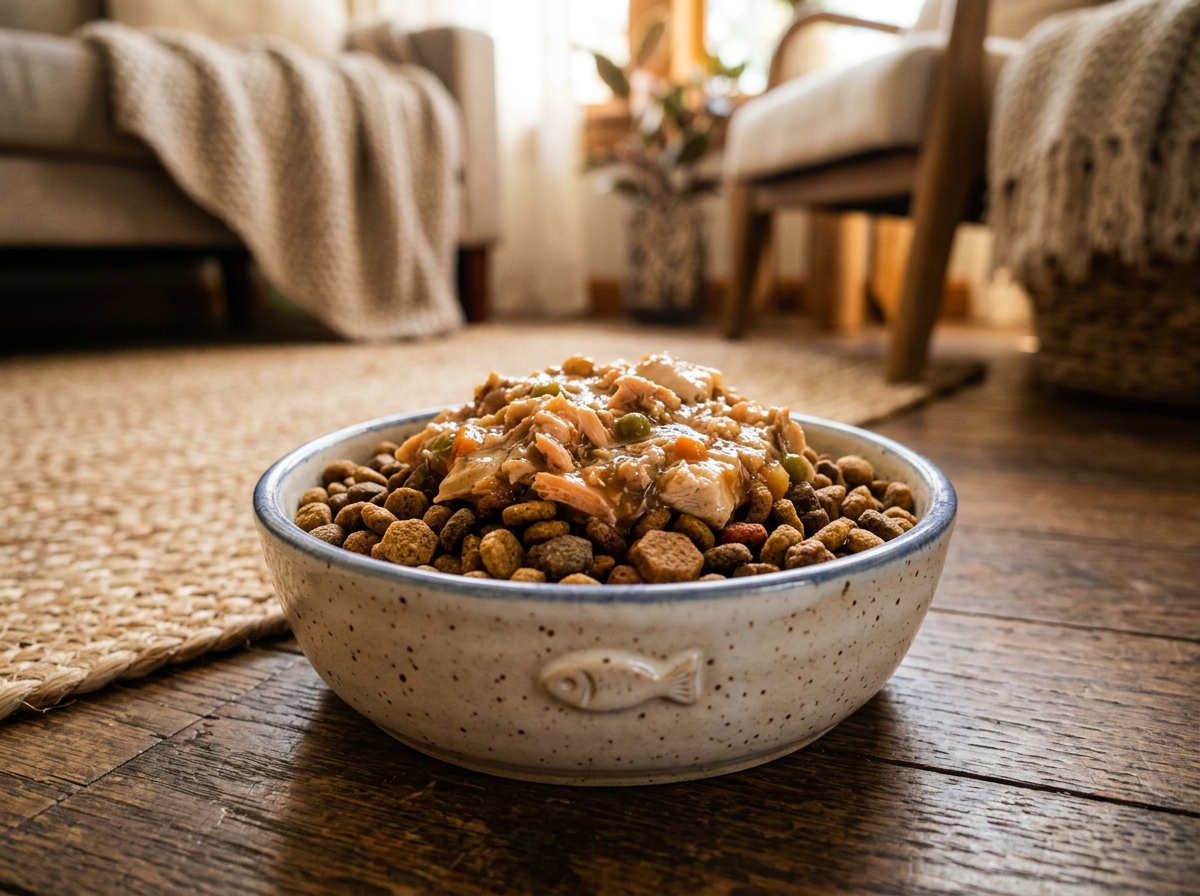
Many cat owners stand in the pet food aisle wondering if a strict kibble diet is sufficient, or if switching entirely to canned food is necessary for long-term health. The truth is that feeding cats doesn’t have to be an all-or-nothing decision. Combining both dry kibble and wet canned food—often called combination feeding—has become one of the most effective ways to satisfy finicky eaters while protecting vital urinary health. Here is a comprehensive look at the veterinary facts behind mixing dry and wet cat food, along with practical guidelines for creating a balanced daily meal plan.
Table of Contents
Why Combination Feeding is a Game-Changer for Feline Health
To understand feline nutrition, we first have to look at their ancestry. Domestic cats evolved from desert-dwelling hunters, which means they naturally have a very low thirst drive. Unlike dogs, cats rarely seek out the water bowl on their own to drink adequate amounts of fluid.
When they rely solely on a dry diet without extra water intake, their urine becomes highly concentrated. Over time, this significantly increases the risk of feline lower urinary tract disease (FLUTD), chronic kidney disease (CKD), and painful bladder stones.
This is precisely why a combined dietary approach offers the best of both worlds. By pairing the caloric density and convenience of crunchy kibble with the moisture-rich benefits of canned formulas, you effortlessly boost your cat’s daily hydration while keeping mealtime engaging and financially sustainable.
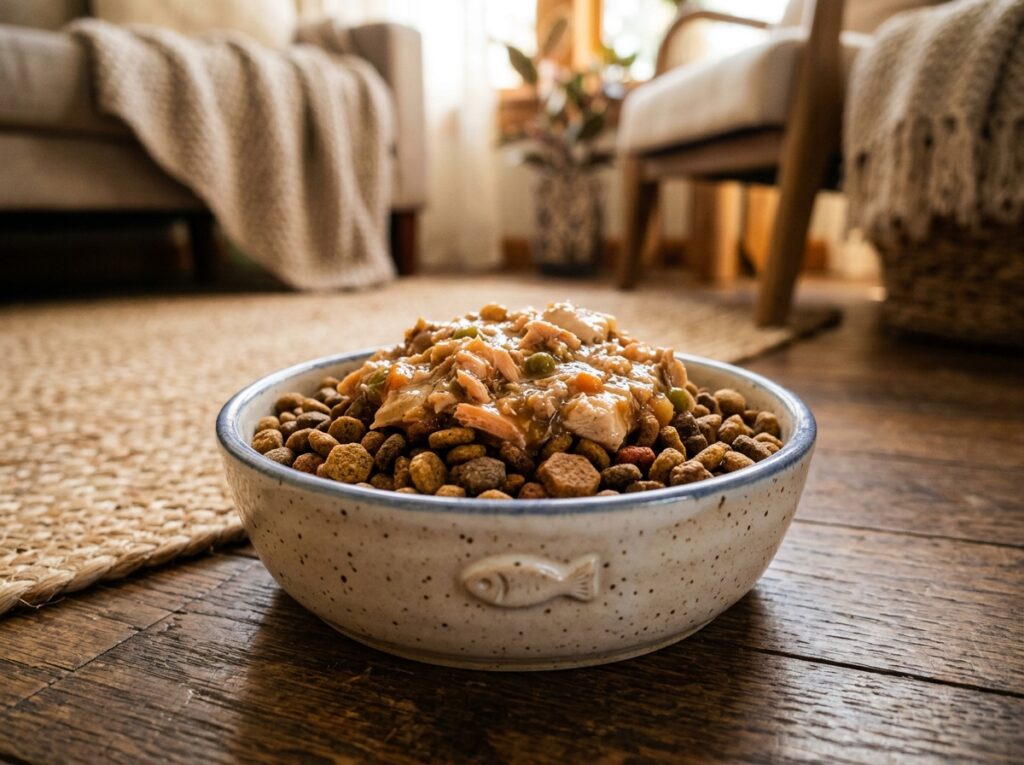
Pros and Cons: Dry Kibble vs. Wet Canned Food
Neither food format is entirely superior on its own. Understanding the unique characteristics of both options helps tailor the ideal nutrition strategy for your companion.
1. Dry Food: Economic Convenience and Dental Realities
Dry kibble typically contains less than 10% moisture, making it a concentrated and stable nutrition source.
- Nutritional Density & Economy: Kibble provides high calories per scoop, boasts a long shelf life, and is generally more budget-friendly for daily feeding routines.
- The Dental Myth: Many owners believe crunchy kibble cleans teeth by scraping away plaque. In reality, cats rarely chew kibble thoroughly enough for effective mechanical abrasion—most swallow it whole or shatter it in one bite. Daily toothbrushing and routine dental cleanings remain essential.
- Storage Caution: Once opened, kibble is exposed to oxygen, which can cause surface fats to oxidize and spoil. Always store dry food in a sealed, airtight container in a cool place to prevent digestive upset.
2. Wet Food: Vital Hydration and Urinary Prevention
Canned or pouched food serves as a powerful preventative tool against chronic renal issues.
- Superior Hydration: With moisture levels hovering around 70% to 80%, wet food naturally flushes out the bladder and keeps urine properly diluted, washing out mineral debris before hard crystals can form.
- Weight Management: Wet formulas contain fewer calories per gram than dry kibble, providing natural volume and satiety without causing unnecessary weight gain in sedentary indoor cats.
- Hygiene Rules: Because of its high moisture content, wet food rapidly grows bacteria if left at room temperature for more than 2 to 4 hours. Always discard untouched portions promptly.
💡 Fact-Check: Treat Toppers vs. Complete & Balanced Cans
Adding complementary snack pouches or liquid treats on top of kibble over a long period can dilute vital amino acids and cause nutritional imbalances. When establishing a daily mixed routine, strictly select canned formulas labeled as “Complete and Balanced” according to AAFCO nutritional standards.
The Golden Ratio: How to Start Safely
Transitioning a pet to a combination feeding schedule requires basic mathematical precision to prevent excessive calorie intake and digestive upset.
Calorie-Based Portion Control
Never measure combo meals by arbitrary volume or random scoops. Always calculate daily feeding portions based on your cat’s Resting Energy Requirement (RER) or ideal target weight.
A widely recommended starting point is a 50:50 or 60:40 caloric split. For example, if an adult indoor cat requires 200 kcal per day to maintain a healthy weight:
- 100 kcal should come from dry kibble measured precisely by weight.
- 100 kcal should come from a nutritionally complete wet canned food.
Step-by-Step Transition Tips
Feline digestive tracts are remarkably sensitive to abrupt dietary changes.
- The 10% Rule: Introduce any new wet or dry formula gradually over a 7 to 10-day window. Start with a ratio of 90% current food to 10% new food on Day 1, slowly increasing the new food proportion daily.
- Monitor GI Health: Sudden shifts in protein sources or fat percentages can trigger loose stools or vomiting. If gastrointestinal symptoms persist beyond 48 hours or if the cat shows signs of lethargy, pause the transition and consult a veterinarian.
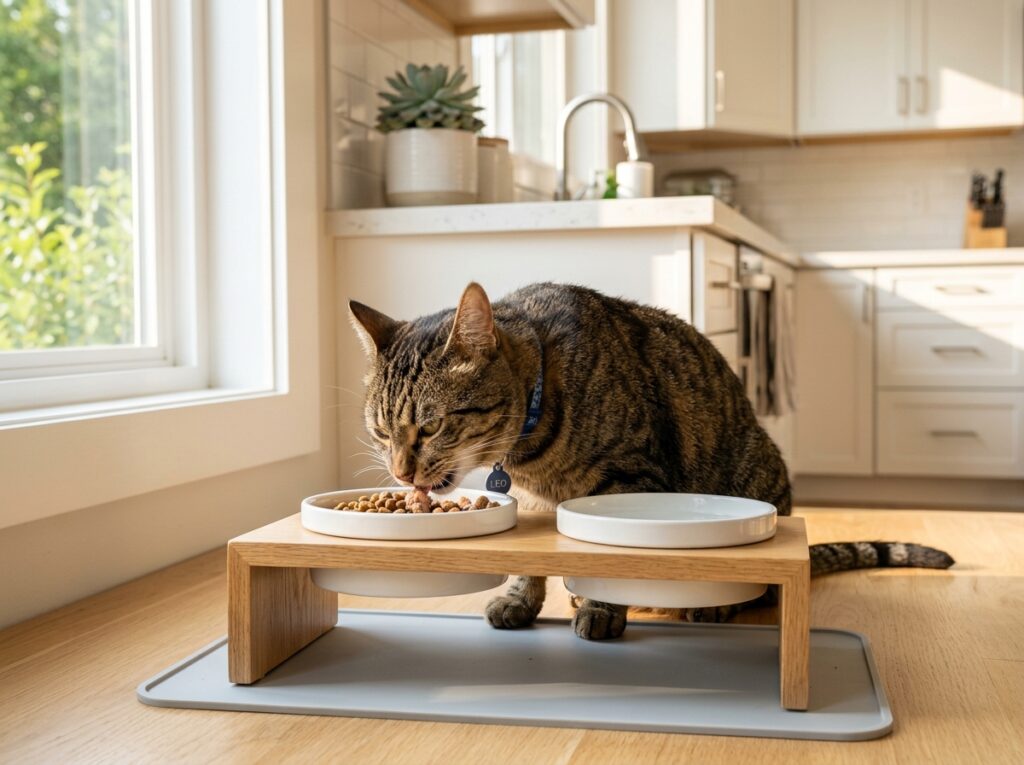
Long-Term Management and Life Stages
Once a stable combined feeding routine is established, nutritional requirements will continue to evolve alongside your pet’s biological changes.
Life-Stage Tailored Diets
Growing kittens, highly active adult felines, and senior cats (aged 7 years and older) have vastly different requirements for protein turnover, phosphorus restriction, and sodium intake. Regularly review your feeding strategy during yearly exams to ensure both the wet and dry components match your cat’s current metabolic demands.
Regular Veterinary Check-ups
Early-stage kidney decline and subtle urinary tract inflammation frequently progress without visible outward symptoms. Scheduling annual wellness evaluations and routine serum biochemistry panels at your veterinary clinic remains the most dependable method to monitor organ function and longevity.
Summary
Combining dry kibble and wet canned food is a scientifically grounded feeding strategy that addresses both behavioral variety and physiological hydration needs. By strictly calculating caloric splits and relying on AAFCO-certified complete diets, pet owners can effectively protect urinary health while simplifying daily meal management.