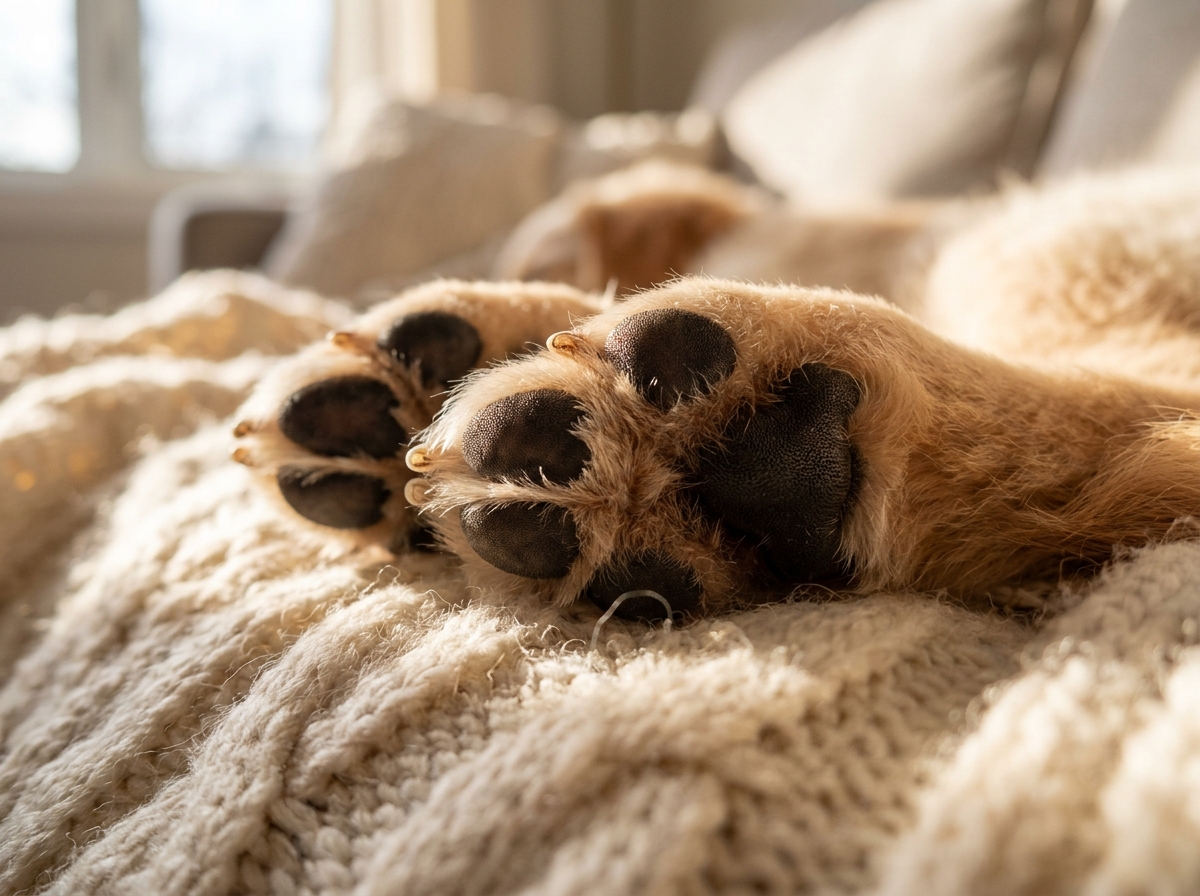
If you live with a dog, you probably absolutely love that nutty, corn-chip scent coming from their little paws. I definitely did! I used to love burying my nose in my dog Dagom’s paws just to take a sniff of that comforting “Frito feet” smell.
But one day, I noticed that our familiar, comforting scent had turned into a foul, sour odor. At first, I didn’t think much of it, but I soon realized that having stinky dog paws isn’t just a natural occurrence—it can actually be a cry for help. It completely shocked me! For pet parents who might brush off a sudden change in their dog’s paw odor like I initially did, today I want to uncover the secrets behind stinky dog paws and the crucial warning signs you need to watch out for.
Table of Contents
Normal “Frito Feet” vs. Stinky Dog Paws
The classic, healthy corn-chip smell from your dog’s paws is a completely natural byproduct of normal bacteria—specifically Proteus and Pseudomonas—living on their skin. However, if this cute scent turns into a strong odor resembling sour vinegar, rotten cheese, or raw fish, you need to pay attention.
When you notice stinky dog paws accompanied by these foul smells, it usually means microorganisms have overgrown and developed into an infection. To distinguish between normal body odor and a medical condition, you should inspect your dog’s paws very carefully.
| Characteristic | Normal “Frito” Smell | Medical Warning Sign |
| Odor Type | Corn chips, roasted nuts | Vinegar, rotten cheese, fishy |
| Skin Color | Natural pad color | Redness (erythema), inflamed |
| Discharge | None, completely dry | Sticky, brown, or crusty |
| Behavior | Normal walking | Excessive licking or biting |
If you spot redness, feel swelling or heat when you touch the paw pads, or notice a sticky mucosal discharge, I highly recommend visiting a veterinary clinic immediately.
Common Skin Conditions Behind Stinky Dog Paws
Pododermatitis and Early Eczema
A leading cause of stinky dog paws is Pododermatitis, which is an inflammation of the skin between the toes. This condition is primarily triggered by moisture left behind after wet walks, dietary allergies, or foreign objects stuck in the paw pads.
In the early stages, the skin between the pads turns a very light pink, making it easy for pet parents to miss. As it progresses, the skin becomes bright red and hot, and your dog will likely show discomfort by intensely licking or biting the area. Never ignore this as simple sweat or mild eczema!
- Repeated inflammation can lead to lichenification, making the skin painfully thick and dark.
- Secondary bacterial infections can turn a highly treatable issue into a chronic condition requiring months of management.
Malassezia (Yeast) Overgrowth: The Vinegar Scent Culprit
The sour smell coming from Dagom’s paws was caused by this exact culprit. Dealing with stinky dog paws caused by Malassezia (a type of yeast) is incredibly common. Malassezia naturally lives on a dog’s skin, but it multiplies rapidly in hot, humid environments or when your dog’s immune system drops.
When this yeast overgrows, it produces a strong, pungent vinegar-like odor. If you spread your dog’s toes and see sticky brown discharge or flaky dandruff, yeast is likely the problem.
- Yeast overgrowth often strikes dogs who already suffer from underlying atopic dermatitis or food allergies.
- It frequently accompanies endocrine disorders like Cushing’s syndrome or Hypothyroidism.
- If symptoms return even after applying ointment, a vet must diagnose the root cause.
The Danger of “Paw Licking” and Proper Management
Why Your Dog’s Paw Licking is a Red Flag
When dogs lick and chew their itchy paws, we often call it “paw candy.” Despite the cute nickname, this behavior starts a vicious cycle that destroys the paw’s skin barrier. If your dog has stinky dog paws and licks them constantly, the moisture and digestive enzymes in their saliva create the perfect breeding ground for bacteria and yeast.
Continuous licking severely weakens the protective barrier. Bacteria from the dog’s mouth can easily transfer into the broken skin, causing secondary infections like Pyoderma.
- Licking often begins due to pain or itching but can quickly become a compulsive habit.
- Once habitual, dogs may continue licking even after the physical cause is healed, requiring gentle behavioral redirection from you.
Precautions for Ointments and Yeast Infections
Treating stinky dog paws correctly means using the right remedy for the right root cause. Bacterial infections and yeast infections require entirely different treatments. Applying human ointments or leftover creams without a vet’s diagnosis can make the infection much worse.
If your veterinarian prescribes an antifungal ointment, strictly follow these rules:
- Place an E-collar (cone) on your dog for 15 to 20 minutes immediately after applying the ointment to prevent licking.
- Distract your dog with safe treats or cuddles so the medication can fully absorb into the skin.
- Never stop treatment early just because the skin looks better; microscopic spores may still be present.
Daily Care Tips for Healthy, Odor-Free Paws
The absolute best way to prevent odors and maintain healthy paws is thorough drying. After washing your dog’s feet post-walk, press a soft towel against the pads to absorb the surface water. Then, use a hair dryer on a cool or low-heat setting to completely dry the hair deep between the toes.
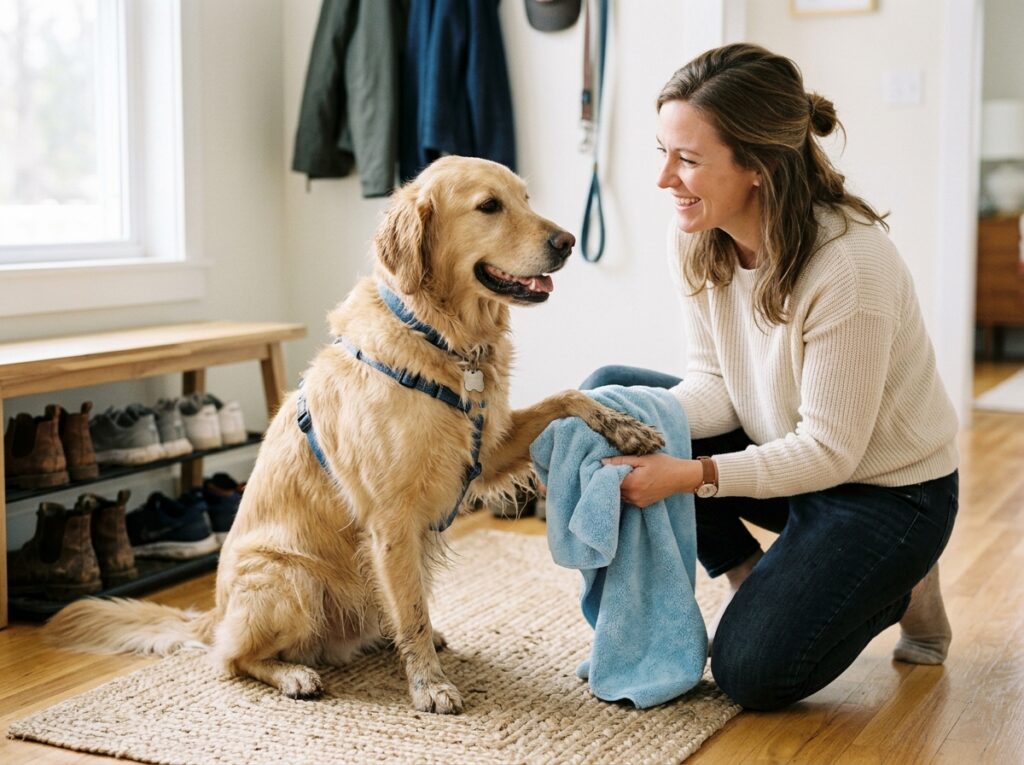
There are also excellent supplementary care routines you can do at home:
- Wash the paws 1 to 2 times a week with a medicated shampoo recommended by your vet.
- Apply a moisturizing dog paw balm to prevent cracking from frequent washing. Massage it in completely so your dog isn’t tempted to lick it off.
Ever since Dagom’s sour-smell incident, I view paw odor as a critical gauge of health. By preventing stinky dog paws, we can ensure every walk is happy and pain-free for our furry best friends!