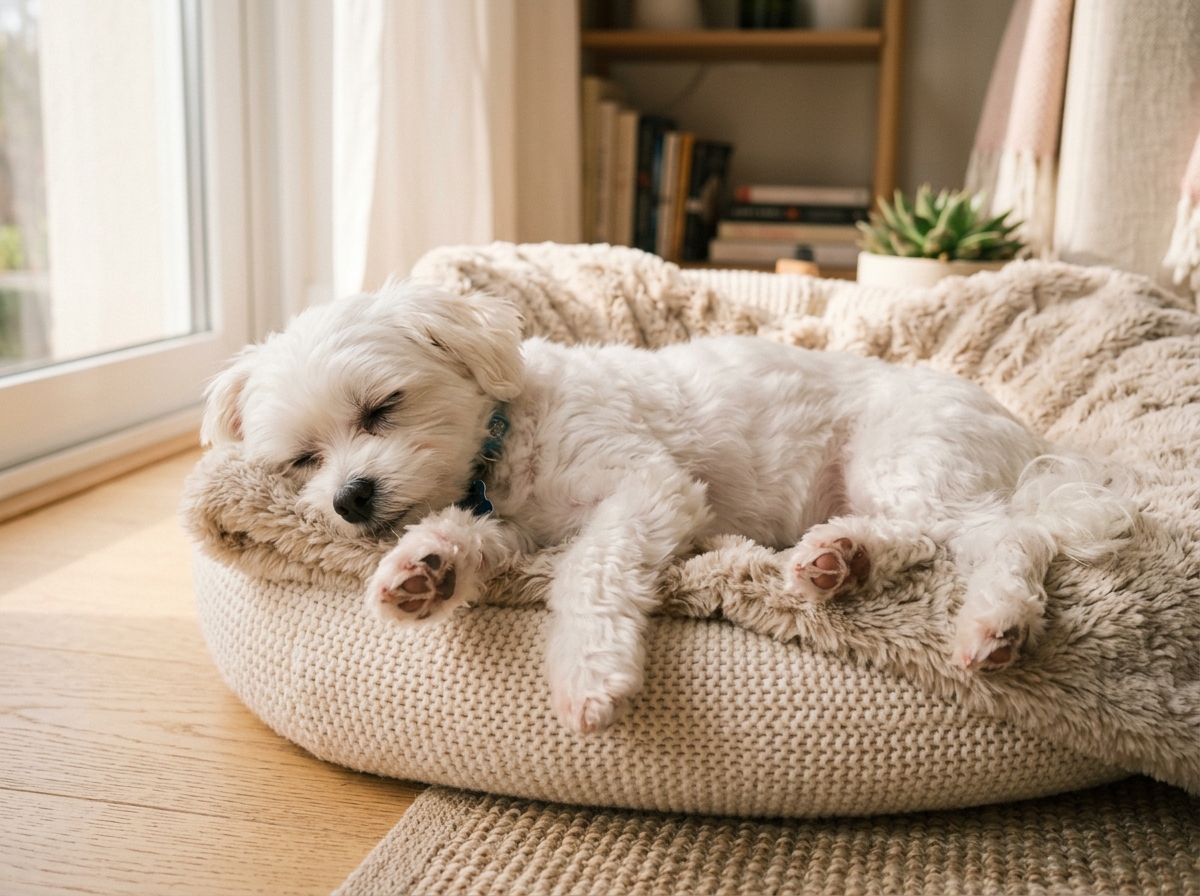
I recently watched my white Maltese, Bokdol, lying on his side, excitedly kicking his legs as if he were running a marathon. It was so cute and funny that I stood there smiling for a long time. As someone who spends every day researching and crafting wholesome, functional senior dog treats, my eyes naturally linger on every little habit and behavior of our furry friends, including dog twitching in sleep.
When our dogs whine, breathe heavily, or kick, many pet parents worry if they are sick or having a nightmare. Because we feel sorry for them, our first instinct might be to touch or wake them up, but doing so suddenly can disrupt their normal sleep cycle. Today, I’ll explain exactly what causes dog twitching in sleep and how to tell the difference between harmless dreaming and sleep seizures that require immediate attention.
Table of Contents
The Causes of Dog Twitching in Sleep and REM Sleep Characteristics
Why Puppies Frequently Twitch and Kick
The reason you often see your dog twitching in sleep is deeply connected to their sleep stages. While adult dogs spend about 10-12% of their sleep in the REM stage, young puppies spend more than half of their resting hours in REM sleep.
- Nervous System Development: As a puppy’s brain, central nervous system, and muscles develop, their muscle movements during sleep aren’t fully suppressed. This results in frequent micro-tremors, whining, and kicking.
- Stimulus Absorption and Cognitive Learning: As they process and store the various stimuli experienced during the day, the cerebral cortex becomes highly active, naturally manifesting as dog twitching in sleep.
Do Dogs Actually Dream?
According to research from institutions like MIT, a dog’s brain wave patterns during sleep are remarkably similar to those of humans, cycling between light and deep sleep stages. When Bokdol was excitedly running in his sleep, he was undoubtedly dreaming about a joyful walk through an open field!
- Shared Sleep Mechanisms: When dogs enter the dreaming stage, you will observe irregular breathing and rapid eye movement, much like in humans.
- Sleep Cycle Differences by Breed: Large dogs tend to have long dreams every 60 to 90 minutes, whereas small dogs like Bokdol tend to have short, frequent dreams every 10 to 20 minutes.
The Crucial Reason You Shouldn’t Wake a Sleeping Dog
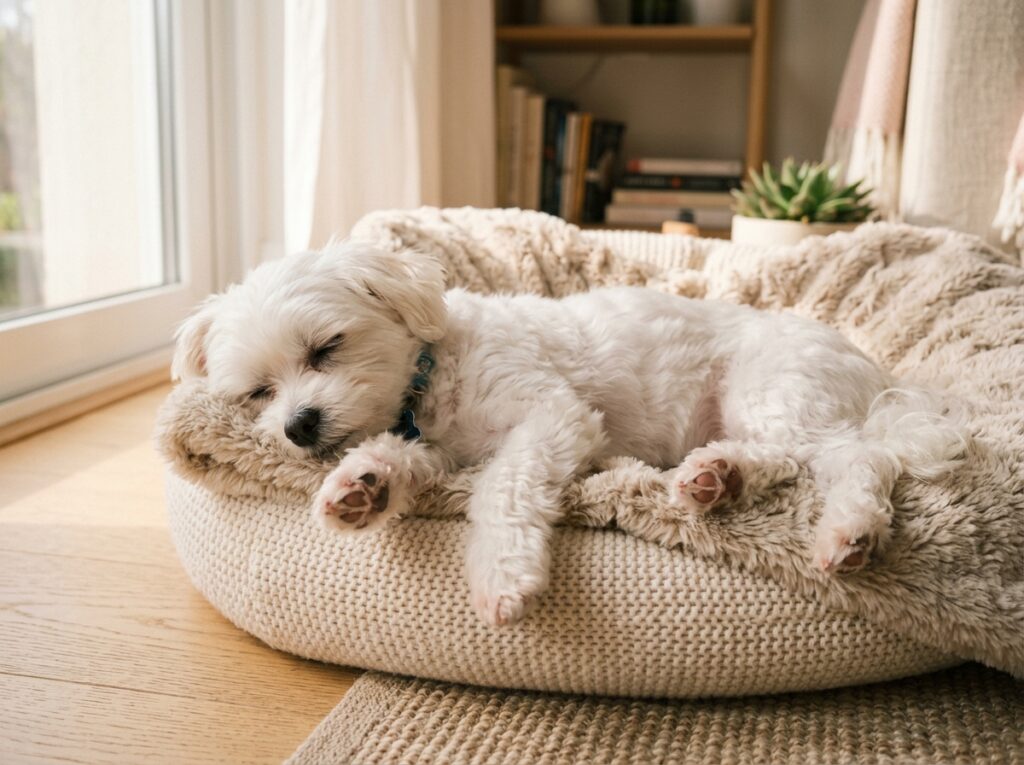
It can be pitiful to see your dog twitching in sleep and whining, but you must refrain from suddenly petting or hugging them awake. If a dog feels sudden physical contact during deep sleep, they can become extremely startled and instinctively show defensive behavior. In such unexpected situations, both the pet parent and the dog could get injured.
- Sleep Disruption and Stress: Continuously interrupting the deep sleep necessary for physical recovery can increase stress and lower immunity.
- When to Wake Them Safely: You should only intervene if there’s a risk of physical injury, such as thrashing so violently they might hit a wall, or if they appear to have severe difficulty breathing.
💡 The Safe Wake-Up Method
If you must wake them, do not touch their body directly with your hands. The best method is to stand at a safe distance of 2 to 3 meters and softly call their name, or gently tap the floor so the resulting vibrations encourage them to wake up on their own.
Harmless Dog Twitching in Sleep vs. Seizures That Need Attention
Checking for External Responses
The most important step is distinguishing whether the current behavior is harmless dog twitching in sleep or a medical emergency like a sleep seizure, which organizations like the ASPCA warn about. Simple sleep talking or twitching will temporarily stop, or the dog will wake up, if you call their name or if the environment changes. In contrast, if it’s a seizure, they will show absolutely no response to external stimuli.
- Physical Signs: During a sleep seizure, involuntary symptoms such as stiffening limbs, locked jaws, or excessive drooling may accompany the episode.
- Duration Check: Normal dog twitching in sleep usually occurs intermittently for a few seconds to a minute or two. If a seizure doesn’t stop after 5 minutes, it is an emergency that could harm your dog’s health, requiring swift veterinary action.
Danger Signals Requiring a Vet Visit
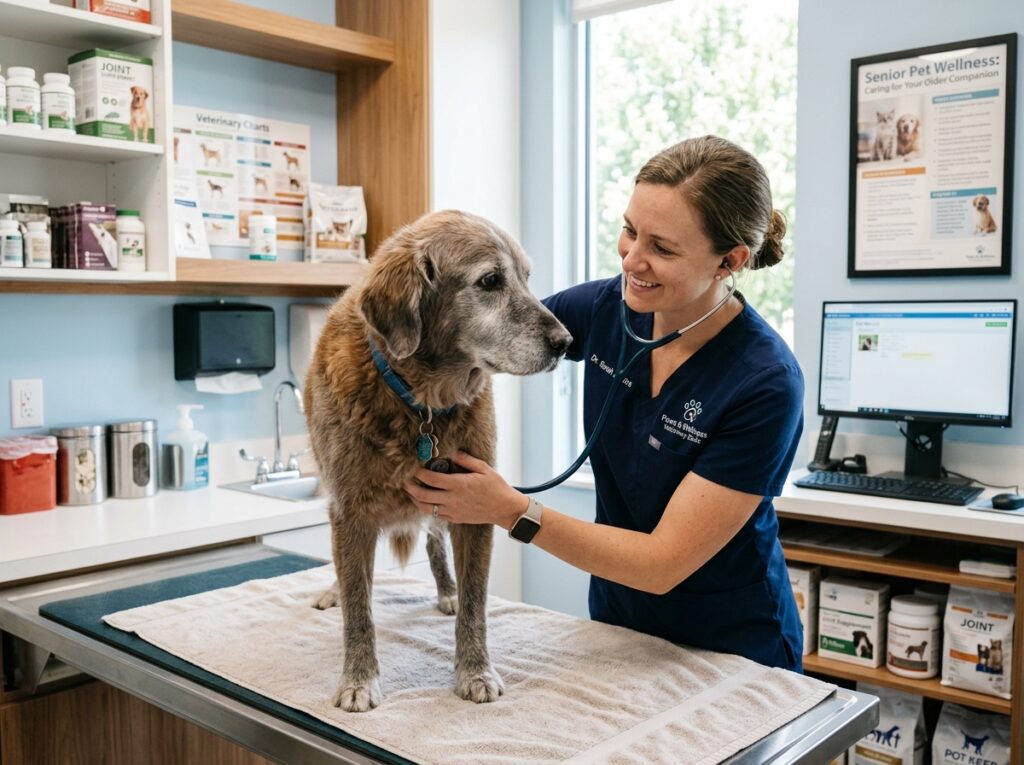
After a simple dream, a dog returns to their normal state immediately upon waking. However, if they show abnormal behavior such as disorientation or stumbling after waking up, you must be careful. Especially since I spend my days formulating treats for senior dogs, I intimately understand that sudden health changes in older dogs should never be taken lightly.
- Sudden Symptoms in Senior Dogs: If an otherwise healthy senior dog over 7 years old suddenly starts experiencing sleep tremors or seizures they’ve never had before, there’s a high chance of an underlying health issue. Prompt, precise diagnosis by a veterinarian is essential.
- REM Sleep Behavior Disorder: If the body’s tension doesn’t release during sleep, causing the dog to violently act out their dreams and frequently bump into things, expert advice is strongly recommended.
Conclusion: A Pet Parent’s Guide to Healthy Sleep
There is a famous English proverb: “Let sleeping dogs lie.” Since dog twitching in sleep or mild whining is a perfectly normal process, the key to their sleep health is simply watching over them so they can rest deeply.
- Create a Safe, Independent Sleep Environment: Provide a dedicated kennel or bed in an independent space with minimal noise or light stimulation. It’s best to maintain a comfortable indoor temperature of 20~24°C (68~75°F) and a humidity of 40~60%.
- Digital Records for Vet Consultations: If you are unsure whether it’s harmless dog twitching in sleep or a health anomaly, do not touch or wake them first. The most accurate diagnostic method is to immediately use your smartphone to record a video showing their entire body, face, and leg movements to show your vet.
Practice careful yet quiet consideration so our lovable furry friends can have happy dreams through comfortable sleep every night!
What kind of cute sleep habits does your dog have? Share their adorable sleeping stories in the comments below! 👇