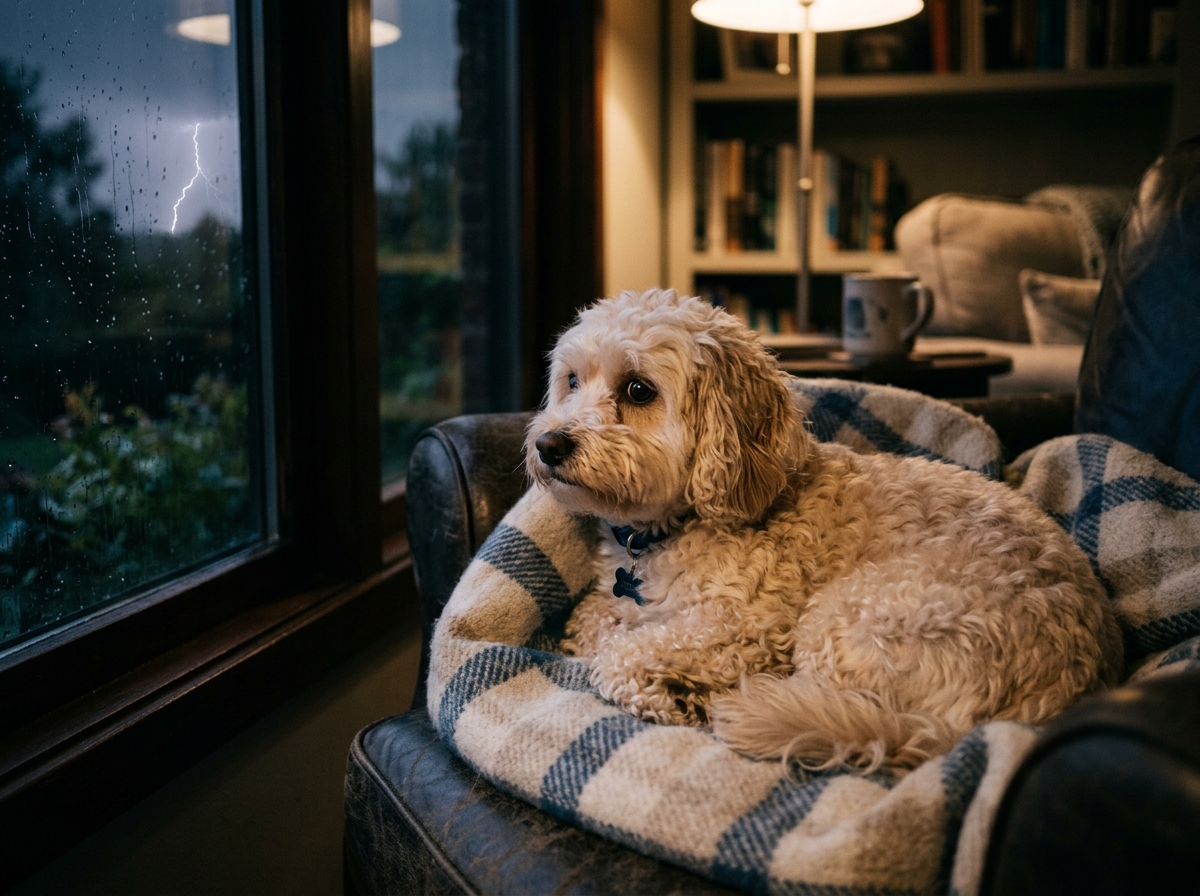
I remember a day recently when thunder and lightning filled the sky, and our beloved Bokdoli became quite distressed, barking continuously out of fear. It made me wonder, do other pets also get scared by thunder and lightning sounds? This experience highlights the need for effective strategies for helping dogs with thunder phobia and understanding their reactions to loud noises.
Table of Contents
Understanding Why Pets Fear Thunderstorms
Many pet owners have witnessed their furry friends reacting fearfully to thunderstorms. This isn’t just a simple dislike of loud noises; it’s often a complex phobia driven by a combination of sensory inputs. Dogs, in particular, can be highly sensitive to changes in barometric pressure, static electricity in the air, and the flashes of light and booming sounds of a storm. These elements combined can create an overwhelming and disorienting experience for them.
Some theories suggest that the static electricity accompanying storms can cause discomfort or even small shocks to a dog’s fur, contributing to their anxiety. Their acute hearing also means that thunder is far louder and more startling to them than it is to humans. Understanding these underlying causes is the first step toward providing comfort and support.
Recognizing the Signs of Thunderstorm Anxiety in Your Dog
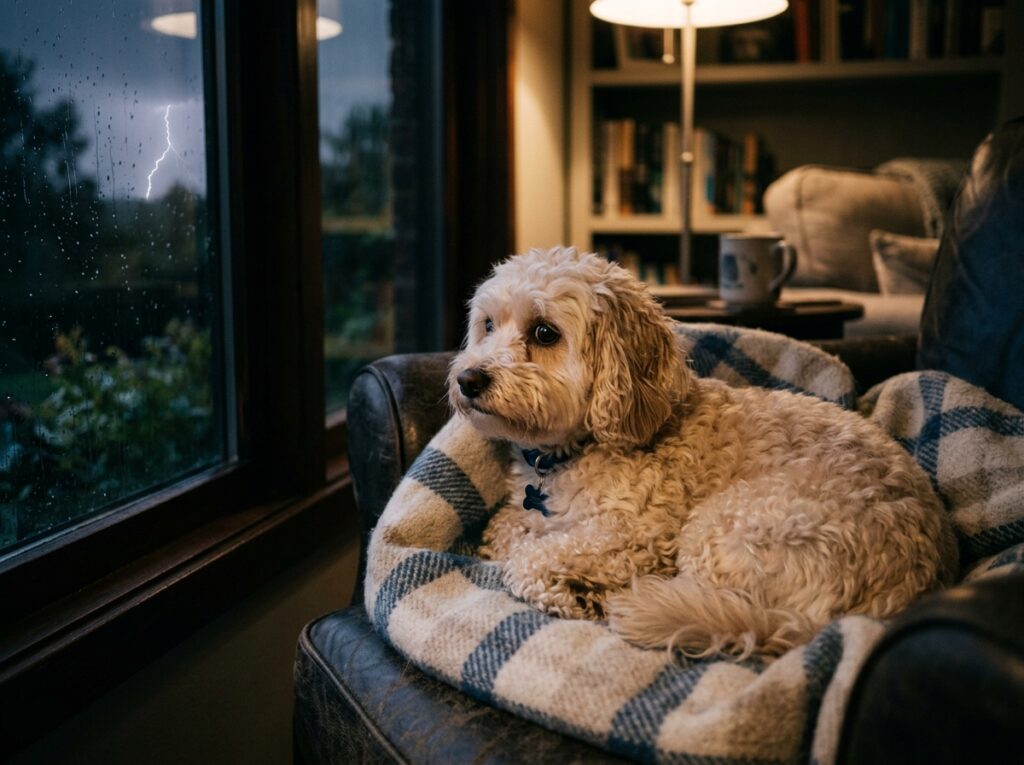
Knowing the signs of stress is important for helping dogs with thunder phobia. Pet anxiety during a storm can manifest in various ways, ranging from subtle discomfort to severe panic. Common signs include excessive barking or whining, trembling, panting, and pacing. Your dog might try to hide in small spaces, like under furniture or in a closet, seeking a perceived safe haven.
More extreme reactions can involve destructive chewing, attempting to escape, or even inappropriate urination or defecation indoors. It’s important to observe your pet’s specific behaviors to tailor your calming strategies effectively. Early recognition allows for quicker intervention and can prevent the phobia from worsening over time.
Creating a Safe Haven
One of the most effective immediate steps you can take is to create a secure and comfortable space for your dog. This could be a crate covered with a blanket, a quiet room, or even a closet. The goal is to dampen the sensory input from the storm. Using white noise machines, calming music, or simply turning on a fan can help mask the sound of thunder. Ensure the space is familiar and associated with positive experiences, not just fear.
Calming Techniques and Products
Several products and techniques can assist in comforting your anxious dog. Pressure wraps, like ThunderShirts, apply gentle, constant pressure similar to swaddling a baby, which can have a calming effect on many dogs. Pheromone diffusers, which release synthetic dog appeasing pheromones, can also help reduce general anxiety. Always ensure your dog has a calm environment even when you are not actively present during a storm. Distraction can also be powerful; engaging your dog in a favorite game or offering high-value treats can redirect their focus away from the storm.

Seeking Professional Help for Severe Phobias
If your dog’s thunder phobia is severe and significantly impacts their well-being, it’s wise to consult a veterinarian or a certified professional dog behaviorist. They can provide personalized advice, and in some cases, prescribe anti-anxiety medication to manage acute panic during storms. Behavior modification therapies, often involving desensitization and counter-conditioning, can also be highly effective when guided by an expert. Resources from reputable organizations can also offer additional guidance on pet behavior. For more information on animal care and behavior, you can visit a trusted animal welfare organization like the ASPCA.
Conclusion: Making Stormy Days Easier
Witnessing your beloved pet distressed by a thunderstorm is never easy. By understanding the causes of their fear, recognizing the signs of anxiety, and implementing effective calming strategies, you can significantly improve their experience during stormy weather. Whether it’s creating a safe haven, using calming products, or seeking professional guidance, every step you take contributes to your dog’s comfort and well-being. Your patience and support are truly important in helping them overcome their fears.